
ECOWAS to Member States: Enforce MSME Protocols, Stop Writing New Rules

 West Africa’s small businesses do not suffer from a shortage of regional agreements. Their deeper problem is the gulf between policies signed in ECOWAS MSME protocols at official meetings and conditions encountered at borders, checkpoints, registration offices and national markets.
That implementation deficit came under renewed scrutiny in Cotonou, Republic of Benin, where the Economic Community of West African States urged member countries to enforce existing protocols designed to support Micro, Small and Medium Enterprises.




The call was made during a delocalised meeting of the ECOWAS Parliament’s Joint Committee on Industry and Private Sector; Macroeconomic Policy and Economic Research; and Administration, Finance, Budget and Public Accounts.
Presenting a paper titled “Trade Facilitation, Regulatory Reforms and Formalisation,” Dr Tony Elumelu of the ECOWAS Business Council Secretariat argued that the region’s immediate priority should be implementation—not another round of policy formulation.
According to Elumelu, ECOWAS has already established credible policies, ECOWAS MSME protocols, legal instruments and protocols for private-sector development. What remains missing is an enabling environment in which legitimate businesses can move goods, access markets and expand across borders without being suffocated by administrative friction.
He called for the removal of barriers constraining MSMEs and proposed sanctions against officials or institutions responsible for frustrating legitimate commercial activity.
His argument goes to the heart of West Africa’s integration dilemma: the region has ambitious frameworks on paper, but entrepreneurs frequently experience a fragmented marketplace in practice.
The checkpoint economy
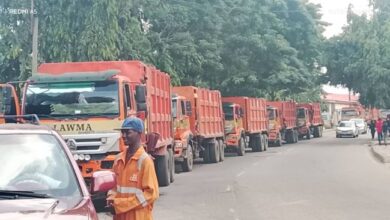
Among the most damaging obstacles identified by Elumelu are the numerous checkpoints along major regional highways.
For a large corporation, an avoidable delay or unofficial payment may be absorbed as an additional operating cost. For a small trader transporting perishable produce, garments, processed foods or household products, it can erase the profit on an entire shipment.
Multiple inspections also lengthen delivery times, weaken inventory planning and increase transport costs. These expenses are eventually transferred to consumers, contributing to higher prices and reducing the competitiveness of West African products.
Elumelu stressed that ECOWAS is competing with other regional blocs. It must therefore avoid obstructing legitimate traders if its businesses are to benefit meaningfully from the African Continental Free Trade Area.
The implication is clear: AfCFTA cannot deliver transformational gains for West Africa if goods remain trapped in a maze of checkpoints, incompatible regulations and uneven enforcement.
The region also requires infrastructure capable of carrying its integration ambitions. Efficient roads, logistics corridors, border facilities, warehousing systems and digital customs processes are no longer optional public projects; they are essential components of competitiveness.
Bringing informal enterprise into the economic mainstream
Dr Olalekan Afolabi, ECOWAS Principal Programme Officer for Enterprise and Business Promotion, placed another structural issue before the parliamentarians: the dominance of informal businesses across the sub-region.
He called for stronger efforts to formalise these enterprises and urged the ECOWAS Parliament to press regional leaders to domesticate and implement policies already adopted at the community level.
Formalisation can give businesses greater access to finance, insurance, export opportunities, public procurement and legal protection. It can also improve economic data, widen the tax base and help governments design more effective enterprise-support programmes.
But formalisation cannot simply mean imposing registration fees and taxes on vulnerable operators. If governments want informal businesses to enter the regulated economy, they must offer a compelling exchange: simpler registration, predictable taxation, affordable credit, business-development support and visible access to wider markets.
Without those benefits, formalisation may be perceived as another layer of bureaucracy rather than a pathway to growth.
Afolabi also called for implementation of the European Union’s €50 million African Trade Competitiveness and Market Access Programme. He said the effectiveness of such initiatives would depend on national domestication, legislative backing, regional accountability and sustained parliamentary monitoring.
Market and investor implications
Consistent enforcement of ECOWAS protocols could expand the addressable market available to small businesses beyond their home countries. It could also reduce logistics uncertainty, strengthen regional supply chains and improve the investment case for manufacturing, agribusiness, retail, fintech and trade-support services.
Investors, however, will judge the region by commercial experience rather than official declarations. A protocol that is not uniformly applied creates regulatory risk, raises due-diligence costs and makes cross-border expansion difficult to price.
Reliable implementation would send a stronger signal than another policy launch: that West Africa is becoming a genuinely investable economic space.
Brand implications
For emerging brands, regional integration offers a route from local recognition to continental scale. Yet brands cannot promise consistent pricing, product availability or customer experience when shipments are routinely delayed and distribution costs fluctuate unpredictably.
Removing trade impediments would help indigenous businesses build dependable regional identities. It would also encourage more investment in packaging, quality assurance, market research, customer service and intellectual-property protection—the infrastructure of serious brand building.
BRANDECONOMY Insight
Sequel to the ECOWAS MSME protocols, ECOWAS has correctly identified its central challenge: West Africa does not lack commercial ambition or enterprise-support policies; it lacks disciplined execution.
The next phase of integration must therefore be measured through practical outcomes—fewer checkpoints, faster border clearance, lower logistics costs, more formalised enterprises and a rising volume of intra-regional trade.
For the region’s MSMEs, implementation is not an administrative detail. It is the dividing line between remaining small and becoming competitive African businesses.