Beyond Hope: Adebayo, SDP Pitch Youth Power and ‘Farewell to Poverty’ for 2027

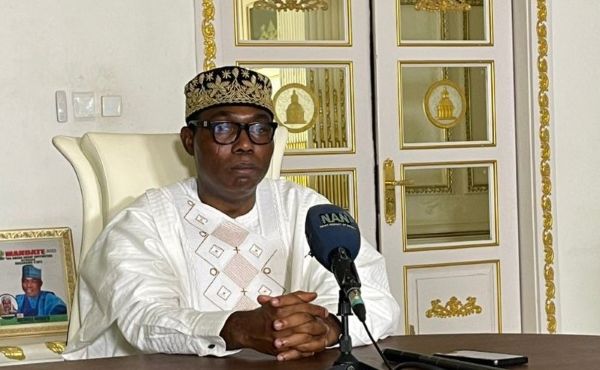
Prince Adewole Adebayo has framed the Social Democratic Party’s 2027 presidential proposition around two mutually dependent ambitions: mobilising young Nigerians to take ownership of governance and confronting the poverty and insecurity that continue to weaken national confidence.
Speaking on the News Agency of Nigeria Personality Interview Series in Abuja on Sunday, the SDP presidential candidate argued that young people should stop waiting for political leaders to offer them hope and instead enter the institutions through which power is acquired, exercised and scrutinised.




His message was deliberately sharper than the familiar language of youth empowerment. Rather than position young Nigerians as passive beneficiaries of a better future, Adebayo presented them as the country’s largest reservoir of electoral, economic and civic power—and therefore as participants who must accept responsibility for Nigeria’s direction.
He linked that appeal to the SDP’s 2027 manifesto, “Farewell to Poverty and Insecurity,” describing deprivation and violence as the twin national emergencies around which the party intends to organise its campaign.
The combination is politically strategic. Poverty, unemployment, unreliable electricity, expensive education, weak economic management and insecurity are not abstract policy debates for millions of young Nigerians. They shape employment prospects, entrepreneurial survival, physical mobility and decisions about whether to remain in the country.
Adebayo’s challenge, however, is larger than identifying public frustration. The SDP must demonstrate how youthful discontent can be converted into political organisation—and how an ambitious campaign slogan can become a credible, funded programme of government.
From online enthusiasm to political ownership
Adebayo recalled joining the SDP at 19, using his experience to argue that neither wealth nor elite connections should be treated as prerequisites for political participation. Citizenship, he maintained, provides the fundamental qualification for entry into public life.
He urged young Nigerians to move beyond functioning as online supporters, crowd-builders and digital defenders of established politicians. They should join parties, participate in internal decision-making, examine candidates, vote intelligently and hold officeholders accountable.
The argument carries considerable democratic weight. Young Nigerians account for a major share of the country’s workforce, security personnel and voting population. Their collective choices can shape electoral outcomes and determine which ideas acquire political legitimacy.
Yet demographic strength is not automatically political power.
Young people do not constitute a single electoral bloc. Their preferences are divided by region, income, religion, ethnicity, education, ideology and personal economic circumstances. Many are also constrained by the practical costs of participation, including party fees, transportation, campaign financing, patronage networks and the risk of political intimidation.
Converting numerical advantage into influence therefore requires more than social-media visibility. It demands organisation at ward level, participation in party congresses, candidate recruitment, voter education, election monitoring and sustained accountability after the ballots have been counted.
Adebayo’s proposition is strongest where it replaces vague inspiration with civic duty. But if the SDP wants young Nigerians to progress beyond political supporters’ clubs, it must give them substantive roles in policy development, campaign leadership, candidate selection and party governance.
A party cannot credibly sell political ownership while reserving real authority for an established inner circle.
The poverty and insecurity proposition
Adebayo said he viewed the 2027 contest not principally as a confrontation with rival politicians, but as a campaign against poverty, insecurity, unemployment, inadequate electricity, rising education costs and poor economic management.
This issue-centred positioning offers the SDP a useful point of differentiation in a political market frequently dominated by personalities, regional calculations and elite rivalries.
It also creates a demanding burden of proof.
Poverty and insecurity are not isolated problems that can be eliminated by presidential declaration. They reinforce one another through unemployment, food inflation, weak local economies, displacement, low agricultural productivity, inadequate policing and diminished confidence in public institutions.
A credible poverty-reduction programme must therefore explain how Nigeria will generate productive employment, expand reliable electricity, support competitive businesses, improve education and healthcare, strengthen agriculture and protect vulnerable households without creating an unsustainable fiscal burden.
Similarly, a security plan must extend beyond higher defence expenditure. It should address intelligence coordination, policing, border management, justice administration, community trust, illicit finance and the socioeconomic conditions that make criminal recruitment easier.
Adebayo said the SDP’s solutions would be judged by how effectively the party communicates them and whether Nigerians trust its competence, character and integrity. That is correct, but communication cannot substitute for programme design.
“Farewell to Poverty and Insecurity” may be memorable campaign language. To become an investable governing proposition, it must be supported by costed interventions, implementation timelines, responsible institutions and measurable outcomes.
Reviving the SDP’s June 12 inheritance
Adebayo presented the SDP as a national institution belonging to Nigerians rather than to a sole founder or political proprietor. He also connected its current manifesto to the party’s history in the June 12, 1993 presidential election, arguing that an agenda previously endorsed by voters has been updated for contemporary conditions.
That history gives the SDP recognisable political equity. June 12 remains associated with democratic choice, national coalition-building and the possibility of electoral support extending across traditional divisions.
But inherited relevance is not guaranteed.
A substantial share of the electorate was either very young or not yet born in 1993. Historical memory may provide emotional legitimacy, but younger voters are more likely to judge the contemporary party by its organisation, candidates, policy sophistication and capacity to compete.
The SDP must consequently translate legacy into present-day value. Its strongest brand opportunity is not merely to invoke June 12, but to demonstrate the inclusiveness, national reach and programme-driven politics associated with the period.
Adebayo’s insistence that the party belongs to no individual could strengthen its institutional identity. That claim, however, should be reflected in transparent party financing, competitive primaries, internal accountability and credible dispute-resolution processes.
Language, access and election machinery
The SDP plans to translate its manifesto into 15 languages and distribute it through print, audio and visual formats before the election. This is more than a communications tactic. It acknowledges that political inclusion depends on language, literacy, disability access and the availability of information outside elite media spaces.
If executed well, the strategy could help the party reach voters who are often mobilised emotionally but rarely given an accessible explanation of competing economic programmes.
Consistency will be essential. Translations should preserve policy meaning rather than reducing complex proposals to slogans. The party will also need trained representatives capable of explaining how its plans would affect household income, food prices, employment, education, security and local enterprise.
Adebayo further said the SDP intends to have agents at polling units across the country. Such coverage is vital for voter mobilisation, election observation and the protection of results.
But national polling-unit presence is a significant operational undertaking. It requires recruitment, training, accreditation, logistics, welfare, legal support, communications systems and reliable data management. The gap between announcing nationwide coverage and delivering it on election day will offer an early test of the party’s organisational seriousness.
Market implications
A stronger issue-based contest could benefit Nigeria’s economy by forcing political parties to compete on electricity, employment, education, security, productivity and the operating environment for businesses.
Policies that improve security and power supply would lower business costs, deepen agricultural value chains and strengthen the capacity of small enterprises to expand. Better education financing and job creation could also increase household purchasing power and reduce the economic exclusion on which instability often feeds.
The risk lies in unfunded promises.
A campaign to eliminate poverty can easily drift into subsidies, politically directed credit and spending commitments that produce short-term relief while worsening public debt, inflation or currency pressure. The SDP must distinguish productive social investment from fiscally unsustainable populism.
Businesses will want to know how the party proposes to finance its programme, improve government revenue without suffocating enterprise and create regulatory stability across political cycles.
Investor relevance
Investors are unlikely to assess the SDP’s proposition solely by its campaign language. They will look for evidence of security reform, fiscal discipline, reliable electricity, currency stability, policy continuity, contract enforcement and respect for property rights.
They will also examine the quality of the prospective governing team. A credible opposition party should identify the expertise required to manage the economy, security architecture and critical public institutions well before assuming office.
The manifesto’s eventual detail will matter more than its title. Investors should watch for funding assumptions, implementation priorities, private-sector participation and whether the party can reconcile social protection with macroeconomic stability.
A party that promises transformational outcomes without acknowledging trade-offs may excite voters but unsettle capital. One that combines social ambition with institutional discipline could broaden confidence in Nigeria’s political alternatives.
Brand implications
Adebayo is building a political brand around responsibility rather than reassurance. His message that young Nigerians should not wait to receive hope, but should enter politics and create it, distinguishes him from politicians who present themselves as personal rescuers.
His decision to frame the race as a contest against national problems rather than individual opponents could also support a more civil, policy-led identity.
The danger is overstatement. Promising to end poverty and insecurity creates expectations that no government can satisfy through rhetoric or isolated interventions. Every expansive claim increases the demand for evidence.
For the SDP, the combination of June 12 heritage, institutional ownership and multilingual engagement could create a distinctive national brand. But coherence is essential. The party’s internal conduct, candidate recruitment and deployment of young people must embody the democratic ownership it is promoting publicly.
BRANDECONOMY Insight
Adebayo’s strongest political idea is not that young Nigerians are numerous. That is already understood. It is that demographic weight becomes meaningful only when citizens accept the duties of organisation, participation and accountability.
But responsibility must operate in both directions.
If the SDP wants to sell involvement, it must share power before asking for votes. Young Nigerians should be visible not only in campaign crowds and digital teams, but in policy committees, party leadership, candidate lists and decision-making structures.
The “Farewell to Poverty and Insecurity” manifesto must also become a governing contract. It should state what an SDP administration would deliver in its first 100 days and four years, what each intervention would cost, how it would be financed, which institutions would be responsible and how progress would be independently measured.
The party should publish an accessible policy scorecard alongside its 15-language communications programme. That would allow citizens, businesses and investors to distinguish ambition from execution.
Demography is potential; organisation converts it into power. A manifesto is a promise; transparent targets convert it into accountability.
Adewole Adebayo has correctly challenged young Nigerians to take ownership of democracy. The next test is whether the SDP can build a party—and present a programme—worthy of that ownership.