2027 Elections: GOCOP Demands Verifiable Results, Media Independence and Economic Accountability

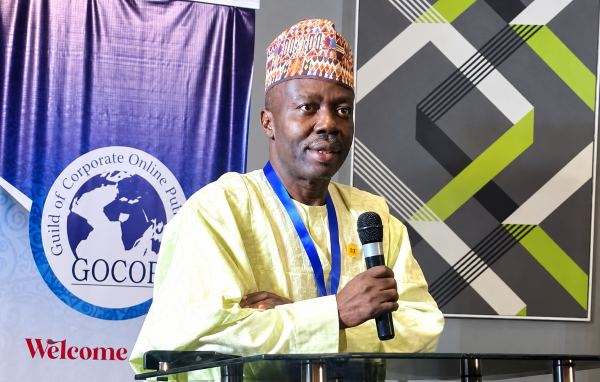
GOCOP Lagos communiqué puts electoral trust at the centre of Nigeria’s democratic and economic prospects, challenging INEC to demonstrate readiness and political actors to explain how their promises will improve citizens’ lives.
The Guild of Corporate Online Publishers has called for a shift from electoral assurances to demonstrable accountability ahead of Nigeria’s 2027 general elections, warning that technology, security deployments and public communication cannot rescue a process that citizens do not believe is fair.

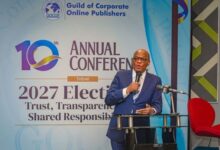

In a communiqué issued in Lagos on October 10, GOCOP demanded transparent election logistics, credible result management, prosecution of electoral offenders and stronger safeguards against disinformation. It also challenged political parties to end exclusionary candidate-selection practices and explain their positions on the cost of living, fuel subsidies and domestic crude pricing.
The resolutions followed the Guild’s 10th Annual Conference, held on October 7–8 at the Radisson Blu Hotel, Ikeja GRA, Lagos, under the theme “2027 Elections: Trust, Transparency and Shared Responsibilities”.
Its central proposition carries significance beyond politics: elections are part of a country’s institutional infrastructure. When citizens cannot reliably connect their votes to leadership outcomes, accountability weakens—and so does the basis for durable economic reform.
A confidence problem technology cannot solve alone
The conference cited a survey indicating that only 38 per cent of Nigerians believe in the credibility of elections. However, the communiqué does not identify the survey’s source, fieldwork dates, sample or question wording. The figure should therefore be treated as a statistic presented at the conference rather than a fully documented national benchmark.
The concern behind it remains the organising issue of GOCOP’s intervention: confidence must be built through observable conduct, not presumed from official authority.
The conference was chaired by Dr Olisa Agbakoba, SAN, former President of the Nigerian Bar Association. INEC Chairman Prof. Joash Ojo Amupitan, SAN, delivered the keynote address.
Discussants included CP Abayomi Shogunle, PhD, Commissioner of Police, Election Planning, Monitoring and Evaluation, Force Headquarters, Abuja; Prof. Tayo Popoola, Head of the Department of Mass Communication, University of Lagos; Dr Adaora Onyechere Sydney-Jack, Creative Director of Gender Agenda and Founder of WEWE Network Afrique; and Lanre Arogundade, Executive Director of the International Press Centre, Nigeria.
GOCOP President Danlami Nmodu, mni, urged politicians to put public welfare first and journalists to scrutinise both government and opposition through accurate, balanced reporting. He also called for sustained engagement with GOCOP and the Nigerian Press Organisation to protect publishers and journalists in the digital environment.
INEC’s readiness must become publicly testable
According to the communiqué, INEC outlined structural, technological and logistical improvements, including upgraded result-integrity systems, AI-assisted data auditing and layered cyber defences developed with partners including Google and Microsoft.
These are institutional claims about preparation, not independent certification that the systems will perform as intended.
The distinction matters after the disappointment surrounding the delayed upload of presidential polling-unit results to INEC’s Result Viewing portal in 2023. INEC subsequently attributed that failure to technical complexity and maintained that it did not undermine the election’s credibility. Nevertheless, the episode exposed the reputational cost of a transparency mechanism failing when citizens most expected it to work.
For 2027, naming technology partners will not be enough. Public assurance requires independently evaluated stress tests, documented contingency procedures, incident-reporting standards and a clear explanation of how polling-unit records will be reconciled with collated totals.
AI can help identify anomalies; it cannot determine democratic legitimacy. Any flag it generates must be reviewable by accountable human officials against traceable evidence.
GOCOP accordingly asked INEC to publish timely information on logistics, technology testing and result management throughout the process. Nationwide Permanent Voter Card collection, announced to commence on October 9, provides an immediate opportunity to demonstrate that readiness through accessible centres, clear requirements and reliable service.
Verification must not become permission to report
The Guild welcomed INEC’s proposed three-part arrangement covering fact-checking, editorial self-regulation and voter education, while expressly preserving editorial independence.
It also demanded immediate activation of a Digital Media Fact-Verification Channel through which editors could confirm field reports, security incidents and technical problems.
A responsive channel could prevent rumours from filling an information vacuum. Its effectiveness will depend on response times, accountable contact officers and explanations that can be checked against events on the ground.
However, official verification must not become an exclusive licence to publish. INEC cannot reasonably serve as the only arbiter of reporting about its own performance. Journalists should seek its response while also assessing documents, eyewitness testimony, observers’ accounts and other independently corroborated evidence.
GOCOP’s instruction to report operational delays with context is sensible. A late opening at one polling unit does not, by itself, establish nationwide failure. Equally, an official explanation cannot erase a documented pattern of delays or irregularities.
Responsible journalism requires neither panic nor deference. It requires proportionate conclusions supported by evidence.
Clarify the result-reporting rules before polling day
GOCOP urged the Nigeria Union of Journalists and other media organisations to seek judicial clarification of the relationship between Section 60 of the Electoral Act 2026 and Section 39 of the Constitution, particularly regarding exit polls, projections and independent tallies.
The distinction between reporting electoral information and making an official declaration deserves careful treatment. Section 60 addresses polling-unit counting, recording, announcement and transmission; Section 39 protects expression and the exchange of information. Neither should be reduced to a slogan about unrestricted publication or a blanket prohibition on journalism.
The Guild’s proposed legal clarification should establish practical boundaries before election-day tensions arise.
Editors also need to distinguish a verified polling-unit result from a partial tally, an exit-poll estimate and an official declaration. Projections should disclose methodology, coverage and uncertainty, while partial totals should never masquerade as complete national outcomes.
GOCOP committed its platforms to rejecting unverified results, altered result sheets and inflammatory speculation, with breaches subject to its disciplinary code.
That commitment should not prevent journalists from exposing suspicious documents. A defaced or apparently altered sheet may warrant investigation, but its disputed figures must not be presented as an authenticated result. The original record, accreditation data and copies held by relevant participants should be examined through a documented verification process.
The misinformation problem has a business model
The communiqué identified fabricated news, unverified leaks, synthetic media and AI-generated deepfakes as threats to participation and public order.
Its diagnosis went further: commercial and ownership pressures can distort coverage. Advertising models that reward instant traffic may encourage sensational headlines, while proprietorial political interests can compromise editorial judgement.
A newsroom cannot promise rigorous verification while rewarding staff solely for speed and page views. Sustainable safeguards require trained editors, protected reporting budgets, transparent corrections, disclosure of paid political content and separation between commercial sales and editorial decisions.
The conference’s first day addressed precisely these underlying business questions through sessions on newsroom sustainability, artificial intelligence and digital-media monetisation, followed by the Guild’s Annual General Meeting.
The connection is important. Financially fragile newsrooms are more exposed to political patronage. Readers, subscribers and advertisers who value credible reporting can help reduce that dependence, provided funding relationships do not buy favourable coverage.
Inclusion must extend beyond election-day messaging
INEC’s reported voter-education initiatives include outreach to women and young people, braille ballot guides, tactile posters, sign-language support, local-language broadcasts and engagement with rural and riverine communities.
GOCOP nevertheless warned that English-only electoral laws and guidance exclude many citizens in a country with roughly 250 ethnic groups. It called for translations into major Nigerian languages and continued provision of accessible formats.
Translations must be accurate, clearly dated and consistent with the authoritative legal text. Radio, community meetings and assisted access remain essential for people who cannot depend on smartphones or broadband.
The conference also criticised women’s political inclusion as largely symbolic, arguing that opaque consensus arrangements can deny them opportunities at the nomination stage. It warned that current trends could produce fewer elected women in 2027—a concern, not an established forecast.
GOCOP asked the National Assembly to strengthen representation through legislation and parties to adopt transparent selection procedures. Practical scrutiny should track nomination fees, candidate lists, selection rules and complaint mechanisms, rather than relying on photographs of women at campaign events.
Peaceful polling is not the same as accountable policing
The Police reported relatively peaceful elections since February 2026, with no shootings in the polls referenced, and attributed the improvement to intelligence-led operations.
This remains an account presented by the Police, not proof that every electoral exercise nationwide was free from violence or intimidation.
GOCOP urged security agencies to sustain lawful, non-partisan operations. The standard must encompass protection of voters, journalists and observers; consistent treatment of political actors; and investigation of intimidation, vote-buying and obstruction.
The communiqué’s warning that offenders are seldom prosecuted identifies a critical weakness. Where violations carry little prospect of punishment, prevention becomes harder.
INEC, investigators and prosecuting authorities should publish an electoral-offences tracker showing referrals, charges and outcomes, with due-process protections for accused persons. Visible accountability would provide stronger deterrence than repeated warnings alone.
The cost-of-living debate needs costed choices
GOCOP identified living costs as the principal campaign issue and criticised conflicting accounts of fuel-subsidy policy. It called for an authoritative explanation of subsidy arrangements and domestic crude pricing, referring to Executive Order 9 concerning NNPC Limited.
The order concerns petroleum-revenue management and remittances. It should not be conflated with a guarantee that Nigerians will receive discounted crude or petrol.
The argument that citizens should pay less because Nigeria produces oil has political appeal, but candidates must explain the mechanism. Below-market crude supplied to a refinery can reduce public revenue unless the concession is offset; consumer benefit also depends on enforceable price pass-through.
Government and opposition should therefore disclose the expected cost, funding source, beneficiaries and safeguards for any proposed intervention. Voters deserve to know whether a promise means retail subsidies, crude concessions, targeted transport support or investment that lowers production and distribution costs.
Nmodu’s call for scrutiny of both sides is especially relevant here. Reform requires evidence of improved welfare; criticism requires a workable alternative.
Market implications and investor relevance
BRANDECONOMY’s economic reading is that electoral uncertainty can delay investment decisions, disrupt commerce and complicate planning. The effect will vary by sector and by how credible institutions remain before, during and after the vote.
Banks, manufacturers, retailers and logistics businesses should assess operational disruption, policy changes and information risks. Investors should examine not merely who may win, but whether results are verifiable, disputes can be resolved credibly and the eventual government can implement policy through legitimate institutions.
Election integrity does not automatically deliver prosperity. It strengthens the accountability through which citizens can reward performance and replace failure.
Brand implications: credibility must survive pressure
INEC’s institutional reputation will be shaped by whether public promises match observable delivery. Consistent explanations, accessible records and prompt correction of errors matter more than promotional messaging.
For publishers, the election will test whether their brand promise of independence survives commercial and partisan pressure. For corporate advertisers and sponsors, supporting voter education and independent journalism can create public value, but transparent sponsorship boundaries are essential.
Political brands face the same discipline: candidates who claim competence should demonstrate policy literacy, while those who promise inclusion should practise it during nominations.
BRANDECONOMY Insight
GOCOP’s communiqué is strongest where it treats elections as national infrastructure rather than a contest owned by politicians.
Its reference to Botswana’s 2024 transfer of power, after 58 years of Botswana Democratic Party rule, illustrates the value of institutions capable of accommodating electoral defeat. The lesson is not that any particular party must lose. It is that the process must remain credible whichever party wins.
Shared responsibility, however, does not mean equal responsibility. INEC controls election administration; parties select candidates; security agencies exercise coercive power; publishers shape information; citizens exercise their franchise. Each must be judged against duties it can actually fulfil.
Citizens should collect their PVCs, vote where eligible, verify information before sharing and maintain scrutiny afterwards. But participation will be encouraged more effectively by reliable access and credible protection than by blaming abstainers.
GOCOP’s commitment of 127 member publications should now become a public accountability programme: tracking INEC’s tests and disclosures, party nominations, verification-channel performance, security complaints and prosecution outcomes.
The communiqué, signed by Nmodu and General Secretary Sufuyan Ojeifo, thanked the keynote speaker, conference chairman, Governor of Imo State, panellists and public- and private-sector partners.
The next task is implementation. Nigeria’s democratic and economic interests require an election whose credibility can be demonstrated through the evidence—not merely asserted by those responsible for conducting it.