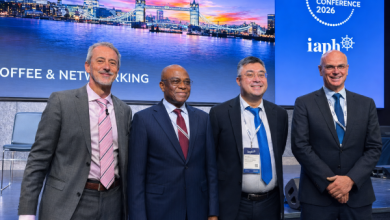


 At the CIoD Nigeria conference in Lagos, business leaders argued that stronger boards and a wider pool of investible companies matter as much as attracting more money in order to achieve the Nigeria $1 trillion economy ambition.
Nigeria attracted $10.37 billion in recorded foreign capital in the first quarter of 2026. Just $135.08 million came in as foreign direct investment. That gap framed the debate at the Chartered Institute of Directors (CIoD) Nigeria’s Business Meets Government dinner on Wednesday, 11 November: what would make investors commit to Nigerian businesses and infrastructure for years rather than simply buy assets they can sell when conditions change?


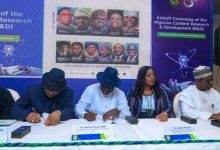

Clare Omatseye, founder and chief executive of JNC International, argued at the Oriental Hotel in Victoria Island, Lagos, that economic reforms alone would not deliver President Bola Tinubu’s $1 trillion GDP target by 2030. The two-day Annual Directors’ Conference focused on how boards could support more inclusive, sustainable growth. Omatseye’s argument brought that theme down to a practical question: can government make the rules predictable while companies make themselves credible enough to finance?
The difference between a rally and an investment pipeline
The National Bureau of Statistics put portfolio investment at 95.09 per cent of first-quarter capital importation and direct investment at 1.30 per cent. Those are shares of recorded foreign inflows in one quarter, not shares of all investment on the Nigerian Exchange. Portfolio capital can improve liquidity and includes longer-dated bonds. But an investor who can sell a security has a different exposure from one whose money is tied up in a factory, a diagnostic centre or a distribution network.
Umaru Kwairanga, chairman of Nigerian Exchange Group, pointed to the equity market’s growth from below ₦30 trillion at the start of the current administration to more than ₦162.5 trillion. He said difficult reforms were beginning to yield results and urged directors to turn them into durable business growth. NGX data put listed equity value at ₦28.85 trillion on 26 May 2023, just before Tinubu took office, and ₦163.53 trillion at the close on 11 November 2026. That is a rise in the naira value of listed shares, not a measure of fresh cash raised by companies.
Market breadth is the harder test. Omatseye pointed to the concentration of equity value in just 11 companies. An analysis of NGX data by THISDAY put their combined share at 75.9 per cent at the end of October. A bigger market with the same few heavyweights can still leave investors with limited choices and mid-sized businesses without credible routes to expansion capital.
What makes a business investible
Omatseye called for hundreds of better-governed mid-sized firms capable of growing into larger companies and eventually tapping capital markets. Not every firm needs an IPO. A well-prepared company can first raise private equity or longer-term debt; for those ready to list, the NGX Growth Board offers a route into the public market. Either route gets harder if investors cannot verify cash flows, see how related-party transactions are approved or know how disputes will be resolved.
That is where corporate governance becomes a commercial advantage. Reliable disclosures and boards willing to challenge management make a company easier to assess. Predictable policy and enforceable contracts make the commitments it signs easier to price. Both matter when a business is weighing dollar debt against naira revenues or deciding whether an expansion can survive a delayed approval. Good governance will not make a weak project viable, but it can expose weaknesses before shareholders pay for them.
Omatseye urged companies to bring more qualified women and younger professionals onto boards and mentor the next generation of directors. The business case is strongest when recruitment fills actual gaps in expertise, from technology oversight to workforce resilience. She also called for sustainability reporting that reflects operating risks such as unreliable power, water constraints and climate exposure. For a corporate brand, disclosing those risks and showing how the board manages them is more credible than a broad promise of resilience.
What the green bond proved
Omatseye cited Nigeria’s third sovereign green bond as evidence that a structured offer can draw interest. The Debt Management Office recorded ₦91.42 billion in subscriptions against a ₦50 billion offer in June 2025: 183 per cent of the offer, or about 83 per cent above it. The government allotted ₦47.355 billion at an annual coupon of 18.95 per cent. The response demonstrated demand for that sovereign instrument at those terms; it did not establish that private green projects could raise money at the same price or that the projects had delivered their intended benefits.
Omatseye also backed public-private partnerships to close infrastructure gaps, especially in healthcare. A diagnostic centre illustrates the financing challenge: someone must carry the cost of imported equipment, pay for maintenance and make services affordable enough to keep the facility in use. A workable partnership makes those obligations explicit and links public payments to services actually delivered.
How households and smaller firms will judge reform
Lagos Governor Babajide Sanwo-Olu, represented by Head of Service Bode Agoro, urged boards to look beyond near-term returns by developing local suppliers and talent and preparing for technological change. He said Lagos’s investments were meant to lift productivity, improve conditions for business and attract capital and jobs. In a coastal city, he added, environmental stewardship is part of protecting economic activity. He called on CIoD to sustain dialogue between government and business.
CIoD Nigeria President Adetunji Oyebanji said that dialogue should help turn reforms into shared prosperity. Consistent policy, macroeconomic stability, better infrastructure and predictable regulation can support investment, he said, but high borrowing costs and infrastructure gaps still weigh on smaller firms. The World Bank put real GDP growth at 4.2 per cent in the first half of 2026 while noting that inflation still squeezed purchasing power. Both can be true: a stronger national growth figure does not mean a manufacturer can afford to borrow or that a household can buy more.
BRANDECONOMY Insight
Judge the Nigeria $1 trillion economy ambition by what gets built and what keeps operating. Against the IMF’s October 2026 estimate of roughly $387 billion in nominal GDP for 2026, the Nigeria $1 trillion economy 2030 target implies about 27 per cent annual growth in current-dollar GDP over four years. That is not a real-growth forecast: domestic prices and the exchange rate can move the dollar figure without a comparable change in what Nigerians produce or earn.
A better scorecard would track how much long-tenor financing reaches firms beyond the largest issuers, how many infrastructure projects go from signed commitments to operating assets, and whether real output per person rises. Nigeria can draw investors in with a compelling reform story. It earns their commitment when contracts hold, companies disclose bad news as promptly as good news, and the assets they finance deliver.