 Petrol, transport and generator bills are eroding incomes just as solar becomes more economically compelling. The decisive question is whether Lagos can finance a shift from repeated fuel purchases to reliable energy services—without making clean power -solar energy- another privilege of the affluent.
Lagos is discovering one of the hardest contradictions in the global energy transition: the more expensive unreliable fossil energy becomes, the stronger the economic case for cleaner alternatives—yet the weaker the average household’s ability to pay the price of entry.

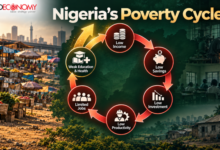


Across Nigeria’s commercial capital, energy is no longer one line in the family budget. It is embedded in transport fares, market prices, rent decisions, business margins, cooking choices, school expenses and the cost of keeping a phone charged or a refrigerator running. A household may pay an electricity bill, buy petrol for a generator, contribute to shared power in a compound, refill cooking gas and still spend heavily commuting through traffic in vehicles whose fares move with fuel prices.
The result is an energy-poverty premium: Lagosians with the least financial room often pay repeatedly for the least dependable service.
By late August 2026, petrol at some Lagos stations had climbed to about ₦1,310 per litre from roughly ₦1,205 earlier in the month. Other outlets reportedly sold above ₦1,400, while depot quotations were near ₦1,200 on August 28. Diesel remained expensive, while fluctuations in liquefied petroleum gas and kerosene continued to shape household cooking decisions.
The price at the pump is only the visible beginning. Generator-dependent businesses add fuel and maintenance costs to the prices of food, transport, rent, services and manufactured goods. Workers then confront those higher prices with wages that may not adjust at the same speed. Inflation enters the household from several doors at once.
For Mr Cyprian Udoh, a civil servant, the immediate consequence is disappearing savings. Energy and related costs consume so much of workers’ incomes, he said, that little remains to build an emergency buffer or invest in the future.
Mrs Ogonna Igwe, a trader, sees the same pressure through the income statement of a small business. Rising transport expenses reduce the margin between what it costs to source goods and what customers can afford to pay. Passing on the entire increase risks losing buyers; absorbing it threatens the survival of the enterprise.
Mr Moses Alabi, who works on Lagos Island, said the arithmetic has become severe enough for some workers to seek accommodation nearer their workplaces. That response may reduce daily fares, but it also reveals how energy costs are beginning to reorder the city’s housing decisions.
When commuting expenses rise sharply, distance from employment is capitalised into rent. Neighbourhoods near commercial centres become more valuable; workers priced out of those locations may accept smaller, less secure or more crowded accommodation. An energy shock therefore becomes a land-use, productivity and welfare shock.
The central policy challenge is not simply how to replace petrol with solar panels, diesel buses with electric vehicles or kerosene with cleaner cooking. It is how to reduce the total cost of useful energy for households and enterprises while improving reliability, mobility and health.
That distinction matters. Lagos does not merely have an energy-spending problem. It has an energy-value problem.
A city that pays twice for electricity
Grid connection is widespread in Lagos, but connection does not guarantee supply of the quality or duration that households and businesses need.
Sustainable Energy for All’s 2024 Beyond Gensets study examined generator use across the state’s 20 Local Government Areas. It estimated that households, micro, small and medium-sized enterprises, and markets operated nearly 4.5 million fossil-fuel generators with roughly 19 gigawatts of combined capacity. Their annual emissions were estimated at about 39 million tonnes of carbon-dioxide equivalent.
The most revealing finding was not simply the number of generators. About 98 per cent of surveyed households were connected to the electricity grid, yet 68 per cent still used generators as backup.
In other words, Lagos has constructed a vast private electricity system beside the public one. It is decentralised but not clean, flexible but inefficient, and accessible only through millions of individual purchases of small machines, fuel, lubricants, spare parts and repairs.
This parallel system imposes several costs.
First is the direct household expense. A small generator may appear affordable at purchase, but its owner acquires a long stream of volatile fuel and maintenance liabilities.
Second is the productivity cost. Enterprises lose time to refuelling, breakdowns and power switching. Sensitive equipment suffers. Cold chains become fragile. Noise disrupts homes and offices.
Third is the health and environmental cost. Exhaust fumes, particulate pollution, carbon monoxide and constant noise are concentrated close to where people live and work.
Fourth is the macroeconomic cost. Imported fuel, generators, parts, solar panels, batteries and inverters place competing demands on foreign exchange. When the naira weakens, the cost of both the dirty incumbent system and the cleaner alternative can rise together.
That is why headline electricity tariffs alone cannot measure the household energy burden. The more meaningful indicator is the total amount a family or business spends to obtain a dependable hour of lighting, cooling, refrigeration, connectivity or productive power.
Transport has become the second energy bill
For many Lagos residents, mobility is the largest daily energy purchase—even when they never buy petrol directly.
Commercial drivers translate fuel, maintenance and financing costs into fares. Traders pay more to move inventory. Delivery companies reprice routes. Employees demand higher wages or change jobs because the journey has become unaffordable. Customers reduce discretionary trips, affecting retail footfall and service businesses.
The pressure is particularly severe in a city where housing and employment are geographically separated and congestion magnifies fuel consumption. A worker does not merely pay for kilometres travelled; part of the fare pays for time spent idling in traffic.
The effect can become self-reinforcing. Higher fares reduce disposable income. Lower consumer spending weakens small-business turnover. Thin margins discourage hiring. Employers face lateness, fatigue and demands for transport support. Some workers relocate, while others withdraw from opportunities that are too expensive to reach.
This is why clean public transport is not a decorative climate initiative. It is household-income infrastructure.
The Lagos Metropolitan Area Transport Authority and its partners have participated in developing plans for compressed natural gas and electric buses, alongside work on a national soot-free bus policy. The direction is important, but the technologies require different judgments.
CNG can reduce some local air pollutants and provide fuel-cost relief, but it remains a fossil fuel and requires refuelling infrastructure, safety standards and dependable gas supply. Electric buses eliminate tailpipe emissions, yet their commercial performance depends on route utilisation, depot charging, electricity reliability, maintenance expertise, battery life and financing costs.
Lagos should therefore evaluate clean-bus programmes by cost per passenger-kilometre, service reliability, fleet availability and fare affordability—not the number of vehicles unveiled. A bus that is technologically impressive but too expensive to operate, repair or ride will not deliver a just transition.
Solar is cheaper eventually—but cash is due today
The strongest candidate for displacing household and small-business generators is distributed solar photovoltaic power combined with battery storage. It is modular, quiet and increasingly familiar to consumers. Once installed, it avoids the daily ritual of buying petrol.
Yet Mr Charles Ogidi, a solar-panel installer, identified the decisive barrier: the upfront cost remains beyond the reach of many residents seeking an alternative.
This produces the Lagos solar paradox. The households most exposed to generator fuel inflation have the greatest incentive to switch, but the same fuel bills erode the savings from which a solar deposit or loan repayment would be made.
The Beyond Gensets study captured the problem clearly. Under its 2024 assumptions, a petrol generator could be 10 to 15 times cheaper to acquire initially than an equivalent solar-and-battery system financed for a household. Over ten years, however, solar was estimated to cost only about 20 per cent more, even when the study assumed petrol at ₦650 per litre.
Petrol is now roughly twice that assumption at many Lagos stations. It is therefore reasonable to infer that solar’s lifetime economics have improved materially. But a fresh model is required to calculate the precise payback period because interest rates, exchange rates, equipment prices, battery replacement, system sizing and maintenance have also changed.
The broader lesson is already clear: cleaner energy may be cheaper to run and still impossible to buy.
This is not a technology failure. It is a financing failure.
Traditional consumer lending is often poorly suited to distributed energy. Interest rates can make repayments unaffordable; tenors may be shorter than the useful life of the equipment; informal workers may lack conventional payslips or credit histories; landlords may not invest when tenants pay the energy bills; renters may not finance equipment attached to property they do not own.
An inclusive market therefore requires several products rather than one universal solar loan. Salaried households may use payroll-backed or on-bill finance. Traders and artisans may need payments aligned with daily or weekly cash flow. Market associations can aggregate demand. Estates and landlords can finance shared systems through service charges. Low-income communities may require guarantees, targeted subsidies or results-based financing.
Green must become cheaper to enter, not merely cheaper to operate.
An import boom is not yet an energy transition
Nigeria’s renewable ambitions are large. The national Energy Transition Plan targets net-zero emissions by 2060. Its power pathway projects renewable technologies rising to 82 per cent of installed generation capacity by 2050, excluding hydrogen, with solar photovoltaic capacity reaching 209 gigawatts.
The country is still starting from a small base.
The International Renewable Energy Agency’s Renewable Capacity Statistics 2026 records 285 megawatts of solar capacity in Nigeria at the end of 2025, including about 108.6 megawatts of off-grid solar photovoltaic capacity.
By contrast, energy research organisation Ember reported that Nigeria imported 1.721 gigawatts of solar panels from China in the 12 months to June 2025. Those shipments were equivalent to roughly six times the solar capacity IRENA recorded as installed at the end of that year.
The comparison should be interpreted carefully. Imported panels may be held in inventory, installed after a reporting cut-off, re-exported, incorporated into projects still under construction or omitted because of fragmented data. Some systems may also fail to reach sustained operation.
Even with those caveats, the gap exposes a critical weakness: counting hardware at the port is not the same as measuring reliable electricity at the socket.
A functioning energy system requires correct design, quality components, skilled installation, safe wiring, battery management, monitoring, repairs, spare parts, warranties and responsible disposal. A panel without these services is a product; a transition requires an ecosystem.
Mrs Joy Ijeneme, Chief Executive Officer of Zamar Solutions, argues that Nigeria must build local capacity to install, maintain and repair renewable-energy technologies. Some imported products, she noted, arrive without adequate technical support when faults emerge.
That deficiency has economic and reputational consequences. A failed inverter or prematurely degraded battery can destroy a household’s confidence in an entire technology category. Poorly sized systems encourage overselling and underperformance. Ambiguous warranties leave consumers carrying risks they do not understand.
Nigeria can import its way into solar adoption, but it cannot import its way into energy resilience.
From electricity law to electricity value
Lagos has begun assembling a more credible institutional architecture.
The Lagos State Electricity Law 2024 provides a framework for a state electricity market, renewable energy, energy efficiency, demand-side management, renewable-energy purchase obligations and certification of installers. It also creates room for incentives around rooftop solar and possible net-metering or net-billing arrangements.
The law is significant because Lagos needs the flexibility to treat electricity as an integrated local economic system rather than a narrow distribution problem. Embedded generation, distributed solar, mini-grids, battery storage, metering, efficient buildings and consumer protection can be coordinated around the characteristics of the city.
But legislation is an enabling architecture, not electricity itself.
Net metering requires meters, rules, settlement systems and a grid capable of safely accepting exported power. Installer certification requires enforcement, accessible training and consumer awareness. Renewable purchase obligations require bankable counterparties and contracts. Demand-side management requires price signals and efficient appliances that households can afford.
Lagos has also moved towards performance-based arrangements for embedded power, under which payment follows metered electricity actually delivered. That structure is commercially healthier than paying for unavailable power, but it still depends on creditworthy buyers, revenue collection, network readiness, transparent regulation and contract enforcement.
The standard of success should be brutally practical: more reliable hours, fewer generator starts and a lower total bill for the same or better energy service.
The Epe mini-grid offers a local proof point
In June, the Rural Electrification Agency commissioned a 505-kilowatt-peak interconnected solar mini-grid serving Odogbawojo, Odoshiwola, Odoayan, Ora and Ibowon in Epe.
The project is designed to supply households, businesses, public institutions and productive users. Its strategic value lies in the shared-service model. Instead of every customer separately purchasing a generator, fuel and maintenance, an interconnected mini-grid can combine solar, storage and the existing network to provide a more coordinated service.
The project should be studied as more than an engineering installation. Lagos needs evidence on customer collections, uptime, productive-use growth, household savings, business formation, appliance adoption, maintenance response and the number of generators retired or used less frequently.
If those results are strong, the model can be adapted for peri-urban communities, markets, industrial clusters, housing estates, health facilities and education corridors. If weaknesses emerge, transparent reporting can improve the next deployment.
Pilot projects become economically valuable when they generate a repeatable commercial template. Otherwise, they remain islands of achievement in a sea of unmet demand.
The transition must be built around people and productive use
Energy policy frequently speaks in megawatts, but households experience service.
For a trader, reliable power means refrigeration, longer selling hours, lower spoilage and the ability to accept digital payments. For a tailor, it means predictable production. For a student, it means light and connectivity. For a clinic, it means vaccines, diagnostics and safer nighttime care. For a household, it means comfort, security and reduced exposure to fumes and noise.
This productive-use perspective changes the financing equation. A system that helps a customer earn or protect income can support repayment more credibly than one sold only as backup convenience. Solar providers and lenders should therefore design packages around economic activity: cooling for food traders, efficient motors for artisans, power for salons, charging for delivery businesses and shared systems for markets.
Energy efficiency must also be treated as a source of supply. Efficient lighting, fans, refrigerators, air conditioners, motors and building designs reduce the size—and therefore the cost—of the generation and battery system required.
For low-income consumers, the cheapest kilowatt-hour is often the one that an inefficient appliance no longer wastes. Yet efficient equipment usually carries a higher purchase price. Appliance finance, minimum performance standards and truthful energy labelling should consequently sit beside solar finance.
Cooking energy requires similarly careful treatment. Households do not always move neatly from one fuel to another. They stack fuels, choosing LPG, kerosene, electricity, charcoal or firewood according to price, availability, meal type and cash on hand. Volatile LPG and kerosene prices can push families towards dirtier options, with disproportionate health and time costs for women and children.
A just transition must therefore recognise the household as a portfolio manager operating under severe constraints—not a passive consumer waiting to adopt the newest technology.
Local capability is the missing industrial policy
At its fifth International Investment and Partnership Conference in Lagos in August, the Renewable Energy and Energy Efficiency Associations Alliance adopted a 12-point action plan covering investment, implementation, energy access and industrial participation.
Professor Abubakar Sambo, Chairman of the alliance’s Board of Trustees, stressed that the energy challenge is too large for any institution or sector to solve alone. That is correct, but coordination must produce a division of responsibility.
Government should set clear rules, enforce standards, fund public goods and de-risk underserved segments. Financiers should provide appropriately structured capital. Developers should deliver performance. Distributors should support safe interconnection and revenue settlement. Training institutions should produce technicians. Manufacturers and assemblers should deepen local value. Consumer groups should monitor fairness and complaints.
The industrial opportunity is substantial. Nigeria’s Energy Transition Plan estimates that the net-zero pathway could support as many as 340,000 jobs by 2030 and 840,000 by 2060. Those figures are potential, not automatic outcomes.
If the country imports finished panels, batteries, inverters, chargers and buses while neglecting installation, software, fabrication, assembly, diagnostics, maintenance and recycling, much of the employment and foreign-exchange value will remain abroad.
Localisation should not mean forcing expensive or unreliable domestic content into projects. It should begin where Nigeria can compete credibly: system design, mounting structures, cables, enclosures, meters, software, project development, installation, servicing, energy audits, battery diagnostics and recovery. Capability can deepen progressively as demand becomes more predictable.
The most valuable local-content policy may be a dependable market. Manufacturers invest when they can see multi-year demand, enforce contracts, access infrastructure and obtain finance—not when localisation is announced without commercial foundations.
Market Implications
Lagos’s energy crisis is creating one of Africa’s largest markets for reliability.
The opportunity extends beyond panel sales. It includes energy-as-a-service, consumer credit, mini-grids, storage, smart meters, efficient appliances, building retrofits, power-management software, equipment testing, insurance, warranties, technical training, recycling and clean mobility.
The strongest growth may come from business models that convert capital expenditure into a predictable service payment. Customers do not fundamentally want to own energy equipment; they want lighting, cooling, mobility and productive uptime. Providers that retain performance responsibility can reduce the consumer’s technical risk and build recurring revenue.
Demand aggregation will be important. A lender assessing one informal trader may see high risk. A market association with payment history, common infrastructure and hundreds of members can create a more financeable pool. Estates, schools, clinics, shopping clusters and transport depots offer similar aggregation possibilities.
Real estate will also be affected. Properties with reliable, efficient energy can command higher occupancy and stronger tenant retention, while poorly powered buildings will carry an operating-cost discount. Energy performance may increasingly influence rents, valuations and corporate location decisions.
There are serious risks. Foreign-exchange exposure can raise equipment and replacement costs. High interest rates can make technically sound projects commercially unviable. Substandard products can poison consumer confidence. Weak collection systems can damage portfolios. Unclear relationships among state regulators, distribution companies, mini-grid operators and customers can delay projects.
The market will reward companies that solve these operational problems, not merely those that import the most hardware.
Investor Relevance
For investors, the Lagos opportunity is compelling because customers already spend heavily on inferior alternatives. Generator fuel and maintenance represent an existing energy wallet that can, in principle, be redirected towards cleaner and more durable assets.
But theoretical savings do not guarantee bankable cash flow.
Due diligence should test the customer segment, actual generator expenditure, collection mechanism, system utilisation, equipment warranty, maintenance response, battery-replacement reserve, foreign-exchange exposure, insurance, theft risk and regulatory interface. Investors should distinguish contracted recurring revenue from optimistic demand projections.
The best businesses will combine technology with credit intelligence and field operations. They will know how much energy customers use, when they earn, how they pay, what equipment fails and how quickly technicians respond. That data can reduce risk more effectively than a glossy pipeline.
Blended finance will remain necessary for low-income segments and public-value projects. The World Bank-backed Nigeria Distributed Access through Renewable Energy Scale-up programme is intended to reach 17.5 million people and mobilise more than $1 billion in private capital. The scale of that ambition indicates both the size of the opportunity and the inability of fully commercial finance to reach every customer unaided.
Development-finance institutions should use guarantees and concessional capital to absorb risks the private market cannot price efficiently, while preserving performance discipline. Subsidies should buy measurable outcomes—connections, reliable service, productive use or affordability—not simply equipment distribution.
Investors should also look downstream. Certified maintenance networks, diagnostics, efficient appliances, battery recovery, software and training may generate less publicity than generation assets, but they can become essential picks-and-shovels businesses in a rapidly expanding ecosystem.
Brand Implications
The next contest in Nigeria’s energy market will be a contest for trust.
Solar companies must evolve from equipment sellers into reliability brands. Their promises should specify usable battery capacity, expected service levels, exclusions, replacement assumptions, warranty processes and repair times. Transparent system sizing will become a competitive advantage in a market damaged by exaggeration.
After-sales service is not a technical department hidden behind the brand; it is the brand. A household that spends several years of savings on an energy system will judge the provider most sharply when something fails.
Banks and fintech companies entering energy finance must avoid treating repossession as their principal risk tool. Fair affordability assessments, clear pricing, payment flexibility and protection against defective equipment will determine whether consumers see green finance as empowerment or another debt trap.
Employers also face a brand and productivity issue. When transport and home-energy costs exhaust workers, engagement, punctuality and retention suffer. Staff buses, hybrid-work arrangements, energy support and location-sensitive workforce planning can become components of the employee value proposition.
Property developers can differentiate buildings through verifiable energy performance, shared solar, efficient cooling and transparent service charges. Retail and consumer brands can strengthen supply chains by helping distributors and small merchants access reliable power.
For Lagos State, institutional reputation will depend on the distance between announcements and daily experience. Citizens will not evaluate the electricity market by legal elegance or commissioned megawatts. They will ask whether power lasts longer, fares are manageable, generators run less often, complaints are resolved and household income goes further.
The true unit of reform is not the megawatt announced. It is the naira removed from the monthly survival bill.
BRANDECONOMY Insight
Lagos should treat the energy transition as a household-income, competitiveness and industrial-development programme with climate benefits—not as a climate project with incidental social benefits.
The immediate priority should be a Lagos Affordable Energy Compact built on six disciplines.
First, measure the real burden. Lagos should publish a household and small-business energy affordability index that combines grid spending, generator fuel, maintenance, cooking energy and transport. Policy cannot optimise a cost it does not measure.
Second, finance service rather than hardware. Concessional wholesale capital, credit guarantees and risk-sharing should support lease-to-own, pay-as-you-go and on-bill models with tenors aligned to equipment life. Repayments should remain below credible savings from displaced fuel wherever possible.
Third, aggregate demand. Markets, estates, communities, schools, clinics and bus depots can lower procurement, installation, credit and maintenance costs when served as portfolios rather than isolated customers.
Fourth, make trust enforceable. Certified installers, tested equipment, truthful sizing, warranty reserves, service-level commitments and a visible complaints process should be conditions for public incentives and participating finance.
Fifth, build the local service economy. Every major programme should include targets for apprenticeships, technicians, women and youth participation, local assembly, diagnostics, repair and battery recovery. Imported technology should become the foundation for Nigerian capability, not a substitute for it.
Sixth, report outcomes that citizens and investors can verify: reliable hours delivered, cost per useful kilowatt-hour, generators displaced, household savings, productive-use growth, complaints resolved, local jobs and emissions avoided.
Lagos already possesses many of the pieces—a new electricity-market framework, distributed solar demand, mini-grid pilots, clean-transport planning, a large financial sector and an immense customer base. What it lacks is an integrated affordability architecture.
The city’s energy transition will not be won by the household that can buy a premium solar system outright. It will be won when a teacher, trader, driver, artisan or junior worker can obtain reliable power and affordable mobility without sacrificing food, rent, education or savings.
That is the real transition: not from one machine to another, but from expensive improvisation to dependable economic infrastructure.