 The World Bank Group has tripled the private capital it mobilises for developing economies, but the harder test is whether record financing can create productive jobs in Africa’s most difficult markets.
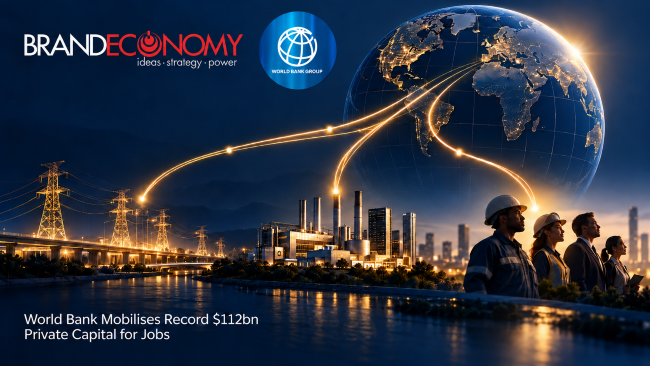
The World Bank Group mobilised a record $112 billion in private capital during its 2026 financial year, more than three times the approximately $35 billion achieved in 2022, as the development institution intensifies efforts to close a widening global employment gap.
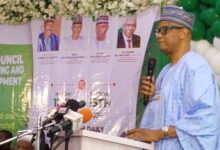
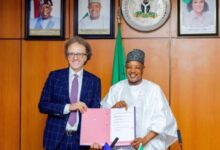

World Bank Group President Ajay Banga disclosed the figures on Friday at the plenary of the 2026 World Bank Group and International Monetary Fund Annual Meetings in Bangkok.
Combined with financing from the institution’s balance sheet, total funding and private-capital mobilisation exceeded $230 billion during the year.
The increase marks an important change in the World Bank’s operating model. Rather than relying mainly on sovereign loans and public resources, the institution is attempting to use its capital, guarantees and development expertise to draw commercial investors into infrastructure and productive sectors across emerging economies.
But the headline number requires careful interpretation. The $112 billion is not a single pool of grants distributed to governments. It represents private investment catalysed through guarantees, syndications, co-financing, equity participation, blended-finance structures and other World Bank Group interventions.
The critical question, therefore, is not simply how much capital was mobilised, but where it went, what risks the public sector absorbed and how many sustainable jobs emerged.
An 800-million-job warning
Banga placed the financing record against a demographic challenge of historic proportions.
Over the next 10 to 15 years, an estimated 1.2 billion young people are expected to enter labour markets in developing economies. On present trends, only about 400 million jobs may be created—leaving a potential shortfall of roughly 800 million employment opportunities.
That deficit carries consequences extending beyond unemployment statistics. Large populations of educated or skilled young people without productive opportunities can deepen poverty, accelerate irregular migration, weaken consumer demand and increase social and political instability.
For Africa, where the population is younger and labour-force growth is particularly rapid, job creation is no longer merely a social-policy aspiration. It is an economic-security imperative.
Banga’s argument is that employment cannot be generated at the required scale by government spending alone. It requires infrastructure, investible businesses, predictable regulation and private enterprises capable of expanding production.
Faster approvals, greater lending capacity
The World Bank Group says it has shortened average project-preparation time from 19 months to nine months and generated more than $100 billion in additional lending capacity over a decade by reforming its balance sheet.
Its co-financing pipeline with other multilateral development banks has reportedly tripled in two years to about 250 projects seeking $138 billion.
During the last financial year, the Group committed $40 billion—nearly one-third of its financing—to physical and human infrastructure. Another 30% of its public-sector financing supported policy and institutional reforms.
The strategy rests on three connected pillars: building electricity, transport, water, digital, health and educational infrastructure; improving the rules governing investment; and using guarantees, equity and local-currency finance to reduce risks that prevent private capital from entering developing markets.
About 55% of the World Bank Group’s financing and mobilised private investment went to infrastructure and energy, agribusiness, healthcare, tourism and value-added manufacturing—sectors capable of raising productivity while creating employment.
Africa gains—but the poorest markets still lag
Private capital mobilised across Africa increased from approximately $9 billion in 2022 to $22 billion in 2026. That is a substantial advance, but it also exposes the continuing difficulty of directing commercial finance into the world’s poorest and most fragile economies.
While mobilisation rose sharply in middle-income countries, it remained at roughly $3 billion in low-income economies.
This imbalance matters. Private capital naturally prefers markets with stable currencies, reliable contracts, predictable regulations and dependable infrastructure. Countries with the greatest development needs frequently present the weakest commercial conditions.
The danger is that development finance could amplify investment in already improving markets while leaving fragile countries dependent on increasingly scarce concessional resources.
The World Bank must therefore demonstrate that its risk-sharing instruments are expanding the investment frontier—not merely subsidising transactions that commercially minded investors would have financed anyway.
Mission 300 puts electricity at the centre
Energy remains central to the World Bank’s African jobs strategy. Through Mission 300, undertaken with the African Development Bank, the institutions aim to connect 300 million Africans to electricity by 2030.
About 59 million people have reportedly gained access so far.
Yet connection numbers alone will not transform economies. Manufacturers, farms, hospitals, technology companies and small businesses require power that is reliable, affordable and sufficiently available for productive use.
An electricity connection that delivers only intermittent or expensive supply may improve household welfare without creating competitive industry. Mission 300’s ultimate success must therefore be measured through business productivity, new enterprises and jobs—not simply installed meters.
What the capital drive means for Nigeria
Nigeria is an obvious potential beneficiary. Its infrastructure deficit, youthful population, large consumer market and opportunities in energy, agriculture, healthcare, logistics, technology and manufacturing match the World Bank’s priority sectors.
However, Nigeria will not attract a meaningful share of the capital merely because its needs are enormous. Investors finance prepared opportunities, not development aspirations.
The country must produce bankable project pipelines supported by credible feasibility studies, transparent procurement, enforceable contracts, realistic revenue models and clear approaches to foreign-exchange and political risk.
Nigerian banks could participate through syndicated project finance, supply-chain funding and local-currency lending supported by multilateral guarantees. Pension funds and insurers could provide longer-tenor domestic capital where instruments meet prudential, risk and return requirements.
For small businesses, the opportunity lies in partial credit guarantees, digital cash-flow underwriting and finance linked to supply contracts. But credit must be accompanied by power, logistics and market access. Lending to businesses trapped in a high-cost environment only converts an infrastructure problem into a repayment problem.
Brand and investor implications
For the World Bank, $112 billion is a powerful institutional proof point—but also a reputational obligation. Stakeholders will expect transparent evidence of additionality, job quality, local participation and environmental and social outcomes.
Governments seeking investment must also understand that national brand credibility is built through predictable conduct. Abrupt regulation, opaque concessions, disputed contracts and weak project governance increase the risk premium attached to a country.
Businesses partnering with development institutions can strengthen trust by reporting measurable outcomes rather than relying on ceremonial announcements: jobs created, local suppliers developed, emissions reduced, women-owned enterprises financed and communities connected.
BRANDECONOMY Insight
The real story is not that the World Bank mobilised $112 billion. It is that traditional development finance is being redesigned because public money alone cannot meet the scale of today’s employment and infrastructure challenges.
But private capital is not development by definition. It becomes developmental when it creates additional investment, raises productivity, spreads opportunity and delivers returns without transferring disproportionate risks to taxpayers.
Nigeria’s response should be to establish a transparent national pipeline of investment-ready projects aligned with power, agribusiness, healthcare, logistics, digital infrastructure and value-added manufacturing.
The country does not suffer from a shortage of opportunities. It suffers from a shortage of opportunities packaged with the governance, data and contractual certainty that serious capital demands.
Until that changes, record global mobilisation may pass around Nigeria without sufficiently passing through its economy.