
NCC Device Checker Targets Counterfeit, Cloned and Stolen Phones in Nigeria

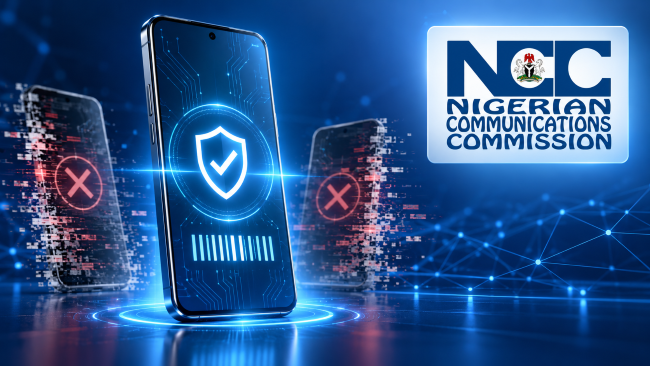 Nigeria’s telecommunications regulator is tightening controls on the country’s sprawling mobile-device market by introducing a verification framework, the NCC Device Checker, to identify counterfeit, cloned, stolen, and unauthorised phones before they compromise consumers or communications networks.
The Nigerian Communications Commission said its Device Checker platform would strengthen compliance with existing Type Approval requirements and allow buyers to confirm a phone’s regulatory status before completing a purchase.



Speaking at a media briefing in Kano, the NCC’s Kano Zonal Controller, Maigana Gidado, urged consumers to make device verification a routine part of buying new and second-hand phones.
The intervention is potentially significant. In Nigeria, a smartphone is no longer merely a communications device. It is increasingly a bank branch, identity credential, retail terminal, workplace, entertainment platform and gateway to government and commercial services. A compromised device can therefore expose its owner to risks extending well beyond poor call quality.
From model approval to individual-device verification
Under the framework, regulatory compliance operates at three connected levels. Businesses importing, distributing or selling telecommunications equipment must hold the appropriate licence; the device model must have received NCC Type Approval; and the individual unit, identified through its International Mobile Equipment Identity number, must be verified.
The IMEI is the unique 15-digit identifier assigned to a mobile device. Consumers can display it by dialling *#06# and use the information to check a handset before payment.
The enhanced verification arrangement took effect on October 7, 2026. Devices already connected to Nigerian networks before commencement were automatically verified, while newly imported SIM-enabled devices must pass the applicable process before sale. Consumers can check a handset by dialling *315#, visiting the NCC Device Checker portal or calling the toll-free number 315.
Gidado said the Commission had streamlined licensing and regularisation, enabling more device dealers in Kano State to enter the formal regulatory system. It has also conducted sensitisation engagements with importers and other market participants in Lagos and elsewhere.
For authorised businesses, an application allows device IMEIs to be scanned and uploaded directly to the verification platform. Manufacturers, importers, distributors, dealers and retailers are expected to confirm compliance before devices reach consumers.
A trust intervention, not simply a technical project
The commercial importance of the programme lies in its capacity to reorganise incentives across the handset value chain.
Legitimate manufacturers and authorised distributors have long competed with grey-market imports, counterfeit products and devices whose origins are difficult to establish. If consistently enforced, device-level verification could reward compliant operators, protect brand equity and raise the cost of selling questionable inventory.
It could also strengthen Nigeria’s growing device-financing market. Banks, fintech companies, telecommunications operators and retail-credit providers require dependable information about the assets they finance. A verified device identity can improve inventory assurance, reduce fraud and support more credible collateral and repayment systems.
For consumers, however, verification must not be oversold. A successful Device Checker result confirms the reported Type Approval and network-verification status; it does not guarantee the condition of a battery, screen or other component. Neither does it provide a complete history of repairs, software modification or seller representations. The NCC advises buyers to continue patronising reputable dealers and inspecting devices carefully. NCC
This distinction matters particularly in Nigeria’s large second-hand-phone market, where affordability pressures have increased demand for used and refurbished devices.
Stolen phones and the economics of mobile theft
One of the framework’s strongest possibilities is the capacity to block a reported stolen device across Nigerian mobile networks once ownership has been verified.
If implemented reliably, this could reduce the resale value of stolen phones and weaken the commercial incentives supporting mobile-device theft. It could also improve recovery processes for consumers, insurers, employers and device-finance companies.
But the system’s credibility will depend on the quality of its dispute and correction mechanisms. A legitimate device incorrectly flagged or blocked can disconnect its owner from banking, employment, emergency communication and digital services.
An unsuccessful verification must therefore be treated as a status requiring clarification—not automatic proof that a handset is counterfeit. Consumers and dealers need prompt escalation channels, transparent decisions and measurable resolution times.
Privacy assurance must be continuously earned
The NCC has responded to public concern by insisting that Device Checker is not a surveillance platform. Gidado said it does not inspect personal messages, photographs, contacts, financial information or other content stored on a handset.
The Commission says the system is limited to device identification and compliance verification and does not give it the capacity to monitor users’ locations or personal communications. NCC
That assurance is important, but institutional trust cannot rest on assurances alone. The Commission should publish clear data-governance rules covering information collected, authorised access, retention periods, cybersecurity controls, third-party participation, audit procedures and remedies for misuse.
Independent technical and privacy audits would strengthen confidence, particularly because an IMEI register becomes part of Nigeria’s critical digital infrastructure.
Market and investor implications
The immediate adjustment costs will fall most heavily on informal dealers and micro-importers. Licensing, stock documentation, IMEI uploads and supplier verification will increase compliance obligations. Some costs may be passed to consumers, while non-compliant sellers could be pushed out of the formal market.
Nevertheless, a more orderly device ecosystem should benefit responsible investors. Original equipment manufacturers gain stronger brand protection; licensed distributors receive a fairer competitive environment; operators face fewer unidentified devices; and financiers obtain greater asset visibility.
Successful implementation could also improve the quality of devices connected to Nigerian networks, reduce harmful interference and support more dependable digital services. The framework extends beyond phones to other SIM-enabled products, including tablets, broadband equipment and Internet-of-Things devices.
BRANDECONOMY Insight
The NCC Device Checker could become one of Nigeria’s most consequential consumer-trust interventions—or another technically sound platform weakened by uneven execution.
Its real test is not how many IMEIs enter a database. It is whether counterfeit devices become harder to sell, stolen phones become less valuable, legitimate dealers gain market advantage and consumers can resolve wrongful flags without prolonged disruption.
The NCC must combine enforcement with education, privacy safeguards and accessible redress. Dealers should be accountable, but consumers should not bear the consequences of opaque classifications or defective compliance processes.
Device verification is ultimately a brand-trust project. If the platform proves accurate, fair and secure, it will strengthen confidence across Nigeria’s digital economy. If errors are poorly handled or privacy concerns remain unanswered, the technology designed to protect trust could become a new source of suspicion.