 Lagos State is preparing Victoria Island for a significant mobility test as rehabilitation begins on a strategic section of Ozumba Mbadiwe Road on Monday, October 19.
The 35-day project will cover the corridor between the Adetokunbo Ademola–Civic Centre junction and the Samuel Manuwa–BJ axis, according to the Lagos State Commissioner for Transportation, Oluwaseun Osiyemi.

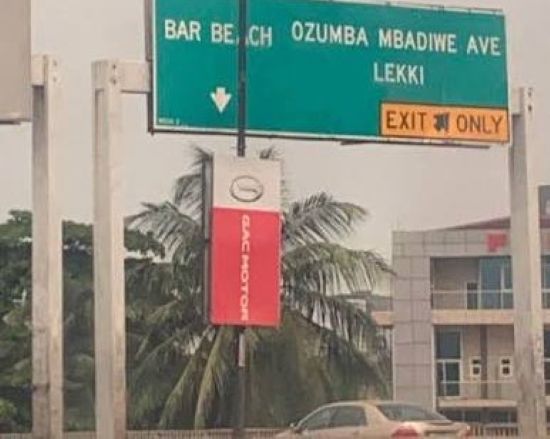
Although the intervention is intended to improve road quality and mobility, its immediate consequence will be tighter traffic conditions across one of Lagos’ most commercially valuable districts. Ozumba Mbadiwe connects major offices, hotels, retail destinations, residential developments and event centres with Ikoyi, Lekki, Falomo and the wider Victoria Island business district.
For companies operating along the corridor, therefore, the project is not merely a road-maintenance exercise. It will be a 35-day test of logistics planning, workforce mobility, customer access and public-sector execution.
Contraflow to preserve movement
To keep vehicles moving while construction proceeds, the state government will establish a contraflow arrangement on the Lagos-bound carriageway between Samuel Manuwa and the Adetokunbo Ademola–Civic Centre junction.
Traffic will share the available side of the road while work continues on the adjoining lane. Such an arrangement can preserve access, but it also creates merging pressure and increases the risk of congestion where motorists enter or exit the narrowed corridor.
The effectiveness of the plan will depend on visible road markings, advance warning signs, disciplined lane management and rapid intervention whenever vehicles break down or minor collisions occur.
Officers of the Lagos State Traffic Management Authority will be deployed to regulate movement and minimise disruption.
Alternative routes for motorists
Motorists travelling from Bonny Camp or Falomo towards Civic Centre and Lekki are advised to enter Adeyemo Alakija Street beside Muri Okunola Park, connect through Adeola Hopewell and Akinbo Savage, and continue onto Bishop Aboyade Cole. They can rejoin the expressway around School Corner, near Black Diamond, towards Sandfield.
Traffic moving from Falomo towards Akin Adesola may proceed through the IMB axis, connect with the Coastal Road entrance and travel through Adetokunbo Ademola, Eko Hotel Roundabout, Ajose Adeogun and Ligali before reaching the Black Diamond School Corner.
Motorists approaching from Bonny Camp may also use Ahmadu Bello Way to reach Eko Hotel Roundabout and continue through the IMB–Coastal Road axis. From there, they can connect with Bishop Aboyade Cole, Ajose Adeogun and Ligali.
Vehicles travelling from Eko Hotel through Adetokunbo Ademola towards Civic Centre will be redirected onto Bishop Aboyade Cole and then through School Corner towards Sandfield.
Drivers exiting the 1004 Estate gate and neighbouring premises will be required to turn left or make a U-turn in front of the gate before proceeding through Bishop Aboyade Cole.
For traffic moving from Eko Hotel towards Falomo and Ikoyi, the recommended route is through Sanusi Fafunwa, Akin Adesola and the ramp bridge.
Commercial costs may move beyond the work zone
The alternative roads are already busy commercial streets. Transferring additional vehicles onto Adeola Hopewell, Bishop Aboyade Cole, Ajose Adeogun and Ligali could spread congestion beyond the construction corridor, particularly during morning and evening peaks.
Delayed staff arrivals, longer delivery cycles and higher fuel consumption could raise operating costs for offices, retailers, hotels, restaurants, ride-hailing operators and logistics companies. Businesses with time-sensitive deliveries may need to reschedule movements outside peak periods, while employers should consider staggered working hours or temporary hybrid arrangements.
Event centres and hospitality brands should communicate access instructions to guests before scheduled functions. A customer trapped in traffic may associate the frustration not only with the road project but also with the destination brand that failed to provide useful guidance.
In the medium term, however, properly executed rehabilitation should reduce vehicle damage, travel uncertainty and the hidden productivity losses created by deteriorating urban roads. The economic return will depend on construction quality, drainage performance and whether the contractor completes the project within the announced timeframe.
Lagos’ infrastructure brand on trial
Victoria Island is one of Nigeria’s most visible investment districts. Road conditions and traffic management influence how investors, multinational companies and visitors judge Lagos as a business location.
The state must therefore treat public communication as part of the infrastructure itself. Route maps, construction stages, changing traffic arrangements and progress updates should be published consistently. The unexplained reference to VGC in the circulated advisory illustrates how even a small geographical inconsistency can confuse motorists and weaken confidence in an otherwise necessary intervention.
BRANDECONOMY Insight
The Ozumba Mbadiwe Road rehabilitation creates economic value only when the eventual gains outweigh the disruption imposed during construction. For Lagos, the decisive issue will not be whether Ozumba Mbadiwe needed attention, but whether the government can manage the work without allowing one repair corridor to paralyse an entire commercial district.
The strongest performance indicators should be public and measurable: adherence to the 35-day schedule, daily travel-time changes, incident-response speed, contractor progress and the durability of the completed road.
Businesses should plan for disruption, but government must earn cooperation through precision, transparency and disciplined delivery. In a city where time lost in traffic translates directly into fuel expenses, missed transactions and lower productivity, traffic management is economic management.