 Nigeria’s argument over the Lagos-Calabar Coastal Highway has entered a more consequential phase. The debate is no longer simply about whether the country needs an ambitious transport corridor. It is about whether the road now being delivered remains the project that Nigerians were originally asked to support.
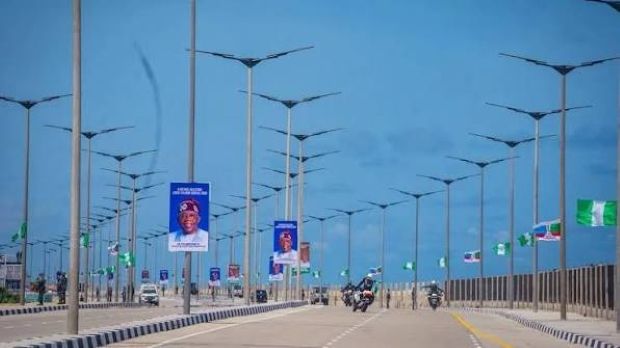
When the Federal Government unveiled the highway, the proposition was both infrastructural and transformational: a roughly 700-kilometre concrete corridor running from Lagos to Calabar through Ogun, Ondo, Edo, Delta, Bayelsa, Rivers, Akwa Ibom and Cross River.




Its “coastal” identity was not decorative branding. It was the project’s development logic.
The Lagos–Calabar corridor was promoted as a means of connecting ports, beaches, fishing communities, industrial zones, tourism assets and underdeveloped coastal settlements. It was expected to open new markets, unlock land values, reduce logistics costs and stimulate economic activity across a region that contributes heavily to Nigeria’s public revenue but remains burdened by deficient infrastructure.
That promise is now under scrutiny following the announcement that portions of the highway would be redirected through the existing East–West Road because of difficult terrain, flooding risk and the enormous engineering demands of constructing a new alignment through parts of the Niger Delta.
Minister of Works David Umahi subsequently insisted that the highway had not been abandoned. Construction, he said, was advancing in several states, while surveys and designs continued elsewhere. The government would also reconstruct a substantial stretch of the East–West Road.
That clarification may settle the question of cancellation. It does not resolve the deeper issue: how much of the original coastal proposition survives the redesign?
An Engineering Decision With Governance Consequences
There may be a sound engineering case for modifying the route.
The Niger Delta contains swamps, wetlands, floodplains, creeks, pipelines and difficult soil formations. Building an entirely new multilane concrete highway across that terrain could require extensive piling, dredging, sand filling, bridges and environmental mitigation. Costs could rise sharply, construction could slow, and climate risks could make some stretches economically irrational.
Using or upgrading an existing corridor may reduce fresh land acquisition, limit disruption and accelerate connectivity. Raising vulnerable portions of the East–West Road could also address chronic flooding while improving a route that has long frustrated commuters and businesses.
Responsible engineering is not a refusal to change a design. It is the discipline to change it when evidence demands—and to document why.
The problem is that a technically defensible realignment can still create a procurement and public-trust crisis if the evidence behind it is not disclosed. Nigerians were presented with an enormous national project whose route, benefits and political symbolism appeared settled. If fundamental portions are now being moved inland, the public deserves more than verbal reassurance.
It needs the comparative engineering studies.
What did the original geotechnical investigation reveal? When were the difficult conditions discovered? What alternatives were evaluated? How much would the abandoned or modified alignment have cost? How much will the new configuration save—or add? Which coastal communities, ports and proposed economic nodes will no longer be served directly?
These questions are neither anti-development nor anti-government. They are the minimum questions that should accompany any material revision to a flagship public investment.
What Early Critics Feared
From the project’s beginning, Nigerians questioned whether construction was moving faster than disclosure.
Affected businesses and property owners protested demolitions and disputed the boundaries of the right of way. Coastal communities asked whether the proposed road would serve them or merely cross their ancestral land. Opposition figures demanded the contract, financing documents, route maps, bills of quantities and Bureau of Public Procurement approvals.
Environmental groups and residents raised concerns about drainage, coastal ecology and the risk that embankments might alter natural water flows. Government officials rejected allegations that the highway was worsening flooding, maintaining that its culverts and drainage infrastructure were designed to improve the evacuation of stormwater.
Communities in Ondo and other states also questioned perceived diversions from the coastal alignment. Property investors and diaspora-backed developers complained that uncertainty around acquisition, compensation and changing road boundaries was damaging confidence.
The government’s answer was that the project had followed due process and that its Engineering, Procurement, Construction and Financing structure transferred substantial design, completion and financing risks to the contractor. Hitech Construction, officials argued, possessed the relevant expertise and capacity.
The latest realignment does not prove that every criticism was correct. It does, however, vindicate one central concern: the physical and economic configuration of the corridor was less settled than the confidence surrounding its launch suggested.
That is a serious finding even without an allegation of wrongdoing.
Selective Procurement Meets a Moving Scope
The highway was awarded without the conventional open competitive tender that many Nigerians expected for a project of such national importance. The government defended the procurement approach on the grounds of Hitech’s technical capability, financing role and experience with concrete roads.
That defence now faces a harder test.
A contractor’s ability to design and finance a project does not eliminate the government’s duty to establish value for money. Indeed, the more discretion used in choosing a contractor, the greater the need for transparency over scope, pricing, risk allocation and performance.
If the original contract covered a specified coastal alignment, a significant reroute raises several questions. Is the change already permitted by the contract? Does it require revised bills of quantities, fresh approvals or a supplemental agreement? Which costs remain fixed, and which are exposed to variation? Has work been paid for on portions that will no longer be constructed as originally planned?
The issue is not whether infrastructure designs may legally evolve. Major projects routinely change as field data improves. The issue is whether the scale of this modification remains within the original procurement authority or represents a materially different undertaking.
The government’s EPC+F argument also deserves interrogation. Engineering, procurement and construction combined with financing can improve delivery by placing several risks with one contractor. But it can also reduce transparency when design, price, financing and execution are negotiated within a single commercial relationship.
“Fixed price” is only meaningful when the public knows what the fixed price purchases.
The Financing Question
The first 47.47-kilometre Lagos section secured a reported $747 million syndicated facility. A subsequent financing package of approximately $1.126 billion was announced for the 55.7-kilometre second section from Eleko towards Ode-Omi.
These financings demonstrate lender appetite and offer external validation of the bankability of specific sections. They do not settle the entire national project’s affordability or procurement questions.
Banks assess whether their loans can be repaid and whether financed sections meet agreed conditions. Citizens must ask a broader question: whether the entire corridor represents the best use of public resources and whether its benefits are distributed as promised.
The realignment therefore matters to lenders and investors. Changes to route, engineering scope and construction schedules may affect costs, guarantees, completion risks, insurance and projected economic returns. They may also influence future tolling assumptions and the commercial viability of adjoining developments.
International financing can strengthen discipline. It cannot substitute for domestic accountability.
Coastal Communities and the Economics of Being Bypassed
A highway is not merely a strip of concrete. Its economic value depends on what it connects.
If sections move away from the coastline, the government must explain how the affected communities will retain access to the growth promised in the original plan. Will feeder roads connect fishing settlements, tourism locations, proposed ports and industrial clusters to the revised corridor? Will the rerouted highway still catalyse coastal real estate and blue-economy investment? Or will some communities bear the disruption without receiving the connectivity dividend?
Reconstructing the East–West Road has undeniable economic value. It is a critical artery for the oil-producing region and has suffered years of deterioration, flooding and fragmented intervention. But rehabilitating that road and building a new coastal corridor are not necessarily economic substitutes.
One improves an established inland route. The other was presented as a new development frontier.
If the Lagos–Calabar highway increasingly absorbs the East–West Road, the Federal Government must publish a revised corridor-development strategy showing how the original maritime, tourism and coastal-industrial objectives will still be achieved.
Otherwise, Nigeria may eventually complete an important road but discover that it delivered a different economic project from the one originally advertised.
Compensation, Property Rights and Social Licence
The Federal Government has reported paying substantial compensation to affected property owners, including about ₦18 billion associated with the Lagos section. Yet disputes have persisted over eligibility, valuations, right-of-way boundaries and properties affected by changes in alignment.
A reroute creates new winners and losers. Owners who faced demolition may ask whether the original acquisition was unavoidable. Communities newly placed on the route will seek consultation and compensation. Those bypassed may have made investment decisions based on an expected economic corridor that no longer reaches them as directly.
This is why compensation is more than a budgetary obligation. It is part of the project’s social licence.
For investors—particularly Nigerians in the diaspora—the handling of land rights sends a signal about the dependability of the country’s investment environment. Capital is reluctant to enter markets where government-backed alignments can change without accessible maps, clear valuation rules and credible dispute-resolution mechanisms.
Infrastructure can raise property values and attract private investment. Uncertainty can erase those gains before the road arrives.
The Environmental Record Must Follow the New Road
Realignment also has environmental consequences.
Nigeria’s environmental-assessment framework requires significant projects to consider likely effects, alternative options and mitigation measures before implementation. It also provides for public comments, written decisions and access to relevant records.
If the route has materially changed, the environmental analysis should change with it. A study undertaken for one alignment cannot automatically answer every question created by another.
The government should clarify whether the existing environmental approval covers the revised route or whether an addendum, supplementary study or fresh assessment is required. Hydrology, wetland disruption, flood patterns, community displacement, biodiversity and cumulative impacts should be examined against the new design.
This is particularly important because the government’s justification invokes the same climate and flooding risks that citizens previously raised.
Ministerial assurances and opposition allegations are not substitutes for hydrological evidence.
The Brand Cost of Contradictory Communication
For the Tinubu administration, the Lagos–Calabar coastal highway is more than an infrastructure project. It is a signature statement about scale, confidence and the government’s willingness to execute projects that previous administrations could not deliver.
That makes its reputational exposure unusually high.
The public first heard that sections would be redirected through the East–West Road. It then heard that the project remained intact and was not being replaced. Both propositions may be compatible, but the government has not communicated the distinction with sufficient precision.
A premium national project requires premium disclosure.
When the Lagos-Calabar route revisions are explained through fragmented speeches rather than a published master plan, Nigerians fill the information vacuum with suspicion. Every inconsistency becomes evidence of improvisation; every withheld document becomes material for political accusation.
The government cannot build trust with concrete alone. It must build an intelligible public record.
Investor Relevance: Execution Is the Real Asset
Investors will not judge the highway solely by kilometres completed. They will assess whether Nigeria can originate, finance, redesign and deliver megaprojects without sacrificing transparency or fiscal control.
A well-explained realignment could improve confidence by demonstrating responsiveness to engineering data and climate risk. An opaque one would reinforce concerns about project preparation, political discretion, compensation exposure and contract governance.
The strongest signal would be the publication of an updated business case that separates three propositions: the original coastal highway, the integration of sections with the East–West Road, and the proposed reconstruction of the wider East–West corridor.
Investors need to know where one project ends and another begins.
BRANDECONOMY Insight
The Lagos–Calabar Coastal Highway should not be trapped between two lazy conclusions: that every redesign proves corruption, or that every engineering explanation must be accepted without documentation.
The latest change appears to confirm that Nigerians were justified in asking whether the alignment, costs and technical assumptions were sufficiently settled before construction and property acquisition accelerated. It does not establish that the project is fraudulent or economically unsound.
That verdict requires evidence.
The Federal Government should publish the original and revised Lagos-Calabar route maps; comparative engineering and geotechnical studies; updated bills of quantities; contract-variation approvals; Bureau of Public Procurement records; financing terms and sovereign commitments; environmental approvals and amendments; compensation registers; and a state-by-state delivery timetable.
It should also identify the coastal communities and economic assets that will be bypassed, together with the feeder roads or complementary infrastructure proposed to preserve their development prospects.
Nigeria may ultimately conclude that the realignment is cheaper, safer and more resilient. If so, transparent evidence will strengthen the government’s case.
But a project sold as a coastal economic revolution cannot become progressively inland through announcement and clarification. Its name carries a promise—to communities, investors and taxpayers.
Transparent redesign is responsible governance. Opaque redesign is an invitation to suspicion.