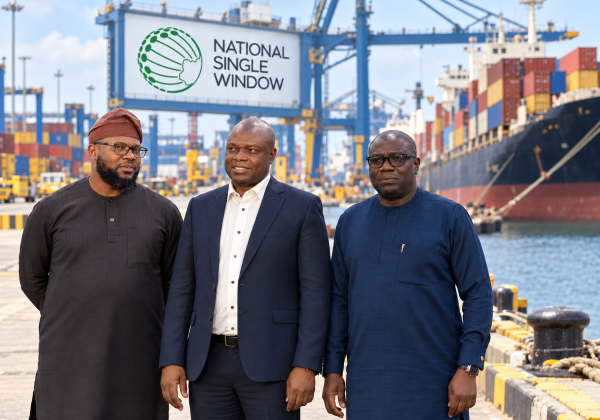
 Nigeria’s National Single Window has recorded a 20 to 30 per cent year-on-year increase in import permits and licences, offering an early indication that the country’s attempt to digitise trade documentation may be pulling more transactions into the formal regulatory system.
Tola Fakolade, Project Director of the National Single Window, disclosed at a news conference in Abuja on Tuesday that the platform had processed more than 156,000 import permits and licences since its March 27, 2026 inauguration.




More than 12,000 importers and agents have registered on the platform, while over 8,000 users have received training. Fakolade also reported system availability of 99.98 per cent—a critical measure for infrastructure intended to support time-sensitive national trade.
He attributed the increase in permits to stronger regulatory compliance. Feedback from the Standards Organisation of Nigeria and the National Agency for Food and Drug Administration and Control indicated that licences and permits issued were between 20 and 30 per cent higher than during the comparable period of 2025.
The increase should nevertheless be interpreted carefully. Higher permit volumes may signal improved compliance and greater visibility of previously fragmented applications. It does not automatically prove that Nigeria imported 30 per cent more goods or that cargo is already moving through its ports 30 per cent faster.
That distinction matters because the National Single Window will ultimately be judged not by the number of forms processed, but by whether it reduces the time, cost and uncertainty associated with moving goods across Nigeria’s borders.
From Multiple Desks to One Digital Window
The first phase centralises applications for import permits, licences and certificates issued by regulatory agencies including SON and NAFDAC. It also covers cargo-manifest submissions and payments attached to regulatory approvals.
Under the previous fragmented structure, traders frequently submitted similar information to different agencies, followed documents across multiple offices and struggled to identify the institution responsible for delays.
Peter Ekunkoya, Director of Operations, said agencies already integrated into the platform no longer maintained parallel paper-based procedures. The central system, he added, enables traders to track applications and understand where documentation is being delayed.
Eliminating parallel paper processes is essential. A digital portal cannot create genuine efficiency if agencies still require physical files, informal follow-ups or duplicate submissions behind the electronic interface. Digitising bureaucracy without redesigning the workflow merely converts queues into online bottlenecks.
Fakolade acknowledged that the rollout encountered initial knowledge gaps, data-migration problems and integration challenges. He said the technical issues had been resolved, while expanded training and stakeholder engagement were continuing.
Export Phase Could Deliver the Larger Prize
The second phase, scheduled to begin with an initial group of agencies before the end of 2026, will extend the platform to export permits, licences and certificates.
It is also expected to incorporate regulatory forms required by the Central Bank of Nigeria for export transactions. User-acceptance testing will precede the rollout, followed by training for agencies and traders.
For an economy seeking to earn more foreign exchange from non-oil exports, this phase may prove more strategically important than the import module. Nigerian exporters routinely contend with certification delays, inconsistent documentation and coordination failures that increase the cost of getting agricultural and manufactured products to international markets.
A functioning export window could improve traceability, shorten documentation cycles and help smaller businesses formalise their participation in regional and global trade. It could also strengthen Nigeria’s ability to exploit the African Continental Free Trade Area.
The third phase will integrate customs declarations. Fakolade said the complete impact on cargo-clearance time would become clearer only after all three stages were implemented.
That is an important qualification. The current results demonstrate platform adoption and permit-processing activity, not yet a fully integrated transformation of cargo clearance.
Market, Brand and Investor Implications
For manufacturers, importers and retailers, faster approval of machinery, raw materials and regulated goods could reduce production delays and inventory costs. For exporters, predictable certification can improve delivery reliability and strengthen relationships with overseas buyers.
Banks, insurers, logistics companies and trade-finance providers could benefit from cleaner data, stronger transaction trails and improved visibility across the trade cycle. Investors in port terminals, warehouses and industrial supply chains would also gain from a more predictable operating environment.
For Nigeria’s national brand, the project addresses a longstanding credibility problem. The country has often advertised its market size while frustrating investors with fragmented institutions, repetitive documentation and opaque processing.
A reliable Single Window could reposition Nigeria as a more organised gateway to West and Central African commerce. A poorly integrated platform, however, would reinforce perceptions that government digitalisation projects change interfaces without changing outcomes.
BRANDECONOMY Insight
The 20 to 30 per cent rise in permits is encouraging, but it is an input metric—not the final measure of success.
The National Single Window must now publish a public performance dashboard showing average permit-processing time, cargo dwell time, clearance duration, transaction costs, rejected applications, system outages and agency-specific delays.
Its strongest contribution will not be moving documents online. It will be making Nigeria’s trade bureaucracy measurable, traceable and accountable.
When all three phases are operational, the decisive questions will be simple: Are goods leaving the ports faster? Are exporters spending less? Have discretionary delays fallen? Can businesses predict when cargo will clear?
If the answers are demonstrably positive, the National Single Window could become one of Nigeria’s most consequential trade reforms. If they cannot be measured, impressive permit volumes may conceal the same old friction behind a more modern screen.