NIA Expands Technical Architecture with Agriculture, Reinsurance Committees to Deepen Market Capacity

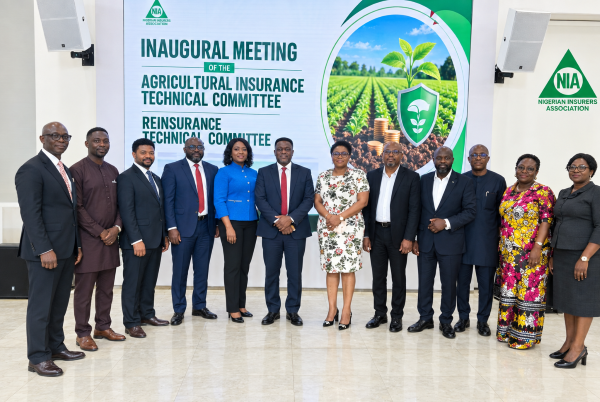 The Nigerian Insurers Association has inaugurated technical committees for agricultural insurance and reinsurance, creating platforms to improve underwriting, claims practice and collaboration in two segments central to industry growth.
The inauguration raises the association’s number of technical committees to 16, the NIA said in a statement on Thursday.




Mrs Bola Odukale, NIA Director-General, described the committees as important vehicles for advancing the market. They followed calls from Governing Council members and industry stakeholders for structures addressing emerging challenges in specialist business lines.
The Agricultural Insurance Technical Committee will promote good practice and strengthen underwriting and claims capabilities. Its reinsurance counterpart will address reinsurance practice while developing comparable technical capacity.
The initiative is timely. Nigeria’s insurers must convert stronger capital positions into better risk knowledge, broader coverage and more reliable claims outcomes. Agriculture and reinsurance sit near the centre of that test.
Agriculture needs more than policies
Agriculture supports livelihoods and commercial value chains, yet farmers and agribusinesses remain exposed to flood, drought, disease, insecurity, price shocks and supply disruptions.
Insurance can protect income, preserve productive assets and make agricultural businesses more attractive to lenders.
Agricultural insurance is technically demanding. Loss data can be incomplete, records fragmented and risks concentrated across locations or crop cycles. Underpricing produces losses; excessive pricing excludes farmers.
Poorly explained exclusions and slow claims also destroy trust. A disappointed farmer can become an ambassador against insurance.
The committee should look beyond policy numbers. Priorities should include common data standards, clearer wording, stronger loss assessment, faster claims and products suited to smallholders, commercial farmers, processors and aggregators.
It should collaborate with lenders, public agencies, farmer organisations, technology providers and weather-data institutions. Insurance works better when supported by reliable production data, early warnings and affordable credit.
Reinsurance as the industry’s shock absorber
The Reinsurance Technical Committee addresses a connected problem: accepting larger risks without endangering insurers’ balance sheets.
Reinsurance transfers portions of insurers’ exposure, stabilises earnings and expands capacity. It becomes critical across agriculture, energy, aviation, infrastructure and marine risks capable of producing severe or correlated losses.
The committee can improve treaty structures, risk selection, catastrophe analysis, claims cooperation and reinsurer negotiations. Stronger local expertise could help Nigerian insurers retain sensible portions of domestic risks without exceeding their capital or competence.
Retention must not become a slogan. Keeping more premium locally creates value only when pricing, reserving, modelling and claims capacity can support the exposure.
New leadership, substantial responsibility
Members were briefed on their responsibilities before leadership elections.
Leonard Okoroafor of AIICO Insurance Plc emerged Chairman of the Agricultural Insurance Technical Committee, with Baron Omiji of Guinea Insurance Plc as Deputy Chairman. Adebayo Olukolajo of Leadway Assurance was elected Secretary, while Ndidi Olagunju of Industrial and General Insurance became Assistant Secretary.
Helen Osadunkwu of Cornerstone Insurance Plc was elected Chairman of the Reinsurance Technical Committee. Ochuko Efenure of Zenith Insurance Plc became Deputy Chairman, Uwem Offong of NSIA Insurance was elected Secretary, and Otoikhila Godskingdom of Emple Insurance emerged Assistant Secretary.
The broad company representation can support market-wide learning, provided industry development prevails over individual corporate interests.
Market implications
Better agricultural underwriting could widen cover across crop, livestock, processing, storage and distribution chains, while shifting some disaster risk into professionally priced insurance pools.
Agriculture offers premium growth, but sustainable expansion requires data, disciplined pricing and efficient claims—not subsidised demand alone.
Stronger reinsurance can expand capacity for major projects and catastrophic losses, improve international negotiations and reduce avoidable foreign-exchange leakage, provided retention remains risk-based.
Investor relevance
Investors should treat the committees as useful institutional infrastructure, not immediate evidence of profitability.
Results will appear in loss ratios, claims turnaround, premium quality, reserve adequacy, reinsurance costs and earnings volatility. Insurers translating shared knowledge into superior underwriting could gain profitable market share; those chasing volume may accumulate claims faster than revenue.
Brand implications
For the NIA, the initiative reinforces its position as a coordinating centre for professional standards. Published guidance, usable data and better customer outcomes must validate that promise.
Agricultural insurance presents a trust test: farmers remember whether claims are paid after a failed season. Reinsurance becomes visible when insurers remain solvent and honour obligations after major losses.
BRANDECONOMY Insight
Creating two more committees is administratively useful; producing measurable change is the real assignment.
The NIA should impose a one-year scorecard. The agricultural team should publish underwriting and claims principles, define minimum data requirements and pilot one complete commodity value chain. The reinsurance team should issue guidance on treaty quality, catastrophe exposure, retention and claims coordination.
Both committees should report quarterly and build a shared intelligence base connecting insurers with NAICOM, reinsurers, banks, development-finance institutions, farmer groups and public agencies.
Nigeria needs agricultural insurance that helps farmers recover, encourages lending and keeps food businesses operating after shocks—not merely higher premium statistics.
Reinsurance must similarly be embedded in capital management and product design, not treated as a routine renewal exercise.
If the new NIA committees convert collaboration into better pricing, faster claims and stronger capacity, their inauguration will matter. Otherwise, they will merely enlarge an impressive committee list.