Trump Wins Interim Relief as Appeals Court Pauses Ruling Against Global Tariffs

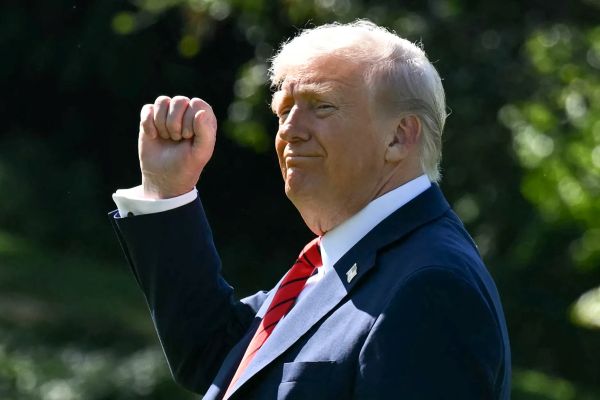
President Donald Trump has won a temporary reprieve in the escalating legal contest over his tariff agenda, after a United States federal appeals court paused a lower court ruling that found his 10 per cent global import surcharge unlawful. The decision allows the duties to remain in force for now while the administration pursues its appeal, preserving a central plank of Trump’s trade strategy even as serious questions persist over presidential authority, importer costs and the stability of global commerce.
The legal war over Donald Trump’s tariff policy has entered a more consequential phase, with a United States appeals court temporarily suspending a ruling that had declared the president’s latest 10 per cent global import tariff unlawful.



The interim stay, issued by the U.S. Court of Appeals for the Federal Circuit, means the Trump administration can continue collecting the duties while the appellate court considers whether a lower court was right to conclude that the president exceeded his legal authority. It is not a final judgment on the merits of the case. But politically, commercially and diplomatically, it gives the White House room to keep its trade agenda alive.
For importers, the immediate implication is stark: the 10 per cent surcharge remains payable for now, including by the plaintiffs who had secured relief from the U.S. Court of International Trade only days earlier. For businesses already navigating higher landed costs, unstable supply chains and unsettled pricing models, the appeals court’s intervention extends the uncertainty rather than resolving it.
The Tariff at the Centre of the Storm
The controversial levy was introduced after the U.S. Supreme Court invalidated much of Trump’s earlier tariff regime under emergency-powers legislation. In response, the administration pivoted to Section 122 of the Trade Act of 1974, a rarely used provision allowing the president to impose temporary import surcharges, subject to specific statutory conditions, for a period of up to 150 days unless Congress extends them.
President Trump’s Proclamation No. 11012, issued on February 20, 2026, imposed an additional 10 per cent ad valorem tariff on most imports into the United States, effective from February 24, 2026. The measure is currently set to lapse on July 24, 2026, unless terminated earlier or extended by congressional action.
The administration has argued that the tariff is necessary to address what it describes as a damaging trade imbalance and to support a broader strategy of industrial revival, import discipline and leverage in trade negotiations. In seeking the stay, government lawyers warned that allowing the lower court’s ruling to stand during appeal would undermine the president’s trade agenda and threaten the government’s ability to retain tariffs already collected.
Why the Lower Court Rejected Trump’s Argument
The legal difficulty for the White House is that Section 122 does not give the president unlimited tariff authority. It authorises temporary trade restrictions under defined circumstances tied to serious balance-of-payments problems. The Court of International Trade held that the administration’s reliance on the United States’ broad trade deficit did not satisfy the statute’s narrower legal standard.
In its divided ruling, the trade court concluded that the tariff proclamation was invalid as applied to the plaintiffs and that the duties imposed on them were unauthorised by law. The judgment granted relief to specific challengers, including importers and the State of Washington, rather than issuing a universal nationwide injunction against the tariff programme.
That distinction matters. Even before the appeals court’s stay, the lower court’s ruling did not automatically end tariff collection for every importer in America. It instead opened a potentially dangerous legal front for the administration: if the ruling survived appeal, more businesses could seek similar relief, and the federal government could face broader refund exposure.
An Interim Win, Not a Clean Victory
The appeals court’s stay is therefore significant, but it should not be misread as a vindication of Trump’s legal position. It is a procedural pause designed to preserve the status quo while the appeal is considered. The core constitutional and statutory questions remain unresolved.
Those questions are substantial:
- Can a president use Section 122 to impose a broad global tariff based on trade-deficit concerns?
- Did Congress intend the provision to address a narrower balance-of-payments emergency rather than general import competition?
- How far can executive trade authority stretch before it trespasses into powers constitutionally reserved for Congress?
These are no longer abstract academic debates. They now sit at the heart of American trade policy, corporate planning and the future of the White House’s tariff-first economic strategy.
The Business Cost of Legal Uncertainty
For global businesses, tariff uncertainty can be almost as damaging as tariffs themselves.
Importers need to price goods, negotiate supply contracts, manage inventories and protect margins. Manufacturers depend on intermediate inputs sourced across borders. Retailers plan seasons and consumer promotions months ahead. When tariff policy becomes legally unstable, businesses hesitate, hedge, reprice or postpone investment.
The current appeals process prolongs that uncertainty. Firms must continue paying the 10 per cent surcharge while also tracking a legal battle that could, depending on the final outcome, create refund claims, pricing revisions and new compliance strategies. Trade lawyers have already indicated that affected importers will closely watch the litigation for possible avenues to recover duties if the administration ultimately loses.
For smaller import-dependent businesses, the pressure is especially severe. Unlike multinationals with diversified sourcing and stronger balance sheets, small firms often have limited ability to absorb sudden cost increases or litigate aggressively against government policy. That explains why the initial legal challenge attracted importers who argued that the tariff regime was causing direct commercial harm.
The Geopolitical Message
Beyond the courtroom, the tariff dispute sends a powerful geopolitical signal.
Trump’s trade doctrine is anchored in the belief that tariffs are not merely taxes on imports but instruments of national strategy—tools to reshape trade flows, strengthen domestic production and force negotiating concessions from partners. The administration’s persistence after the Supreme Court struck down its earlier tariff architecture shows a willingness to search aggressively for alternative legal routes rather than retreat from the policy itself.
That approach has consequences for allies, rivals and emerging markets alike. Countries exporting heavily to the United States face fresh uncertainty. Supply chains may be rerouted. Trade talks become more transactional. Businesses with exposure to the U.S. market must now account not only for tariff rates, but also for litigation risk and rapid policy shifts.
The broader international concern is that the United States—long the anchor of a rules-based trade order—is increasingly using unilateral tariff instruments in ways that provoke both domestic legal challenges and foreign strategic responses.
A Case That Could Still Reach the Supreme Court
The litigation is far from over.
If the Federal Circuit eventually upholds the lower court’s reasoning and strikes down the tariffs, the Trump administration would still have the option of seeking review at the U.S. Supreme Court. Given that the new tariff regime followed a prior Supreme Court rebuke of another Trump tariff framework, the legal confrontation over executive trade powers could yet return to the country’s highest court.
That possibility means the tariffs may expire by their statutory deadline in July before the courts deliver a final answer on their legality. Even so, the case remains highly consequential because of the refund question and, more importantly, because it will shape the boundaries of presidential tariff authority for future administrations.
BRANDECONOMY Insight
The appeals court’s temporary pause of the ruling against Trump’s tariffs is a reminder that in today’s global economy, trade policy is no longer shaped only by markets and diplomacy. It is also increasingly shaped in courtrooms.
For the Trump administration, the interim stay preserves a crucial economic and political instrument. The 10 per cent global tariff remains alive, allowing the White House to continue projecting toughness on imports and trade deficits while arguing that tariff pressure is central to rebuilding American manufacturing strength.
But the underlying legal challenge has not disappeared. In fact, it has become sharper.
The Court of International Trade’s ruling struck at the core of the administration’s justification, finding that the statute relied upon does not comfortably support such sweeping action. The appeals court has postponed the consequences, not settled the argument.
For businesses, this means a prolonged season of caution. Importers must pay today while wondering whether they may seek refunds tomorrow. Exporters to the U.S. face a volatile policy environment. Investors must price in the possibility that tariff rules can change through litigation as rapidly as through executive proclamation.
For the global economy, the significance is larger still. The dispute illustrates the growing strain between economic nationalism and legal constraint. Governments want more room to act forcefully in trade. Courts are increasingly being asked to decide where that room ends.
The case also reveals a deeper truth about the Trump trade agenda: even after legal defeat, it is adaptive, persistent and willing to re-enter the field through another statutory door. That makes the global tariff policy highly consequential, but it also magnifies uncertainty.
In the end, the real issue is not merely whether the 10 per cent tariff survives. It is whether the United States will continue expanding executive discretion over trade policy, and how much instability the global economy must absorb while that question is litigated.