
Oyetola Pitches Nigeria’s Blue Economy Agenda at Africa-France Summit
Port Modernisation as Economic Strategy

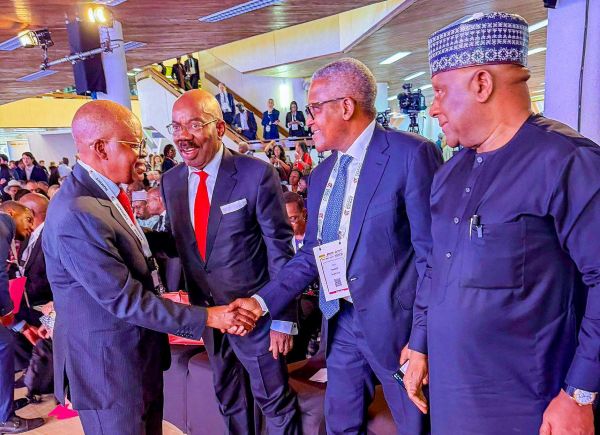
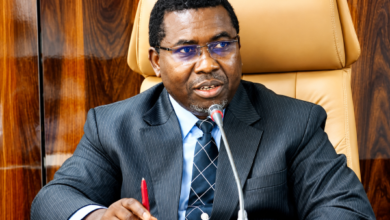
Nigeria has taken its marine and blue economy reform message to a major continental diplomatic stage, with the Minister of Marine and Blue Economy, Adegboyega Oyetola, presenting the country’s maritime investment agenda at the Africa Forward Summit in Nairobi, Kenya. Speaking on maritime sovereignty and sustainable value creation, the minister highlighted Nigeria’s first national blue economy policy, a record ₦1.83 trillion revenue performance by agencies under the ministry in 2025, and a port-modernisation drive intended to attract larger vessels, create jobs and strengthen Nigeria’s claim to maritime leadership in West and Central Africa.
Nigeria Carries Its Blue Economy Pitch to Nairobi
Nigeria’s blue economy ambition has moved beyond domestic policy declarations to international economic diplomacy.



At the Africa Forward Summit in Nairobi, the Minister of Marine and Blue Economy, Dr Adegboyega Oyetola, presented the Federal Government’s emerging maritime development agenda before a high-level audience of African leaders, policymakers, investors and development partners. His intervention came during a panel session themed “Blue Economy: Maritime Sovereignty and Sustainable Valorisation,” where he positioned Nigeria’s maritime resources as a central pillar of future economic diversification, trade growth and regional influence.
The summit, co-hosted by Kenyan President William Ruto and French President Emmanuel Macron, was framed around “Africa-France Partnerships for Innovation and Growth.” It marked a significant diplomatic shift in Africa-France engagement, being the first such summit hosted in an English-speaking, non-Francophone African country, and it drew broad attention to investment, sovereignty, trade and new partnership models for the continent.
Oyetola’s appearance at the summit was therefore not a ceremonial outing. It was part of Nigeria’s attempt to sell a new economic story: that the country’s marine space, ports, shipping corridors, coastal resources and logistics ecosystem can become major drivers of national prosperity if matched with policy clarity, capital investment and institutional reform.
From Neglect to Strategic Sector
For decades, Nigeria’s maritime economy was treated largely as an adjunct to import trade and port administration. The creation of the Federal Ministry of Marine and Blue Economy in August 2023 signalled a deliberate effort to change that narrow perspective and elevate the sector to a strategic development priority. Oyetola reiterated this point in Nairobi, presenting the ministry’s formation as one of the government’s first major steps toward building a more coordinated and economically purposeful maritime framework.
Since its establishment, the ministry has moved to develop Nigeria’s first National Policy on Marine and Blue Economy, intended to provide a unified framework for sustainable growth across maritime transport, fisheries, coastal tourism, aquaculture, renewable marine energy, seabed resources and environmental protection. The policy-development process began with stakeholder validation efforts in 2024 and has been presented as the foundational blueprint for the sector’s next decade.
That matters because blue economy development cannot be reduced to ports alone. It covers the entire interface between sea-based assets and national growth. For Nigeria, this includes shipping, coastal states, fisheries, marine tourism, inland waterways, offshore logistics, shipbuilding, maritime services, ports, exports and environmental stewardship.
The Nairobi presentation was therefore an attempt to place Nigeria within a broader African conversation: how can coastal and maritime economies be harnessed without repeating old extractive patterns? How can African countries convert ocean access into sovereign economic strength, rather than merely facilitating foreign trade?
The ₦1.83 Trillion Revenue Signal
One of the most striking claims from Oyetola’s presentation was that agencies under the ministry generated ₦1.83 trillion in revenue during the 2025 fiscal year. The minister presented the figure as evidence that the marine and blue economy sector is already beginning to show stronger fiscal and commercial relevance within the national economy.
The figure is significant for two reasons.
First, it strengthens the argument that the blue economy is not a future fantasy but an emerging revenue frontier. At a time when Nigeria is seeking to expand non-oil revenue and improve the productivity of government agencies, stronger earnings from maritime-linked institutions will attract attention from fiscal policymakers and investors alike.
Second, the revenue performance supports the ministry’s broader narrative that better institutional coordination, tighter regulation and investment in port and shipping systems can translate into measurable economic gains.
Yet revenue growth, while important, is only one indicator. The larger test is whether those revenues are being accompanied by deeper structural improvements: faster cargo clearance, higher port efficiency, safer waters, lower logistics costs, stronger export capacity and greater private-sector confidence.
Port Modernisation as Economic Strategy
Oyetola also used the summit to highlight the Federal Government’s comprehensive port modernisation and upgrade programme, which he said is aimed at attracting larger vessels, expanding employment opportunities and reinforcing Nigeria’s position as the leading maritime hub in West and Central Africa.
This is a central plank of the country’s blue economy strategy.
Nigeria cannot dominate regional trade with ageing port infrastructure, long vessel turnaround times, congestion, shallow draughts and inconsistent evacuation systems. A modern maritime economy requires efficient berths, digital port systems, rail and road connectivity, inland dry ports, barging capacity and transparent cargo-processing regimes.
Recent official messaging around the sector has linked port modernisation with job creation, improved turnaround time and higher competitiveness. Oyetola has previously indicated that port upgrades, together with other maritime initiatives, could generate tens of thousands of jobs and strengthen Nigeria’s regional logistics position.
The policy logic is straightforward. Nigeria’s ports are not just gateways for imported cargo; they are economic instruments. If improved, they can support manufacturing, exports, agribusiness, industrial corridors and regional transshipment. If neglected, they become a tax on the entire economy.
Maritime Sovereignty and the African Development Question
The theme of Oyetola’s panel—maritime sovereignty and sustainable valorisation—was especially notable.
In practical terms, maritime sovereignty means that African nations must control, regulate and benefit from their coastal and ocean resources rather than merely hosting extraction, shipping routes or foreign maritime influence. Sustainable valorisation means converting those resources into long-term value without environmental degradation or one-sided dependence.
That framing fits well with the larger tone of the Nairobi summit, where African leaders pushed for fairer financing, better risk perception and more equitable economic partnerships with Europe and other global partners. Discussions at the summit went beyond aid and touched on investment, sovereign equality and structural changes in how Africa is financed and perceived.
Nigeria’s blue economy agenda sits naturally within that wider debate. The country is essentially arguing that its maritime geography is a strategic asset deserving of capital, technology and policy support. It is also signalling that Africa’s coastal economies can become engines of industrialisation, not merely corridors for global supply chains designed elsewhere.
A Diplomatic Platform for Investment
The Africa Forward Summit provided Nigeria with more than a speaking opportunity. It offered a platform to engage investors and development partners at a moment when the continent is debating the future of infrastructure finance, trade competitiveness and partnership models.
Macron used the summit to announce a large package of investment commitments for Africa, while African leaders pressed for a rethinking of global credit systems and risk pricing that they say unfairly inflate the continent’s borrowing costs.
For Nigeria, which requires substantial capital to modernise ports, inland waterways, logistics systems and blue economy institutions, that financing conversation is highly relevant. The challenge is to translate diplomatic exposure into bankable projects, credible PPPs, multilateral support and private capital flows.
Blue economy speeches are useful. Blue economy project pipelines are decisive.
What Nigeria Must Do Next
Oyetola’s Nairobi campaign strengthens the visibility of Nigeria’s maritime reform agenda, but the next phase will depend on domestic execution.
Nigeria must finalise and implement its marine and blue economy policy with clear sector priorities, measurable targets and strong coordination among agencies. Port modernisation plans must move from approval to procurement, construction and operational improvement. Investors will want certainty around timelines, concessions, tariffs, maritime security and cargo flows.
The country must also deepen its fisheries and aquaculture strategy, improve coastal tourism assets, support indigenous shipping, expand maritime skills and use technology to reduce inefficiency across the port and logistics value chain.
Most importantly, Nigeria must treat the blue economy as a national competitiveness agenda. When ports become faster, exports become cheaper. When cargo delays fall, manufacturers become stronger. When maritime security improves, insurers reduce risk pricing. When coastal economies are better organised, jobs and investment spread beyond traditional oil dependence.
That is the real promise.
BRANDECONOMY Insight
Oyetola’s presentation at the Africa Forward Summit is significant because it places Nigeria’s blue economy agenda where it belongs: inside the country’s broader search for a new development model.
Nigeria has spent too long talking about diversification while underutilising one of its greatest strategic assets—its marine geography. With an extensive coastline, major ports, inland waterways, fisheries potential, regional trade routes and a population large enough to sustain complex maritime value chains, the country should be a natural blue economy leader in Africa.
The creation of the Marine and Blue Economy Ministry, the emergence of a national policy framework, the reported ₦1.83 trillion revenue performance in 2025 and the push for port modernisation all suggest that the sector is finally receiving the attention it deserves.
But attention is not transformation.
The Nigeria blue economy will only become a genuine growth engine if reforms deliver practical results: efficient ports, export-ready logistics, safer maritime corridors, modern shipping systems, coastal enterprise, fisheries expansion and transparent investment structures. Nigeria must avoid the old habit of celebrating policy launches while implementation lags behind.
The Nairobi summit also highlights a larger economic truth. Africa is entering a period in which sovereignty, infrastructure, trade and finance are being renegotiated. Countries that present clear investment stories backed by policy discipline will attract capital. Countries that rely on rhetoric will be left behind.
Nigeria’s maritime campaign has strong ingredients. What it needs now is execution strong enough to match the ambition.
The sea can become a pillar of prosperity. But only if policy, ports and private capital move in the same direction.