
Nigeria Mourns 32 as Air Force Aircraft Crashes in Ondo, Tinubu Orders Full Probe

 The crash of a Nigerian Air Force ATR-42 near Igbokoda has left the country in mourning while raising important questions about military aviation safety, aircraft maintenance, operational readiness and the sustainability of Nigeria’s expanding airpower capabilities.
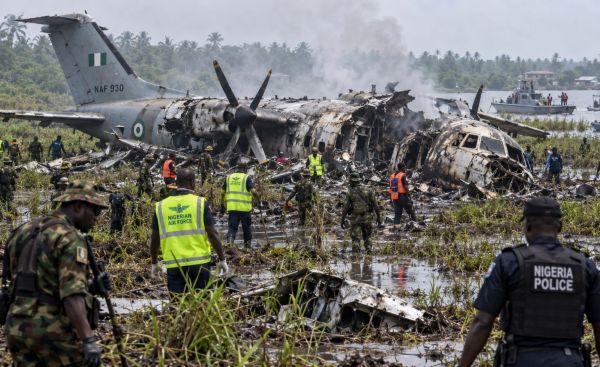 The crash of a Nigerian Air Force ATR-42 near Igbokoda has left the country in mourning while raising important questions about military aviation safety, aircraft maintenance, operational readiness and the sustainability of Nigeria’s expanding
 Nigeria was plunged into mourning on Monday following the crash of a Nigerian Air Force ATR-42 aircraft near the Naval Base in Igbokoda, Ondo State, with 32 people reported to have been on board.
The aircraft, which was travelling from Benin City to Lagos on what the Nigerian Air Force described as a routine mission, lost contact with air traffic control at about 9:13 a.m. Efforts to re-establish communication were unsuccessful, and the wreckage was later located in the Igbokoda area as search-and-rescue teams moved into the crash site.




Minister of Aviation and Aerospace Development, Mr Festus Keyamo, who confirmed the incident, said preliminary information indicated that 25 passengers and seven crew members were aboard the aircraft. While announcing the loss of contact and subsequent discovery of the wreckage, Keyamo also stressed that military aircraft fall outside the regulatory authority of both the Ministry of Aviation and Aerospace Development and the Nigerian Civil Aviation Authority.
The distinction is important because, although military and civil aircraft share the same skies and may interact with the same air traffic environment, they operate under different regulatory and command structures. The responsibility for the investigation therefore rests primarily with military authorities, though civilian aviation experts may still provide technical assistance.
President Bola Ahmed Tinubu, reacting to the tragedy, expressed deep sadness over the crash and ordered the Nigerian Air Force to immediately conduct a thorough investigation into its cause. He extended his condolences to the families of those on board, as well as to the Chief of Air Staff, Air Marshal Sunday Aneke, and the wider Nigerian Air Force community.
For the families of the victims, however, the technical questions will inevitably come after the first and most painful reality: the loss of loved ones who set out on what was expected to be a routine journey and did not return. Behind the passenger manifest are spouses, children, colleagues and military units suddenly confronted with bereavement.
Yet because lives have been lost, the investigation now carries a responsibility that goes beyond procedure. Nigeria must establish, as comprehensively as possible, what went wrong, why it happened and whether anything in the chain of operations, maintenance, training, weather assessment, aircraft systems or human decision-making requires correction.
The Aircraft Was a Turboprop, Not a Jet
Although some early reports described the aircraft as a jet, the ATR-42 is technically a twin-engine turboprop aircraft. The distinction matters because turboprops have different operating characteristics from pure jet aircraft, even though both use turbine-based engines.
The ATR-42 platform is widely used around the world for regional transport, maritime surveillance and specialised intelligence missions. In Nigerian Air Force service, the aircraft type has been deployed for maritime patrol and Intelligence, Surveillance and Reconnaissance missions, making it an important part of the country’s wider security architecture.
That operational role means the loss of one such aircraft may have implications beyond the immediate tragedy. While the human cost is paramount, the Air Force will also have to assess what the accident means for surveillance coverage, fleet availability and mission continuity, especially if other aircraft in the same class require additional precautionary inspections.
The aircraft involved, with tail number NGR 931, was part of a small and strategically useful fleet. Any reduction in available platforms therefore places greater pressure on remaining assets and raises questions about how the Air Force balances mission demand with maintenance cycles and fleet readiness.
From Routine Mission to Emergency Response
The Nigerian Air Force said search-and-rescue operations were activated immediately after the aircraft was reported missing, with relevant authorities and emergency agencies participating in the response.
The wreckage was subsequently located close to the Naval Base in Igbokoda, while Ondo State authorities moved to support rescue and recovery efforts at the site. The difficult terrain in parts of the area, including swampy and waterlogged zones, may complicate recovery operations and the preservation of evidence.
The Nigerian Safety Investigation Bureau also offered technical support to the Air Force, including the possible deployment of investigators and the use of its Flight Safety Laboratory to recover and analyse flight-data and cockpit-voice recordings if such assistance is formally requested.
That offer could prove significant because military aviation investigations often benefit from the same forensic disciplines that underpin civil aviation safety work. Data recovered from onboard recording systems, air traffic control communications, radar tracks, maintenance documentation and wreckage analysis can help investigators build a chronological picture of the final phase of flight.
Although the NSIB does not automatically have jurisdiction over military aircraft accidents, its specialist capabilities could still strengthen the technical depth and independence of the investigation if the Nigerian Air Force chooses to draw on them.
The Cause Must Be Established Through Evidence, Not Speculation
Air crashes are rarely explained responsibly by immediate assumptions, no matter how tempting early theories may appear.
A military transport or surveillance aircraft can be lost because of mechanical failure, weather, navigation issues, crew decision-making, maintenance problems, avionics faults, structural issues or a combination of factors. In many major accidents, investigators eventually discover that the final outcome was produced not by one dramatic failure but by several smaller vulnerabilities aligning at the same time.
For that reason, the Ondo investigation should examine the complete operational history of NGR 931, including maintenance records, engine and propeller performance, airworthiness documentation, flight-control systems, crew qualifications, recent technical defects, weather conditions and the aircraft’s communications immediately before contact was lost.
Investigators will also need to establish whether there were any distress calls, abnormal system indications or deviations from the planned flight path before the crash. If flight-data and cockpit-voice information can be recovered, those recordings may provide the clearest evidence of what the crew experienced in the final minutes.
This is why accident investigations must not be rushed simply to satisfy public demand for quick answers. Search-and-rescue operations require urgency, but aviation investigations require discipline, patience and technical rigour.
A Bigger Question for Nigeria’s Airpower Modernisation
The crash also brings into focus a broader strategic issue at a time when Nigeria has been investing heavily in military aviation.
The Nigerian Air Force has continued to acquire new aircraft and helicopters in response to changing security threats, insurgency, banditry, maritime insecurity and the demand for broader surveillance coverage. Such acquisitions have strengthened airpower capability and expanded the range of missions the service can undertake.
However, buying aircraft is only the beginning of aviation capability.
The far more difficult task is keeping those aircraft safe, serviceable and mission-ready over many years.
Modern air forces depend not only on pilots but also on engineers, avionics specialists, maintenance crews, logistics planners, spare-parts supply chains, simulator instructors, safety managers and technical inspectors. If any part of that ecosystem is weak, the operational value of the aircraft eventually declines.
Military aviation strength should therefore not be measured simply by how many aircraft are commissioned at induction ceremonies. The more important measure is sustainable mission availability: how many aircraft are genuinely safe, properly maintained and ready to fly when required.
The NAF’s own history with the ATR-42 fleet demonstrates the importance of lifecycle maintenance. Aircraft in the fleet have previously undergone major maintenance and periodic depot work abroad before returning to operational service, which is standard aviation practice but also highlights the long-term cost and complexity of sustaining specialised military platforms.
That is one of the central lessons for Nigeria’s defence modernisation drive. Aircraft acquisition creates capability on paper, but maintenance, logistics and technical depth are what keep that capability alive.
Civil Aviation and Military Aviation Must Not Be Conflated
The crash is also likely to generate wider public concern about aviation safety in Nigeria, even though the accident involved a military aircraft operating outside the regulatory framework governing commercial airlines.
Keyamo’s clarification on jurisdiction is therefore significant. The Nigerian Civil Aviation Authority does not regulate military aircraft in the same way it regulates commercial carriers, while military aviation operates under its own command, training, maintenance and safety regimes.
That distinction is important for Nigeria’s civil aviation brand because military accidents should not automatically be interpreted as evidence of deterioration in the commercial airline safety system.
Nevertheless, perception matters.
International investors, insurers, aviation partners and passengers often encounter headlines before they examine regulatory distinctions. This means the professionalism, transparency and credibility of the investigation will influence how the broader Nigerian aviation environment is perceived.
A detailed, evidence-based inquiry followed by visible implementation of safety recommendations can strengthen institutional confidence. Silence, defensiveness or incomplete disclosure would risk doing the opposite.
The Investment Case Around Aviation Safety
The tragedy also draws attention to a wider industrial opportunity in Nigeria’s aviation and aerospace sector.
Nigeria still relies heavily on foreign facilities for sophisticated aircraft maintenance, component repair, avionics testing, technical diagnostics and specialist training. That dependence creates both cost pressures and operational vulnerabilities.
There is therefore a long-term investment opportunity in building deeper domestic Maintenance, Repair and Overhaul capacity, particularly for military and specialised aircraft. The ecosystem also extends to simulator training, component diagnostics, flight-data analysis, spare-parts logistics, aerospace engineering, communications systems and technical education.
For investors, defence aviation should not be viewed only as a market for aircraft sales. The greater long-term opportunity lies in the infrastructure that keeps fleets operational.
A country with Nigeria’s scale, security needs and growing aviation requirements will continue to demand these services.
Brand Implications: Trust Is Tested Most Severely in Crisis
For the Nigerian Air Force, the accident is also a moment of institutional scrutiny.
Military organisations naturally operate within limits of operational secrecy, but that need not prevent credible communication with the public. The strongest response would combine empathy for affected families with disciplined transparency about what is known, what remains under investigation and what corrective actions eventually follow.
Institutional trust is not built only when organisations celebrate success. It is often tested most severely when something has gone wrong.
Regular verified updates, respect for victims and their families, a technically credible investigation and the eventual publication of meaningful findings would help demonstrate that safety lessons will not be buried with the wreckage.
BRANDECONOMY Insight
The tragedy in Igbokoda will inevitably dominate national attention in the immediate aftermath. There will be condolences, tributes, official visits and public expressions of grief, while investigators and recovery teams work through the wreckage.
But the true measure of Nigeria’s response will come later, after the national attention moves elsewhere.
Aviation safety improves when institutions are willing to learn deeply from failure. Across the history of modern aviation, many of the procedures now taken for granted emerged because investigators refused to allow earlier tragedies to pass without producing lessons.
Nigeria owes the victims of this crash the same discipline.
If a component failed, the country needs to understand why. If maintenance contributed, the weakness must be corrected. If procedures need to change, they should change. If training needs strengthening, the necessary investment should follow. If there was no systemic failure, that too should be established transparently through evidence.
President Tinubu’s directive for a thorough investigation is therefore only the beginning. The real test will be whether the findings lead to measurable improvements in military airworthiness, maintenance practices, crew training, operational planning and safety oversight.
This matters particularly because Nigeria is in the middle of an ambitious airpower modernisation programme. New aircraft can strengthen national security, but the sustainability of that strength will depend on the less visible investments that accompany them: skilled technicians, strong maintenance systems, spare-parts support, flight-safety culture and independent technical review.
In other words, Nigeria must invest as seriously in keeping aircraft safely in the sky as it does in acquiring them.
That is the larger lesson from Igbokoda.
In military aviation, national capability is not defined simply by what can take off. It is defined by what can take off, complete the mission safely and return home.
Thinking effortHigh
To pick up a draggable item, press the space bar. While dragging, use the arrow keys to move the item. Press space again to drop the item in its new position, or press escape to cancel.
To pick up a draggable item, press the space bar. While dragging, use the arrow keys to move the item. Press space again to drop the item in its new position, or press escape to cancel.