By Ayoola Ajanaku
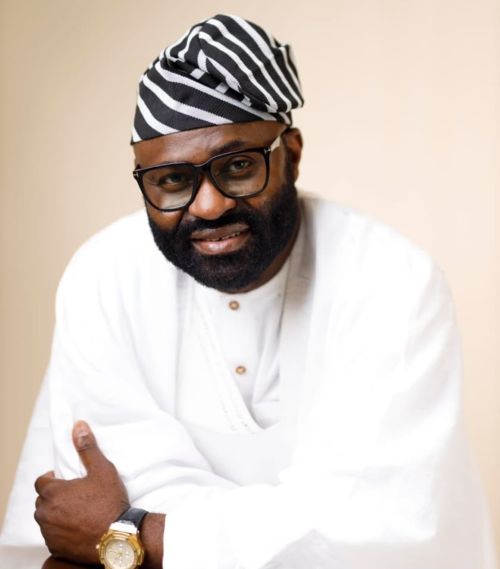
As Lagos Central approaches another defining moment in its political journey, the emergence of Dr. Desmond Ojumu and his senatorial ambition via APM party raises a fundamental question about leadership, representation and the search for a new political proposition.




In politics, as in life, the distinction between appearance and substance is often the difference between expectation and achievement. Political aspirants emerge with promises, declarations of purpose and compelling narratives about what they intend to accomplish.
Yet, beyond the rhetoric, the ultimate test of leadership lies in the capacity to translate ambition into measurable value for the people.
It is against this backdrop that the question surrounding Dr. Desmond Ojumu’s aspiration for the Lagos Central Senatorial District becomes particularly relevant: Is he the real McCoy?
The question is not merely about political ambition or the attractiveness of a candidate’s public presentation. It is about the substance of his proposition, the depth of his understanding of the constituency and the extent to which his vision aligns with the aspirations of the people he seeks to represent.
Lagos Central occupies a distinctive position in Nigeria’s political and economic landscape. Encompassing Lagos Island, Lagos Mainland, Surulere, Apapa and Eti-Osa, the district brings together communities with diverse socioeconomic realities, commercial interests and developmental priorities.
From the historic commercial districts of Lagos Island to the industrial and maritime activities around Apapa, the residential communities of Surulere and Lagos Mainland, and the rapidly evolving urban environment of Eti-Osa, the constituency presents a complex representation challenge.
Its diversity demands more than conventional political engagement. It requires a representative capable of understanding the relationship between economic productivity, infrastructure, social inclusion and legislative responsibility.
One of the enduring challenges of democratic representation is the tendency to mistake political visibility for legislative value. A candidate’s popularity, professional accomplishments or ability to command attention may generate public interest, but these attributes do not automatically translate into effective representation.
The Senate is an institution of constitutional responsibility. Its members participate in lawmaking, oversight of executive institutions, national policy deliberations and the consideration of issues affecting the federation.
Consequently, the question of suitability must extend beyond personal ambition to encompass legislative preparedness, public accountability and a clearly articulated understanding of the office.
For Ojumu, the central challenge is to demonstrate how his experience, ideas and proposed legislative priorities would address the specific realities of Lagos Central.
What is his position on the district’s infrastructure challenges?
How does he intend to engage federal institutions on maritime development, transportation and urban renewal?
What mechanisms would he establish to maintain regular communication with constituents?
How would he measure the effectiveness of his representation?
These are not peripheral questions – They are the building blocks of an informed public assessment.
The APM platform and the question of political alternatives comes to play. Ojumu’s emergence with the Allied Peoples Movement introduces another dimension to the conversation.
The APM has been positioning itself as an alternative political platform in Lagos ahead of the 2027 general elections. Its broader state-level messaging has included proposals around healthcare, education, employment, infrastructure and security. These priorities form part of the party’s publicly articulated Reset Lagos agenda.
However, a state-level programme is not a substitute for a candidate’s individual legislative manifesto. The important question is how a senatorial aspirant would translate broad political objectives into constitutional responsibilities and practical interventions at the federal level.
For Lagos Central, this distinction matters. Constituents require clarity about what their representative can realistically accomplish through legislation, oversight, constituency engagement and collaboration with relevant institutions.
A credible political proposition must therefore be built on clearly defined objectives, realistic commitments and an accountability framework that allows citizens to assess progress.
Ultimately, the real McCoy is not established by the strength of a slogan, the enthusiasm of supporters or the sophistication of political packaging. It is established through evidence, consistency, character and a demonstrable commitment to public service.
For Desmond Ojumu, the opportunity lies in presenting a compelling and verifiable account of his professional background, public service experience, political philosophy and legislative priorities.
The electorate deserves to understand not only what a candidate promises to do, but also why he believes he can do it, how he intends to proceed and what measurable outcomes would constitute success.
This is particularly important in an era when citizens increasingly demand accountability from elected representatives and expect political engagement to extend beyond election cycles.
The conversation around Lagos Central should therefore be about more than the emergence of another aspirant. It should be about the quality of representation, the substance of competing ideas and the institutional responsibilities that accompany the mandate of the people.
In a nutshell, the pressing question swirling around: Is Dr. Desmond Ojumu the real McCoy? The answer ultimately rests on the evidence he presents, the credibility of his commitments and the confidence he earns through sustained engagement with the constituency.
For now, the question itself offers an opportunity to elevate the political conversation in Lagos Central from personalities to principles, from promises to programmes, and from electoral ambition to the enduring responsibility of representation.
Because in the final analysis, the real measure of a senator is not the office he occupies, but the value he creates for the people whose mandate he carries.
Ayoola Ajanaku is a Communications and Advocacy Specialist based in Lagos, Nigeria….