


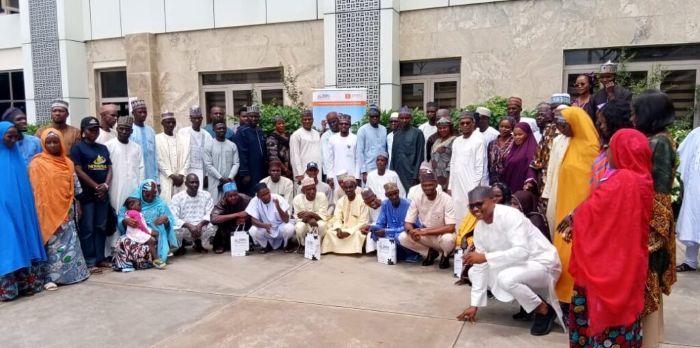
 A six-year dairy development programme linked to Sebore Farms, Sahel Consulting and the Gates Foundation has ended in Adamawa with a familiar development question: who will keep the market working when programme support for the Dairy Farmers stops? At a closeout ceremony in Yola on Monday, participants described gains for smallholder producers in Mayo-Belwa Local Government Area, including organised farmer groups and a route for their milk into commercial yoghurt production.
The Mayo-Belwa initiative connected smallholders to processing and income. Its legacy will depend on whether milk collection, animal services and reliable purchasing continue after the donor-supported phase.





The account provided to the News Agency of Nigeria said 279 livestock farmers had benefited. Temi Adegoroye, Managing Partner of Sahel Consulting, said 178 cooperatives were formalised during the programme. The account did not define the local beneficiary count or make clear whether the cooperative figure covered Mayo-Belwa or a wider programme footprint. Those distinctions matter when assessing the scale of the Adamawa intervention; the figures should not be treated as a ratio of farmers to local cooperatives without clarification.
A separate account of the wider programme’s Kano closeout identified 279 Community Livestock Workers and 234 registered cooperatives across seven states. It does not establish that the Yola account’s 279 farmers is wrong, but the matching number and different cooperative total call for a state-by-state reconciliation. Clear reporting would make the achievement easier to evaluate and protect the credibility of the partners’ claims.
Adegoroye said the work sought to improve livelihoods, productivity, nutrition and the economic participation of women dairy farmers and their communities. He used the Yola event to recognise partners and urge Adamawa’s government to help sustain the advances. The appeal is timely: dairy development cannot be secured by training farmers for a few seasons if milk collection, animal health, feed and a dependable buyer disappear afterwards.
The value of a buyer at the farm gate
The commercial link with Sebore is central to the story. Milk is perishable; a producer gains little from higher output if the buyer cannot collect it promptly, preserve its quality or pay on time. Aggregation allows many small volumes to become a reliable input for a processor. Processing into yoghurt creates another source of value and a consumer-facing product, while regular purchases can give households a reason to invest in better animal care and feed.
Ya’u Adamu, speaking for beneficiaries, said dairy sales had brought income to families and helped keep children in school. He also said farmers no longer needed to travel as far to feed their animals. These are meaningful accounts of household change, although the report supplies no before-and-after income, milk-yield or school-attendance data with which to measure the effect across all participants. The distinction between a beneficiary’s experience and independently measured programme impact should remain clear.
Sahel’s broader Advancing Local Dairy Development in Nigeria initiative was designed to improve local milk sourcing through processor partnerships, farmer organisation, feed and fodder, animal health, infrastructure, financial inclusion and women’s participation across several states. Adamawa’s closeout offers a local view of that wider model. It also exposes the question every such partnership must answer: can the processor continue buying at a price farmers accept while remaining competitive in the market?
What Adamawa must preserve
Nyalas Bartholomew, Permanent Secretary in Adamawa’s livestock ministry, invited investors and development partners to work with the state. He pointed to its livestock policy and an investment document channelled through the Adamawa State Investment Company, presenting the state as ready for partnerships with Sahel Consulting, Sebore International Farms and the yoghurt business identified at the ceremony as Admiral. A policy can open doors, but its value will depend on budgets, clear responsibilities and services that reach farmers.
Sebore Farms’ Head of Operations, Kabir Abdulmumini, called for Sahel Consulting to extend the programme so that more farmers could enter dairy production. That request reflects a genuine transition risk, but a lasting answer need not rely on another grant. Adamawa could protect shared water and collection facilities, strengthen veterinary and extension services, help producer groups maintain accounts and negotiate predictable supply arrangements with processors. Cooperatives must remain useful commercial organisations, rather than registrations that cease to function after a project closes.
Women’s control over earnings deserves particular attention. A programme may report that women were trained while payment for their milk goes to someone else. Producer records, accessible accounts and direct payment options can help establish who supplies milk and who receives the proceeds. Basic digital logs could also record volumes, quality checks and payment dates, making disputes easier to resolve. Technology would support trust only if farmers can use it and still obtain assistance when connectivity fails.
The investment and brand case
For investors, Adamawa’s opportunity spans more than cattle. Collection points, hygienic containers, cooling, solar power, veterinary delivery, fodder production, refrigerated transport and processing all affect the cost and safety of each litre that reaches a consumer. Capital should follow verified daily milk volumes, seasonal supply, spoilage rates, collection distances and the processor’s ability to sell its finished products. Building capacity before confirming dependable throughput can leave expensive equipment underused.
The brand implication is equally direct. A yoghurt label built on local sourcing can earn consumer trust and regional loyalty when taste, safety and availability remain consistent. It cannot rely on an appealing farmer story to compensate for weak quality control or irregular supply. Transparent procurement and prompt payment strengthen the brand’s relationship with producers; sound testing, packaging and cold distribution protect its relationship with shoppers.
Nigeria’s dairy ambition will ultimately be decided by these linked economics. More local milk can reduce the need for some imported inputs only where collection and processing are efficient enough to compete on delivered cost and quality. State support is most useful when it removes shared bottlenecks and allows processors and farmers to trade on terms they can sustain.
BRANDECONOMY Insight
The most valuable outcome of the Mayo-Belwa programme would be a dairy market that no longer needs a closeout ceremony to keep operating. Adamawa should publish a practical continuity plan: who maintains facilities, who provides animal services, how farmers are paid and how much milk processors continue to buy. If women retain earnings and children remain in school because the milk trade stays reliable, development support will have created an enduring commercial system rather than a temporary benefit.