Ardova–Diadem Bets on 100 CNG Stations to Break Nigeria’s Refuelling Bottleneck

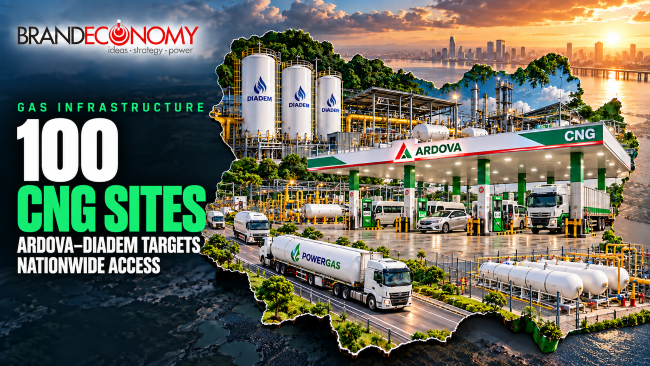 Nigeria’s compressed natural gas transition could receive a major infrastructure boost as the Ardova Plc–Diadem Energy consortium moves to establish 100 CNG refuelling sites across the country within 24 months.
The proposed rollout is designed to tackle one of the biggest obstacles to wider CNG adoption: the shortage of conveniently located and consistently supplied refuelling facilities.

Dr George Eluwa, Chairman of Diadem Group, and Dr Abdul-Wasiu Sowami, Chairman of Ardova Plc, announced the plan in a joint statement issued in Abuja.
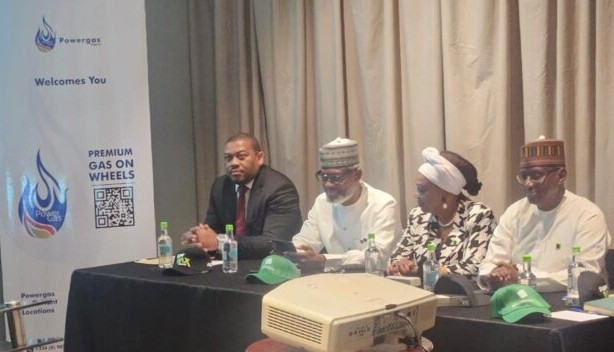
The expansion follows the consortium’s agreement to acquire Powergas, a major African compressed natural gas producer and virtual-pipeline distributor, from Africa Infrastructure Fund I.
The transaction is expected to be completed before the end of 2026, subject to the conditions required to close the acquisition. Until completion, it should be understood as an agreed transaction rather than a concluded transfer of ownership.
If successfully executed, the combination could create one of Nigeria’s most integrated CNG platforms. Powergas would provide gas-sourcing relationships, compression infrastructure and an established industrial customer base. Diadem would contribute virtual-pipeline logistics, while Ardova would bring its retail, distribution and operational footprint.
The industrial logic is straightforward: Powergas compresses the gas, Diadem transports it beyond the reach of conventional pipelines, and Ardova makes it accessible through a broader national network.
Solving the Infrastructure Paradox
Nigeria’s CNG ambition has frequently encountered a circular problem.
Vehicle owners and fleet operators are reluctant to convert because refuelling stations remain inadequate. Investors are cautious about building stations because the number of converted vehicles appears insufficient to guarantee demand.
This chicken-and-egg dilemma has slowed adoption despite the economic argument for using more of Nigeria’s abundant gas resources in transportation.
A 100-site network could begin to reduce that uncertainty, particularly if the stations are placed along commercially viable transport corridors and supported by dependable gas supplies. For commercial fleets, buses, logistics companies and high-mileage vehicles, convenient refuelling is not optional. It is fundamental to operating economics.
A vehicle running on a theoretically cheaper fuel delivers no practical savings if it must travel long distances, queue for hours or suspend operations because CNG is unavailable.
The real product being offered is therefore not merely gas. It is dependable access.
An Integrated Gas-to-Customer Platform
Ardova is expected to deploy CNG infrastructure through its existing retail network, giving the consortium an advantage over greenfield operators that must secure land, obtain approvals and build new customer relationships from the ground up.
The parties also intend to expand Powergas’ compression capacity across viable gas-producing corridors. This would create additional demand for associated and non-associated gas, support efforts to reduce flaring and potentially unlock investment across the gas value chain.
Eluwa said Diadem’s existing relationship with Powergas as a virtual-pipeline logistics partner had demonstrated the potential of transporting natural gas beyond conventional pipeline infrastructure.
Virtual pipelines move compressed gas by specialised trucks and storage systems to customers that are not connected to physical gas pipelines. In a country where pipeline coverage remains inadequate, this model can extend domestic gas utilisation to factories, commercial fleets and communities that would otherwise remain dependent on diesel, petrol or other expensive fuels.
Eluwa maintained that the combined platform would deliver cleaner and potentially more affordable energy to industries, fleets and communities, while supporting the Presidential Initiative on Compressed Natural Gas and Electric Vehicles and the Federal Government’s Decade of Gas programme.
From Gas Reserves to Usable Energy
Nigeria’s gas story has long contained a frustrating contradiction. The country possesses substantial reserves but struggles to convert that endowment into dependable energy for businesses and households.
Gas underground is a geological asset. It only becomes an economic advantage when it can be processed, transported, distributed and purchased at commercially sustainable prices.
Sowami argued that the country’s next phase of energy development would be built on gas and delivered at scale. He said the partnership would connect domestic gas resources to industry, power generation and transportation while pursuing lower energy and mobility costs.
The consortium also plans to develop a platform with relevance beyond Nigeria, potentially extending into other West African markets.
Regional expansion could create additional scale and diversify revenue. It would, however, require careful navigation of cross-border infrastructure, regulation, currency risk and variations in national energy policy.
Execution Is Now the Real Test
Managing Director of Ardova Plc, Abiola Babatunde-Ojo, said the Powergas acquisition would provide the infrastructure, reach and capabilities required to serve customers nationwide.
According to her, the immediate focus would be on expanding compression capacity, integrating CNG into Ardova’s retail network and connecting more industrial users and fleets to domestic gas.
Powergas Vice-Chairman Pulak Sen described the company’s compression backbone and Ardova’s national reach as complementary assets capable of entering new markets and supporting Nigeria’s autogas objectives.
The strategic fit appears convincing. But the credibility of the 100-site promise will depend on disciplined execution.
The consortium must secure appropriate locations, equipment, safety approvals, gas supply, logistics capacity and trained personnel. Each site must also attract sufficient demand to justify its operating costs.
A nominally national rollout that produces under-supplied or poorly located stations would do little to strengthen consumer confidence. Deployment should therefore follow transport intensity, fleet concentration and proximity to viable gas-supply corridors—not political pressure to distribute projects evenly.
Market Implications
A successful rollout could reshape fuel economics for bus operators, haulage companies, ride-hailing fleets and other high-mileage users. Reduced fuel expenditure could support lower operating costs, although the extent to which savings reach passengers and consumers will depend on competition and pricing behaviour.
The project could also stimulate demand for conversion kits, cylinders, compressors, storage systems, specialised trucks, maintenance services and technical training.
For industries currently dependent on diesel, expanded virtual-pipeline capacity may provide an alternative energy source, particularly where grid electricity is unreliable and conventional gas pipelines are unavailable.
Petroleum retailers must also reassess their business models. As Nigeria’s transport-energy market gradually becomes more diversified, stations built exclusively around petrol and diesel could lose relevance. Multi-energy retail—combining liquid fuels, CNG, charging infrastructure and related services—may become the industry’s next competitive frontier.
Brand Implications
The consortium’s strongest brand opportunity is to position CNG as dependable, accessible and safe—not merely cheaper.
Price may attract trial, but network availability and customer experience will determine sustained adoption. Clean, professionally managed stations, trained attendants, visible safety standards and accurate digital information about locations and availability will be essential.
The reputational risk is equally significant. A CNG safety incident, prolonged shortage or misleading expansion claim could damage confidence across the emerging market, not only in the companies directly involved.
Ardova’s established retail identity gives it both an advantage and a responsibility. Customers will judge the new platform against the service reliability expected from a major national energy brand.
Investor Relevance
Investors should monitor the acquisition’s completion, capital requirements, station rollout milestones, compression-capacity additions and customer commitments.
Demand from fleet operators will be particularly important because anchor contracts can provide predictable throughput and strengthen project economics.
Other indicators include the number of operational sites—not merely announced locations—average daily gas sales, conversion rates, logistics costs, safety performance and margins relative to conventional fuels.
The acquisition could generate value through vertical integration, but it also introduces execution and capital-allocation risks. Expansion at speed must not compromise site economics, safety or balance-sheet discipline.
BRANDECONOMY Insight
The Ardova–Diadem initiative addresses the weakest link in Nigeria’s CNG proposition: the distance between policy ambition and accessible fuel.
Nigeria does not need more declarations that gas is its transition fuel. It needs dependable compression, transportation, retail distribution and vehicle conversion systems that work together.
The consortium’s integrated structure gives the project strategic credibility. Powergas brings the molecules and compression backbone; Diadem provides the virtual pipeline; Ardova offers the route to the customer.
But 100 logos on a rollout map will not transform transportation. One hundred safe, adequately supplied and commercially viable stations might.
The ultimate measure of success will be whether fleet operators can refuel without disruption, industries can reduce energy expenses, investors can earn sustainable returns and ordinary Nigerians experience lower mobility and goods-distribution costs.
If those outcomes materialise, this will be more than a corporate acquisition. It could become a meaningful piece of Nigeria’s missing gas infrastructure.