BUSINESSNEWS

ACCI Seeks Business-Friendly Reforms, End To Multiple Taxation

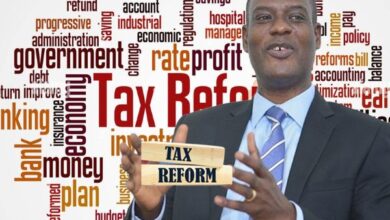
ACCI Seeks Business-Friendly Reforms, End To Multiple TaxationACCI says Nigeria’s tax reform drive is necessary, but business leaders warn that poor implementation, overlapping levies and excessive compliance demands could weaken investment, squeeze MSMEs and undermine public trust.


The Abuja Chamber of Commerce and Industry has urged policymakers and tax authorities to simplify compliance, eliminate multiple taxation and ensure that Nigeria’s ongoing tax reforms support growth, investment, productivity and business survival.

The call was made by Dr Aliyu Hong, Chairman of the National Policy Advocacy Centre of ACCI, at a stakeholders’ tax roundtable in Abuja themed “Tax Reality: Ripple Effects on Industry and Commerce.”

Hong said Nigeria needs a tax system that encourages enterprise expansion rather than one that merely raises revenue from businesses already under pressure. He urged government to prioritise broad stakeholder engagement, clearer communication, stronger institutional coordination and specific protection for Micro, Small and Medium Enterprises.

According to him, the success of any tax reform depends not only on the strength of policy design, but also on public trust, implementation discipline and the ability of government institutions to recognise the realities facing businesses.

“Nigeria needs a tax system that encourages growth, rewards productivity, attracts investment and supports businesses to expand, not merely survive,” Hong said.

He added that the organised private sector remains willing to collaborate with government in building a stronger and more sustainable economy, but stressed that such cooperation must be anchored on mutual trust, policy consistency and genuine consultation.

Reforms Necessary, But Implementation Must Be Careful

Hong, who also serves as Second Deputy President of the Chamber, said the recent tax reforms are important but must be implemented carefully to avoid worsening the operating difficulties already confronting businesses.

He noted that companies are still adjusting to major fiscal changes introduced through the Nigeria Tax Act 2025 and related legislation. For the organised private sector, he said, the key issue is to understand how the reforms will affect investment, production, employment, profitability and long-term economic survival.

He warned that taxation must not become another obstacle for businesses already battling inflation, exchange-rate instability, insecurity, weak infrastructure, high energy costs and unpredictable regulatory demands.

For many firms, particularly MSMEs, the tax burden is not limited to headline rates. It is often the administrative weight of compliance, repeated demands from multiple agencies, uncertain interpretation of rules and the cost of dealing with overlapping authorities that create the deepest pain.

Hong said excessive compliance burdens could reduce competitiveness, discourage investment and shrink the tax base. Businesses, he argued, need clarity, consistency, fairness and predictability if they are to commit capital and expand operations.

Multiple Taxation Remains a Major Business Complaint

The ACCI official identified multiple taxation as one of the most damaging issues in Nigeria’s business environment.

He said overlapping taxes and repeated revenue demands from different agencies continue to raise the cost of doing business. He therefore urged government to ensure that tax harmonisation becomes practical and measurable, rather than remaining a policy slogan.

“Taxation should promote economic growth, industrial development, job creation and investment attraction,” he said, adding that policies affecting businesses must emerge from consultation, stakeholder engagement and realistic economic assessment.

The ACCI roundtable, he said, was intended to generate practical recommendations for a more balanced, efficient and business-friendly tax system.

Hong also commended partners, stakeholders and participants for their commitment to constructive economic dialogue and national development.

CITN: Tax Reform Is Necessary for Stability

Speaking at the event, Mr Innocent Ohagwa, President of the Chartered Institute of Taxation of Nigeria, said the tax reforms were designed to support vulnerable Nigerians and improve economic stability.

Ohagwa warned that abolishing taxes would worsen Nigeria’s fiscal challenges, increase borrowing and weaken government’s ability to provide essential infrastructure and services.

He said the reforms seek to simplify tax administration, block revenue leakages, reduce the burden on low-income earners and ensure that wealthier citizens contribute more through progressive taxation.

The CITN President urged Nigerians to remain patient with government, meet their tax obligations and elect credible leaders capable of ensuring that tax revenues are properly used for public welfare.

His argument reflects the other side of the tax debate: Nigeria needs revenue to fund development. The real issue, therefore, is not whether taxation should exist, but whether it is fair, efficient, transparent and growth-supporting.

ACCI Calls for Continuous Dialogue

The Director-General of ACCI, Mr Jideani Agabaidu, said constructive dialogue and stakeholder collaboration are essential in shaping policies that affect businesses, investments and national economic growth.

He reaffirmed the Chamber’s commitment to promoting policies that support enterprise development, while stressing that tax reform requires clarity, transparency and proper stakeholder engagement to succeed.

According to him, the roundtable was designed to educate businesses on the opportunities, realities and implications of the new tax framework, while also addressing misconceptions surrounding ongoing reforms.

Agabaidu called for continuous public enlightenment and policy dialogue to ensure that tax reforms do not impose unnecessary burdens on MSMEs or discourage business expansion.

BRANDECONOMY Insight

Nigeria’s Tax Reform Must Raise Revenue Without Killing Enterprise

The ACCI’s warning is timely. Nigeria needs tax reform, but it needs the right kind of tax reform.

A modern economy cannot function without revenue. Government must fund infrastructure, security, education, health, public services and debt obligations. But taxation becomes counterproductive when it punishes productivity, complicates compliance, discourages investment and drives small businesses further into informality.

The core challenge is balance.

Nigeria’s tax system must become simpler, fairer and more predictable. Businesses should know what they owe, who they owe it to, when it is due and how to pay without facing multiple agencies making overlapping demands. Tax harmonisation must move from policy language to operational reality.

The MSME question is especially important. Small businesses are the backbone of employment, but they are also the most vulnerable to compliance costs. A large company can hire tax consultants and absorb administrative complexity. A small business often cannot. For MSMEs, simplicity is not convenience; it is survival.

The government must also understand that tax morale depends on trust. Citizens and businesses are more likely to comply when they see evidence that public revenue is used responsibly. Without transparency and visible service delivery, even well-designed tax reforms will face resistance.

The ultimate goal should be a tax system that broadens the base, rewards compliance, protects small businesses, attracts investment and funds national development. Nigeria does not need higher tax anxiety. It needs higher tax confidence.

Back to top button