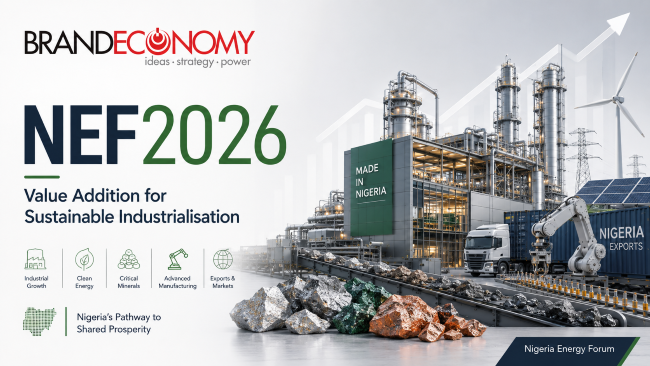
 Nigeria’s industrial future will depend less on the volume of raw materials it extracts than on how much value it can retain before those materials leave its borders. That is the central proposition of the 11th Nigeria Energy Forum, NEF2026, which will convene policymakers, investors, manufacturers, energy players, researchers and young innovators in Lagos to examine how local processing, cleaner production and stronger industrial partnerships can convert Nigeria’s resource wealth into jobs, exports and enduring economic value.
Nigeria has never lacked natural resources, entrepreneurial talent or market potential. What it has lacked, too often, is the industrial machinery to convert those assets into durable prosperity.

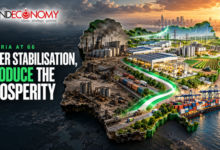
The country exports crude oil while importing refined products. It produces minerals but captures limited downstream value. It grows agricultural commodities but frequently earns less than countries that process, package and brand those same materials for global markets. It has a young, digitally fluent population, yet still struggles to build enough factories, processing hubs, energy systems and supply chains to absorb its productive energy.
This is why the theme of the 11th Nigeria Energy Forum, NEF2026 — “Upscaling Value Addition for Sustainable Industrialisation” — is more than a conference slogan. It goes to the centre of Nigeria’s development challenge.
Scheduled to hold on June 30 in Ikeja, Lagos, NEF2026 is expected to bring together policymakers, manufacturers, investors, development institutions, technology providers, energy specialists and students around one pressing question: how can Nigeria move from exporting raw potential to producing higher-value goods, technologies and industrial services?
According to the forum’s chairman, Dr Oluwole Adeuyi, industrialisation is no longer optional for countries seeking long-term prosperity. The nations that will succeed in the coming decades, he argued, will be those capable of turning natural resources, innovation and human capital into competitive products, thriving industries and sustainable wealth.
That assessment is difficult to dispute.
For Nigeria, value addition is the bridge between extraction and prosperity. It is the difference between exporting lithium ore and producing battery materials; between selling cocoa beans and exporting cocoa butter, powder and premium confectionery ingredients; between producing crops and building branded food-processing businesses; between installing solar panels and manufacturing components for the clean-energy value chain.
The wider development lesson is clear: countries do not become industrial powers simply by owning resources. They become industrial powers by processing, refining, assembling, designing, financing and branding those resources into products the world needs.
A Timely Forum for a Country Seeking Productive Growth
NEF2026 comes at a sensitive economic moment.
Nigeria is seeking to stabilise its macroeconomic environment, improve foreign-exchange earnings, attract productive investment and reduce its dependence on imported industrial inputs. At the same time, the global energy transition is reshaping demand for critical minerals, renewable-energy systems, battery inputs, low-carbon manufacturing and climate-smart infrastructure.
This creates both opportunity and risk.
Nigeria can either remain a supplier of raw materials into global value chains dominated elsewhere, or it can use the current transition to build domestic processing capacity, industrial clusters, skills pipelines and stronger export brands.
The forum’s agenda reflects that choice. Discussions are expected to cover critical minerals, clean energy, manufacturing, infrastructure, circular-economy solutions, industrial decarbonisation, agriculture, technology and sustainable finance.
The planned unveiling of a report titled “Lithium in Nigeria: Enhancing Sustainable Production, Processing and Value Addition” is especially significant. Lithium has become one of the world’s most strategic minerals because of its role in batteries, electric vehicles, energy storage and renewable-energy systems.
But Nigeria’s real opportunity is not simply to become another mining destination. It is to ask a harder question: how much of the lithium value chain can be retained locally?
Mining generates activity. Processing generates deeper value. Manufacturing creates jobs, skills, technology transfer and industrial capability. The difference between the three will shape whether Nigeria becomes a serious participant in the green economy or merely a source of raw inputs for factories elsewhere.
Beyond Raw Materials: The Industrialisation Imperative
The forum’s focus on local processing, manufacturing and industrial value addition is timely because Nigeria’s economy remains structurally vulnerable to commodity cycles.
When prices rise, export earnings improve. When prices fall, fiscal and foreign-exchange pressures return. The country has seen this pattern repeatedly with oil. The same danger exists in minerals, agriculture and other extractive sectors if policy fails to prioritise downstream development.
Value addition reduces this vulnerability.
It allows firms to earn more from each unit of raw material. It supports local suppliers, logistics providers, technicians, packaging companies, laboratories, software developers, marketers and financiers. It expands the tax base. It creates more skilled jobs. It makes an economy less exposed to sudden swings in commodity prices.
That is why industrialisation must be understood as more than factory construction. It is the deliberate building of value chains.
Nigeria needs processing plants near agricultural zones, reliable power for manufacturers, standards laboratories for export products, industrial parks with water and transport access, trade-finance products for producers and logistics systems that can move goods competitively to African and global markets.
Without these foundations, the country will continue to generate raw potential without capturing enough of the value it creates.
The Energy Question Cannot Be Separated From Industry
The Nigeria Energy Forum’s emphasis on energy is equally important.
No industrial strategy can work without reliable, affordable and scalable power. Manufacturers cannot plan production around diesel generators. Agro-processors cannot preserve food or run cold chains with unstable electricity. Mining and mineral processing cannot scale if energy costs are unpredictable. Digital and technology businesses cannot compete if power failures are built into their operating models.
The country’s clean-energy opportunity is therefore not only environmental. It is industrial.
Solar mini-grids, embedded generation, battery storage, gas-to-power, energy-efficient equipment and decentralised renewable systems can reduce production costs and improve reliability for industrial clusters. They can also create entirely new markets for Nigerian engineers, installers, distributors, financiers and service providers.
The forum’s inclusion of industrial decarbonisation and circular-economy solutions points to another emerging reality: future competitiveness will increasingly depend on how efficiently companies use energy, manage waste and reduce carbon intensity.
For Nigerian businesses hoping to export into demanding markets, sustainability is no longer a public-relations accessory. It is gradually becoming a market-access requirement.
The Investment Opportunity in Nigeria’s “Missing Middle”
For investors, the most attractive opportunities may not always sit in headline sectors such as oil, telecoms or large infrastructure.
They may lie in the industrial “missing middle”: the businesses that connect raw materials to finished products.
These include mineral processors, agro-processing firms, packaging companies, testing laboratories, logistics providers, cold-chain operators, renewable-energy developers, industrial equipment suppliers, recycling businesses, traceability platforms and specialised finance providers.
This is where value compounds.
A cocoa-processing plant can support farmers, packaging suppliers, food manufacturers and exporters. A lithium-processing facility can create demand for engineers, technicians, energy systems and transport operators. A solar-component assembly business can build local capability while reducing import dependence. A recycling company can turn waste into industrial input while improving environmental outcomes.
Nigeria needs more investors willing to back these intermediate stages of production.
The returns may not always be as immediate as trading or commodity extraction. But the long-term strategic value is often greater because value-added businesses build defensible positions, stronger brands and more durable employment.
Youth Innovation as an Industrial Pipeline
One of the forum’s notable features is the final of the Tertiary Institutions Students Energy Pitch Contest, supported for the fourth consecutive year by All On.
The competition will feature the top 10 finalists selected from 107 teams involving 370 students across 36 universities and polytechnics. They are expected to present technologies and business models before industry experts, investors and development partners.
This matters because industrial transformation cannot be delivered only by government agencies and established corporations. Nigeria’s young people must be part of the solution.
Many of the country’s best ideas may emerge from students developing cleaner energy systems, battery solutions, agricultural technologies, recycling models, digital platforms, energy-efficiency tools and local manufacturing concepts.
The greater challenge is what happens after the pitch.
Nigeria has produced many innovation competitions, hackathons and entrepreneurship programmes. The real test is whether promising ideas gain access to capital, mentors, customers, pilot projects and regulatory support.
An innovation ecosystem is only meaningful when it carries ideas from presentation to production.
Market Implications
- Critical minerals, clean energy and agro-processing could become major destinations for industrial capital if policy certainty improves.
- Local processing would reduce raw-material exports while increasing demand for energy, logistics, equipment, packaging and technical services.
- Energy reliability will remain decisive for manufacturers seeking to scale production and compete regionally.
- Circular-economy businesses could gain relevance as industries seek lower-cost inputs and more sustainable operating models.
- Export-oriented manufacturers may benefit as Africa’s trade integration deepens, particularly where Nigerian firms can meet quality and delivery standards.
Brand Implications
The next generation of strong Nigerian industrial brands will not be built only around visibility. They will be built around reliability.
Companies that can offer quality, traceability, sustainable production, timely delivery and credible technical support will become more valuable in domestic and regional markets.
For Nigeria itself, value addition is a national-brand issue. A country known only for raw materials occupies a different position in global markets from one known for processed products, clean technology, manufacturing competence and innovation.
Investor Relevance
Investors should watch opportunities in:
- Lithium and critical-mineral processing
- Renewable-energy infrastructure and decentralised power
- Agro-processing and food-value chains
- Industrial equipment and local manufacturing
- Recycling and waste-to-value enterprises
- Logistics, warehousing, cold chains and industrial parks
- Sustainable finance and climate-focused investment vehicles
- Enterprise technology serving manufacturing and energy businesses
BRANDECONOMY Insight
NEF2026 is arriving at the right moment because Nigeria’s development debate must move beyond the old question of what the country owns.
The more important question is what Nigeria makes, The value addition strategy.
The country’s future will not be secured by exporting more raw minerals, crops or hydrocarbons alone. It will be secured by building the processing plants, industrial clusters, clean-energy systems, technical skills, financing platforms and export brands that retain more value within the economy.
Nigeria’s green-transition opportunity is especially important. The global demand for lithium, solar components, batteries, recycling systems and low-carbon products is rising. But resource ownership alone will not deliver prosperity. The countries that win will be those that build capability around their resources.
For policymakers, the task is to align mining, energy, manufacturing, trade, education and finance policy around a few strategic value chains.
For investors, the opportunity lies in backing the businesses that make industrialisation work: processors, logistics firms, clean-energy providers, equipment suppliers, standards laboratories and technology platforms.
For brands, the opportunity is to build trust around Nigerian-made products that are consistent, traceable, well-designed and globally competitive.
Nigeria does not need to industrialise everywhere at once. It needs to industrialise deliberately, starting with the sectors where it has resources, market demand and a realistic chance of building advantage.
The success of NEF2026 should not be measured by the number of speeches delivered. It should be measured by the partnerships formed, pilots launched, investment commitments secured and value chains strengthened after the conference hall empties.