
BRICS Bets on AI, Geospatial Intelligence and Digital Agriculture as Global South Seeks New Growth Architecture

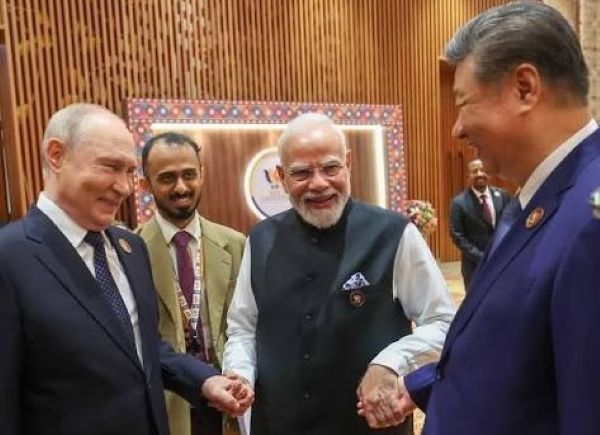 BRICS countries are moving to turn digital agriculture, artificial intelligence, geospatial technology and public digital infrastructure into practical tools for food security, farmer productivity and Global South competitiveness, in a move that could have significant implications for Nigeria and other partner countries seeking new pathways to inclusive growth.
Indian Prime Minister Narendra Modi disclosed the direction on Sunday in New Delhi while delivering opening remarks at the 18th BRICS Leaders’ Summit session on “Resilience, Innovation, Cooperation and Sustainability: Shaping the Future for Inclusive Global Growth.”


Modi said the proposed BRICS Network on Digital Agriculture would open fresh opportunities for farmers across member and partner countries by connecting emerging technologies to everyday agricultural needs. His message was direct: technology must not remain locked inside laboratories, elite conferences or urban startup clusters. It must reach farmers, rural producers and the millions whose livelihoods depend on climate-sensitive agriculture.
“The BRICS Network on Digital Agriculture will create new opportunities for farmers,” Modi said, according to the News Agency of Nigeria.
The initiative is expected to connect AI, geospatial technology and Digital Public Infrastructure with practical agricultural use cases, including crop monitoring, weather intelligence, soil information, irrigation planning, input management, fisheries, aquaculture, agroforestry and market access. For developing economies, this could mark a shift from agriculture as a low-productivity survival sector to agriculture as a technology-enabled platform for food security, trade and rural wealth creation.
The Indian leader also linked the agriculture push to wider innovation structures within BRICS, including the bloc’s Incubator Network and a proposed Startup Innovation Fund. The implication is strategic: BRICS wants to build an innovation pipeline that connects research, startups, MSMEs, farmers, logistics operators and export markets.
But Modi also warned against the weaponisation of technology and critical minerals, arguing that shared progress could be constrained if access to strategic tools becomes exclusionary. That warning speaks directly to the current global moment, where AI chips, satellites, cloud infrastructure, minerals, data and payment systems are increasingly part of geopolitical competition.
From Diplomatic Club to Development Platform
The New Delhi summit is significant because BRICS is trying to move beyond summit rhetoric into practical instruments. Under India’s 2026 Chairship, the bloc has advanced cooperation around digital agriculture, MSMEs, global value chains, logistics, startup innovation, science repositories and Global South negotiating capacity.
Shri Sudhakar Dalela, Secretary of Economic Relations in India’s Ministry of External Affairs, told journalists in New Delhi that India’s chairship had produced more than 50 practical outcomes across resilience, innovation, cooperation and sustainability. Among the initiatives he identified were the BRICS MSME Cooperation Portal, collaboration on global value chains, and the BRICS Logistics Supply Chain Cooperation Framework.
Dalela said the goal was to make BRICS more practical, solution-oriented and people-centred. That framing matters. If BRICS is to remain relevant beyond geopolitics, it must prove that it can help solve real development problems: food insecurity, fragmented supply chains, youth unemployment, weak industrialisation, limited trade finance, poor logistics and low productivity.
The bloc is also considering a programme to strengthen the negotiation capacity of officials and young professionals from the Global South. This is not a small matter. Many developing countries enter global negotiations on trade, technology, climate finance, digital taxation, agriculture, intellectual property and financial architecture with weaker technical preparation than richer countries. Capacity-building in these areas could improve how Global South countries defend their interests in global governance.
Nigeria’s Partner-Country Opportunity
Nigeria’s participation in the New Delhi session as a BRICS Partner Country is highly relevant. Alongside Belarus, Bolivia, Cuba, Kazakhstan, Malaysia, Thailand, Uganda, Uzbekistan and Vietnam, Nigeria now has an expanded platform to engage BRICS conversations without being a core member of the bloc.
For Nigeria, the digital agriculture agenda should not be treated as ceremonial diplomacy. It should be read as an opportunity to address weaknesses in one of the country’s most important economic sectors. Agriculture employs millions of Nigerians, supports food supply, anchors rural livelihoods and remains central to inflation management. Yet the sector is constrained by low mechanisation, poor extension services, climate shocks, insecurity, fragmented markets, weak storage, inadequate logistics and poor access to reliable data.
AI and geospatial tools can help Nigeria map farmlands, predict yields, monitor crop stress, track floods and droughts, improve input distribution, guide insurance products and strengthen early-warning systems. Digital Public Infrastructure can support farmer identity, digital credit, subsidy targeting, payment rails, produce traceability and market information.
However, Nigeria’s challenge is execution. The country does not suffer from a shortage of policy slogans. It suffers from weak coordination between ministries, states, research institutions, private operators, farmer groups and financiers. BRICS cooperation will matter only if Nigeria converts it into pilots, data partnerships, funding pipelines, startup support and measurable productivity gains.
Market Implications
The market implications are considerable. Digital agriculture can expand the addressable market for agri-tech startups, satellite-data firms, logistics platforms, input suppliers, commodity exchanges, rural fintechs, insurers and food processors. If BRICS cooperation creates shared standards, data corridors and financing mechanisms, African and Asian innovators could build products for multiple Global South markets rather than single-country niches.
The BRICS MSME Cooperation Portal also has commercial significance. MSMEs remain the real backbone of developing economies but are often excluded from cross-border value chains because of weak visibility, poor documentation, lack of credit, logistics challenges and limited certification. A functional portal could help small businesses connect to procurement opportunities, partners, distributors and trade information.
The logistics framework is equally important. Global South trade is not limited by demand alone. It is limited by ports, warehousing, cold chains, customs friction, unreliable transport and costly finance. If BRICS can reduce trade frictions among member and partner economies, it could deepen South-South commerce and create new export channels for agriculture, light manufacturing and services.
Brand Implications
For BRICS, the brand challenge is credibility. The bloc has often been framed as a counterweight to Western dominance, but that positioning alone is insufficient. To win trust across the Global South, BRICS must become known for practical delivery: lower transaction costs, better financing, stronger food systems, inclusive technology and useful capacity-building.
India’s chairship appears to understand this. By positioning BRICS around farmers, MSMEs, startups, women, youth, researchers and ordinary citizens, New Delhi is trying to humanise a bloc that can otherwise feel remote and state-centric.
For Nigeria, participation carries brand implications too. Nigeria must not appear as a passive attendee in Global South forums. It should project itself as a serious partner with bankable projects in digital agriculture, renewable energy for rural productivity, food processing, agro-logistics, AI talent, fintech rails and commodity markets.
The Nigerian brand in such settings should be: scale, talent, market depth and problem-solving urgency. But that brand must be supported by execution discipline.
Investor Relevance
Investors should pay attention to this BRICS direction because it signals where development capital, strategic finance and policy attention may increasingly flow. Digital agriculture sits at the intersection of food security, climate resilience, AI, satellite data, fintech, insurance and rural infrastructure. That makes it attractive to venture funds, development finance institutions, agribusiness investors and sovereign-backed vehicles.
The proposed BRICS Startup Innovation Fund, if effectively structured, could provide new capital pathways for innovators building in high-friction markets. The Incubator Network could help founders access mentors, technical partners and regional market knowledge. The science and research repository could support commercialisation if it is designed to connect research outputs with industry needs.
For Nigeria, investor relevance will depend on whether the country can package credible opportunities. A BRICS-facing Nigerian digital agriculture pipeline could include climate-smart farming platforms, crop-intelligence systems, rural agent networks, agro-processing clusters, commodity-traceability tools, warehouse-receipt systems, livestock monitoring, aquaculture analytics and weather-index insurance.
The opportunity is not theoretical. Food inflation, climate disruption and supply-chain fragility have made agriculture one of Nigeria’s most urgent investment frontiers.
The Geopolitical Layer
BRICS’ agriculture and MSME agenda cannot be separated from geopolitics. The summit is taking place at a time of rising conflict, trade tensions, supply-chain realignment, sanctions pressure and disputes over technology access. Reuters reported that BRICS leaders adopted a New Delhi Declaration expressing concern over Middle East tensions and calling for restraint, while also raising concerns about unilateral trade and non-tariff measures.
This is the operating environment in which digital agriculture becomes strategic. Food is power. Data is power. Logistics is power. Critical minerals are power. AI is power. Countries that control the infrastructure of production, trade and intelligence will shape future economic outcomes.
Modi’s warning against the weaponisation of technology and critical minerals therefore speaks to a deeper anxiety among developing economies: that the next phase of global growth may be controlled by those who dominate chips, satellites, cloud systems, digital payments and mineral supply chains.
BRICS is trying to answer that anxiety by building cooperative platforms. The test will be whether those platforms remain open, transparent and useful, or become another layer of geopolitical competition.
BRANDECONOMY Insight
The BRICS digital agriculture agenda should matter deeply to Nigeria because it captures the future of development: the fusion of food systems, technology, finance, logistics and diplomacy.
For Nigeria, the question is not whether AI and geospatial technology can transform agriculture. They can. The real question is whether Nigeria can build the institutional seriousness to use them. Digital agriculture requires trusted farmer data, interoperable platforms, rural connectivity, extension services, state-level coordination, private-sector participation, patient capital and measurable outcomes.
BRICS may provide the table, but Nigeria must bring the project discipline.
The country should leave New Delhi with more than communiqués. It should identify pilot states, priority crops, technology partners, financing sources, research institutions and private operators that can turn BRICS cooperation into Nigerian productivity.
The Global South does not need another grand declaration that dies at the airport. It needs working platforms that help farmers produce more, MSMEs trade better, startups scale faster and countries negotiate smarter.
That is the real promise of New Delhi. And for Nigeria, it is a promise worth converting into action.