


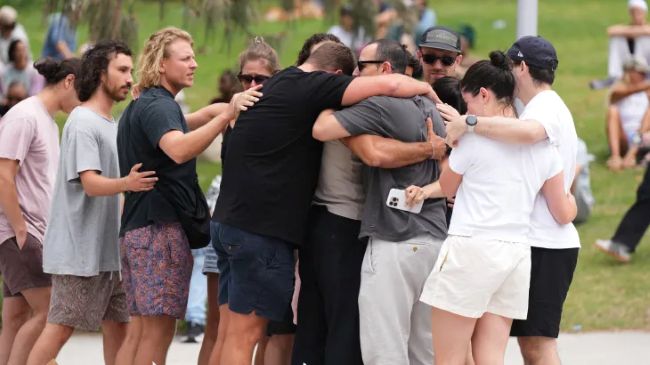
A Preventable Tragedy That Redefined Risk in a “Low-Threat” Democracy
Australia’s deadliest gun attack in nearly three decades did more than shatter lives at Sydney’s Bondi Beach—it punctured long-held assumptions about the country’s internal security architecture, intelligence coordination, and firearms oversight.
The targeted attack on a Jewish Hanukkah celebration, which left 15 civilians dead and dozens injured, has now been officially confirmed by authorities as a domestic terror incident carried out by a father and son, using legally obtained firearms. What followed was not just national mourning, but a sobering reckoning: how did multiple warning systems fail at once?




When Legal Frameworks Fail to Detect Lethal Intent
At the centre of the tragedy is a disturbing paradox.
The older suspect—who died at the scene—held a valid firearms licence for nearly a decade. His son, critically injured and now under arrest, had previously drawn the attention of security agencies years earlier but was later assessed as posing “no imminent threat.”
This combination—licensed access + downgraded threat assessment + radicalised intent—proved catastrophic.
From a crisis-management standpoint, the Bondi attack underscores a recurring global risk pattern:
Systems built to manage isolated risks struggle when threats emerge at the intersection of ideology, legality, and family networks.
The Blind Spots Exposed
1. Firearms Licensing ≠ Continuous Risk Monitoring
Australia’s gun laws are among the world’s strictest, yet this case shows that licensing is not the same as behavioural surveillance. Long-term permit holders can radicalise after approval, with little mechanism for dynamic reassessment.
2. Intelligence “De-Escalation” Gaps
The younger suspect had earlier interactions with security agencies, including a counter-terror review that ended without escalation. That decision—technically correct at the time—raises deeper questions about how dormant risk is re-evaluated over time, especially when ideological exposure persists.
3. Family-Linked Radicalisation
Crisis analysts increasingly warn that intra-family radicalisation is harder to detect than lone-wolf activity. Shared living spaces, shared weapons access, and shared grievance narratives create compact, opaque threat cells.
4. Event-Based Risk Underestimation
Despite the global rise in antisemitic attacks, the Bondi event—attended by about 1,000 people—was not treated as a high-risk target. The absence of visible security buffers turned minutes into mass casualties.
The Human Factor: Courage Amid Chaos
One of the most striking moments of the attack was the intervention of a civilian who physically tackled and disarmed one of the attackers, sustaining gunshot wounds in the process. His actions saved lives—and simultaneously exposed the absence of layered security where it mattered most.
In crisis doctrine, this is known as heroic substitution—when civilians fill the gap left by institutional failure. It is never a strategy; it is a warning.
BRANDECONOMY INSIGHT
From “Gun Control Success Story” to System Stress Test
Australia has long been cited globally as proof that strict gun laws prevent mass shootings. Bondi does not negate that record—but it complicates it.
The lesson is not about loosening or tightening laws alone. It is about integration:
- Firearms regulation must connect seamlessly with intelligence refresh cycles
- Threat assessments must be living documents, not archived decisions
- High-risk cultural and religious events require dynamic, not static, protection models
For democracies worldwide, Bondi is a reminder that security failures rarely come from one broken system—but from several “adequate” systems that fail to talk to each other.
What Comes Next
Australian authorities have already signalled a review of firearms licensing, intelligence escalation thresholds, and event-security protocols. More importantly, the country is confronting an uncomfortable truth:
Even stable societies are vulnerable when risk is treated as episodic rather than continuous.
Bondi will likely become a case study—not only in counter-terrorism, but in how modern democracies must rethink prevention in an age of legally enabled violence and ideologically driven hate.