FutureMakers by NASENI: Nigeria’s Visionary Project for Innovation Leadership

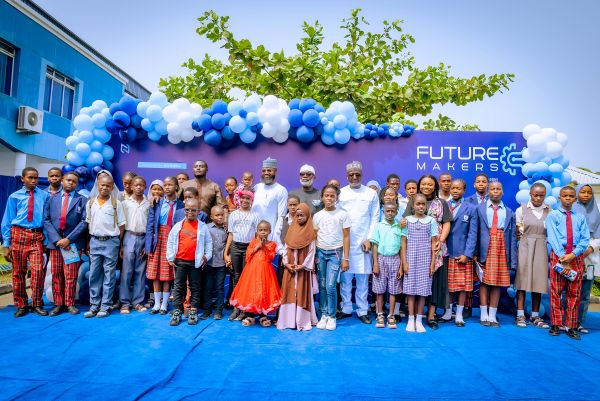
Nigeria has taken a decisive step toward securing its long-term innovation future with the launch of FutureMakers by NASENI, a national programme designed to cultivate creativity, problem-solving, and technological confidence among children aged 5 to 16 years.
Unveiled at the headquarters of the National Agency for Science and Engineering Infrastructure (NASENI) in Abuja, the initiative signals a strategic shift in Nigeria’s innovation policy: building inventors before importing solutions.


Why FutureMakers Matters Now
Speaking at the launch, NASENI Executive Vice Chairman and CEO, Khalil Suleiman Halilu, framed FutureMakers as a generational investment rather than a short-term programme.
“The technological future of Nigeria belongs to the younger generation. Early exposure creates lifelong innovators, and with FutureMakers, Nigeria is deliberately joining that league.”
Unlike conventional STEM competitions, FutureMakers is positioned as a national pipeline, feeding talent into NASENI’s broader incubation, acceleration and industrialisation ecosystem over the next 30 to 50 years.
According to Halilu, the programme is designed to:
- Build technical confidence early
- Develop problem-solvers, inventors and creators
- Prepare children for STEM, entrepreneurship and leadership
- Strengthen Nigeria’s innovation ecosystem from the ground up
- Create a steady flow of talent into national R&D and manufacturing frameworks
“This is how nations secure innovation stability,” he said. “Not by chance—but by design.”
Beyond Coding: A Mindset Shift
Providing deeper context, Engr. Dr. Anas Balarabe Yazid, Special Adviser to the EVC/CEO on Commercialisation and Efficiency, emphasised that FutureMakers is not merely about tools or competitions.
“This is about believing in our children before the world has fully seen them. It’s about investing in talent before a CV exists.”
At its core, FutureMakers aims to create a defining moment for participants—the moment they realise they can build, solve real problems, and shape the future, rather than merely consume it.
Programme Structure and Incentives
According to Mrs. Rachael Oluwabusola Perez-Folayan, Head of the NASENI Innovation Hub, the pilot phase will run from December 2025 to February 2026, drawing 60 children from across Nigeria’s six geopolitical zones.
Key highlights include:
- ₦5 million in prizes for top winners across zones
- Scholarships for outstanding participants
- An exclusive international study tour with the NASENI EVC
- Structured mentorship, hands-on innovation challenges, and prototype development
The design reflects a deliberate balance between competition, exposure and long-term capacity building.
Legislative and National Backing
Delivering a goodwill message, Senator Francis Ezenwa Onyewuchi, Chairman of the Senate Committee on NASENI, described FutureMakers as a foundational intervention for national competitiveness.
“This is how nations are built—where creativity is elevated, ideas are supported, and every child’s potential is allowed to thrive.”
He commended parents, teachers, mentors and private-sector partners for supporting a vision that places children at the centre of Nigeria’s innovation economy.
BRANDECONOMY Insight
FutureMakers represents a quiet but profound pivot in Nigeria’s development strategy. While much of Africa’s innovation conversation focuses on startups and venture capital, NASENI is betting earlier—on children, curiosity and confidence.
If sustained, the programme could:
- Reduce Nigeria’s long-term dependence on imported technologies
- Create a domestic pipeline of engineers, inventors and industrial designers
- Align education with manufacturing, science and national productivity
- Position Nigeria as a net exporter of innovation talent, not just ideas
In a global economy increasingly shaped by AI, climate technology and advanced manufacturing, the countries that win tomorrow are the ones educating differently today.
FutureMakers is Nigeria’s declaration that the future will not be improvised—it will be engineered.