Zamfara’s $200m Lithium Plant: Gov Lawal Targets 2,000 Jobs, Local Processing and Mining Rebirth

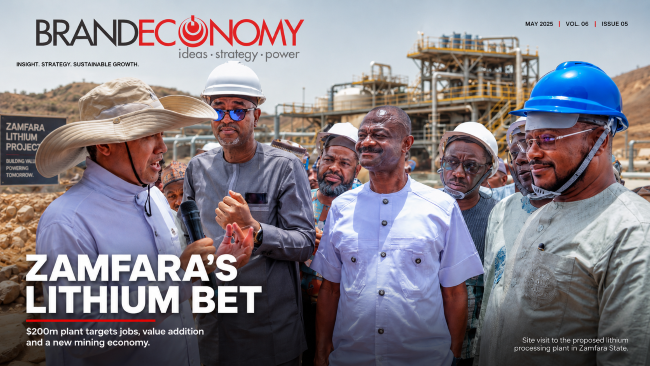 Governor Dauda Lawal’s unveiling of a $200 million lithium mining and processing plant in Boko, Zurmi Local Government Area, is more than an investment announcement. It is Zamfara’s attempt to move from raw mineral extraction to value-added industrialisation, jobs, responsible mining and a cleaner investment identity.
Zamfara State is seeking a new economic story from beneath its soil.




Governor Dauda Lawal has unveiled a $200 million lithium mining and processing plant in Boko, Zurmi Local Government Area, describing the project as a major step in the state’s journey toward economic rebirth, responsible mining and industrial development.
The announcement was contained in a statement issued on Sunday in Gusau by the Governor’s spokesperson, Sulaiman Idris.
According to the statement, Lawal said the Lithium Plant project represents the beginning of a new chapter in Zamfara’s effort to harness its mineral wealth through responsible investment, local processing, value addition, job creation and sustainable development.
For a state long associated with vast mineral deposits but also burdened by informality, illegal mining and insecurity, the project carries both promise and responsibility.
 A New Mining Chapter
 A New Mining Chapter
Lawal said the plant marks a significant milestone in Zamfara’s collective effort to convert mineral resources into broad-based economic value.
He said his administration is determined to transform the solid minerals sector from largely informal and unregulated activity into an organised, transparent and value-driven industry that directly benefits the people.
“For many years, our state had been known within and outside this country as a haven of vast mineral deposits,” Lawal said.
“The measure of this blessing is how it is responsibly harnessed to improve the lives of our people.”
That is the heart of the matter.
Mineral wealth is not development by itself. It becomes development only when it creates jobs, supports local businesses, strengthens government revenue, protects communities and reduces the incentive for illegal extraction.
The Global Lithium Moment
Lawal said global demand for lithium and other critical minerals has grown because of their importance to renewable energy, electric vehicles, modern technology and industrial transformation.
That context is important.
Batteries have become central to the future of transport, renewable-energy storage and digital infrastructure, with lithium remaining one of the most strategic materials in the battery value chain. Reuters recently described batteries as moving from a marginal technology into a core pillar of modern infrastructure and the global energy transition.
This global shift has intensified competition for critical minerals and processing capacity. It has also made countries more interested in securing supply chains for battery materials rather than depending only on distant suppliers or raw-mineral exports.
For Zamfara, lithium is therefore not just another mineral. It is a ticket into one of the world’s fastest-changing industrial conversations.
Beyond Raw Exports
The Governor was clear that Zamfara must no longer remain merely a supplier of raw mineral resources.
He said the state must become an active participant across the mining value chain through local processing, value addition, skills development and industrialisation.
This aligns with Nigeria’s broader policy direction. The Federal Government has moved toward granting mining licences only to companies that show plans for local processing, as part of a shift away from exporting raw minerals and toward creating jobs and domestic value from solid minerals. Reuters reported that the policy is designed to encourage value addition, attract investment and ensure communities benefit more directly from mineral wealth.
That makes the Zamfara plant strategically significant.
If well executed, it can help move the state from extraction to processing, from informal mining to industrial operations, and from mineral potential to taxable, investable economic activity.
The Investors
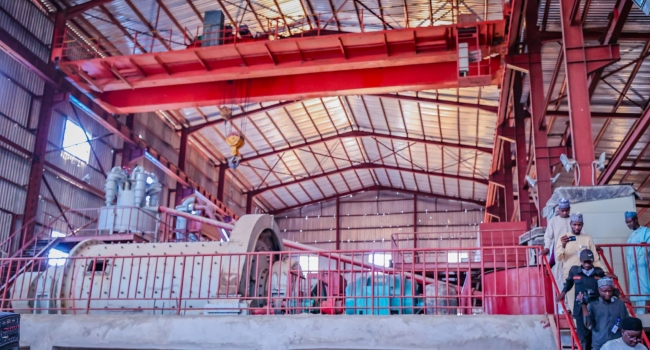
The $200 million Zamfara Lithium Mining and Processing Plant is a joint investment involving Zam Mining Company Ltd, Bima Mines Ltd, Jinlide Mining Co. Ltd and other partners.
Lawal also commended Bevo Mines Ltd, Generalized Mining Company Ltd and other development partners for showing confidence in the state.
He said their investment demonstrated that Zamfara remains open to legitimate businesses and responsible partnerships.
The companies, for their part, commended the Lawal administration for creating an enabling environment that had restored investor confidence and attracted major investment into the state.
The project is expected to create no fewer than 2,000 direct and indirect jobs, with priority to be given to qualified residents of Zamfara, especially people from the host communities.
Jobs and Skills
The employment promise is critical.
Mining projects can generate jobs directly through plant operations, technical work, processing, logistics, maintenance, security, administration and environmental management.
They can also generate indirect opportunities through haulage, catering, housing, local supply, equipment repair, small businesses, retail activity and community services.
But the quality of jobs matters.
For the project to become a genuine development tool, Zamfara residents must not be limited to casual labour. They must be trained for technical, supervisory, safety, environmental, processing and management roles.
That is why Lawal mandated operators to prioritise local employment, skills transfer, community development, environmental protection and corporate social responsibility.
Community as Partner
The Governor stressed that local communities must be treated as partners in development.
He said host communities should benefit through jobs, skills acquisition, community projects, environmental protection and meaningful corporate social responsibility initiatives.
This is not optional.
Across Africa, mining projects often fail the social-licence test when communities feel excluded, exploited or environmentally exposed. In Nigeria, illegal lithium mining has already attracted concern, including government crackdowns on unlicensed operations and warnings about the risks of unsafe and unregulated extraction.
For Zamfara, responsible mining must therefore mean more than official speeches.
It must mean transparent agreements, environmental safeguards, community consultation, grievance systems, fair compensation where necessary, local procurement and credible monitoring.
The Revenue Question
As a tax and development story, this project should matter to both Zamfara State and the Federal Government.
A properly formalised processing plant can strengthen the revenue base through taxes, royalties, permits, PAYE from workers, corporate income tax, withholding tax, VAT-linked transactions, customs duties where applicable and local levies within the law.
But revenue will depend on governance.
The state and federal authorities must ensure proper mineral valuation, transparent reporting, transfer-pricing discipline, export documentation, environmental compliance and clear audit trails.
Nigeria cannot afford a situation where minerals leave the ground while public revenue, community benefits and environmental accountability disappear into weak systems.
The fiscal test is simple: mining must pay its way.
Security and Confidence
Zamfara’s mineral story cannot be separated from security.
Investors need stable operations. Communities need protection. Workers need safety. Government needs control over mining corridors, transport routes and informal extraction networks.
A legitimate processing plant can help bring order into a sector often affected by informality. But it must also be supported by strong security coordination, lawful operations and strict enforcement against illegal mining.
If mining becomes more formal, transparent and beneficial to communities, it can reduce the space for criminal exploitation.
If it is poorly governed, it could deepen old problems.
Market Implications
The project could reposition Zamfara within Nigeria’s emerging critical-minerals economy.
It may attract further investment in mining services, logistics, power solutions, equipment supply, laboratory testing, environmental consulting, security, transport and industrial support services.
It could also encourage other states with lithium and related minerals to move from raw extraction to value-added processing.
For Nigeria, the wider implication is clear: the solid minerals sector can no longer remain a small, underperforming contributor to national output. Reuters has reported that Nigeria’s mining sector contributes less than one per cent to GDP, despite the country’s resource potential and ongoing reform drive.
If the Zamfara project succeeds, it becomes a proof point for Nigeria’s mining diversification agenda.
Brand Implications
For Zamfara, this is a reputation-reset opportunity.
The state has often been viewed through the lens of insecurity and illegal mining. A well-managed lithium processing project can begin to tell a different story: one of investment, industrial ambition, responsible resource governance and job creation.
For Governor Lawal’s administration, the brand promise is execution. Investors and citizens will not judge the project by the unveiling ceremony alone. They will judge it by jobs created, communities supported, environmental standards met, revenue generated and operations sustained.
For the companies involved, the brand test is responsibility. Lithium is part of the clean-energy story, but irresponsible mining can damage the very sustainability credentials it claims to support.
Investor Relevance
For investors, Zamfara’s lithium plant is a signal that Nigeria’s critical-minerals sector is moving into a more investable phase.
Opportunities may emerge in:
- mineral processing
- mining logistics
- power and energy supply
- industrial equipment
- environmental services
- laboratory and quality testing
- safety systems
- technical training
- export infrastructure
- trade finance
- community development services
- battery-material supply chains
But investors should approach the sector with discipline.
Key questions include:
- Are mining titles and operating rights clear?
- Is the processing model commercially viable?
- Are environmental approvals in place?
- Is there a credible community agreement?
- Is security risk properly managed?
- Are export and tax structures transparent?
- Is local employment real or cosmetic?
- Can the plant operate consistently at scale?
Critical minerals are attractive, but they are not risk-free.
The Tinubu Link
Lawal commended the administration of President Bola Ahmed Tinubu for repositioning Nigeria’s solid minerals sector as a major driver of economic diversification and national development.
That link is important because mining is governed within a federal framework. States can support investment, provide local coordination and create enabling environments, but mineral ownership, licensing and sector regulation remain strongly tied to federal authority.
The best outcomes will therefore require alignment between federal policy, state-level execution, responsible investors and host communities.
Community Reaction
Residents of Boko community welcomed the investment, saying it could help reduce unemployment and poverty not only in the area but across Zamfara State.
That optimism is understandable.
But expectations must be managed properly. Mining projects can bring jobs and business opportunities, but they can also create pressure on land, housing, services, prices and the environment.
The state government and operators must therefore communicate clearly, hire transparently and ensure that benefits are visible without creating unrealistic promises.
BRANDECONOMY Insight
Zamfara’s $200 million lithium processing plant is a powerful economic signal.
It says the state wants to move from mineral potential to industrial value. It says Nigeria’s solid minerals sector can no longer be treated as a side story in the economy. It says the clean-energy transition is creating new opportunities for resource-rich regions that are ready to process, regulate and compete responsibly.
But the real test begins after the unveiling.
Lithium can create wealth. It can also create tension if poorly governed.
For Zamfara, success will depend on three things: responsible mining, local value addition and community trust.
If the Lithium Plant delivers jobs, skills, revenue, environmental protection and investor confidence, it could become a model for Nigeria’s critical-minerals future.
If not, it will join the long list of resource promises that failed the people who needed them most.