UBA After Elumelu: Nnorom Takes the Chair as Africa’s Global Bank Enters a New Governance Era

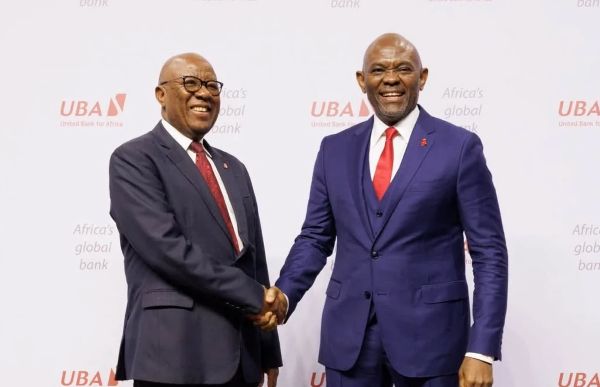
United Bank for Africa Group (UBA Group) board transition is more than a change of name at the top. It is a corporate-governance milestone, a continuity signal to investors and a fresh test of how one of Africa’s most recognisable banking brands sustains momentum after the Tony Elumelu chairmanship era.
United Bank for Africa Plc, UBA, has opened a new chapter in its corporate history with the announced retirement of its Group Chairman, Mr Tony O. Elumelu, and the election of Mr Emmanuel N. Nnorom as his successor.




The leadership transition was approved at the bank’s board meeting held on July 6, 2026, with Nnorom expected to assume office as Group Chairman on August 21, 2026. The development was confirmed in a statement signed by Alero Ladipo, Group Head, Marketing and Corporate Communications, United Bank for Africa Plc. UBA’s official website also listed the notification of the retirement and succession announcement on July 8, 2026.
The retirement, according to UBA, follows the Central Bank of Nigeria’s corporate-governance guidelines, which prescribe a maximum tenure of 12 years for non-executive directors of banks. Elumelu will therefore step down from the board on August 21 after completing the regulatory tenure limit.
For UBA, the message is deliberately clear: this is not an emergency handover. It is a planned succession.
The End of a Defining Chairmanship
Tony Elumelu’s chairmanship will be remembered as one of the most consequential periods in UBA’s modern evolution.
The board placed on record its appreciation for what it described as his “visionary leadership” and his contribution to the strategic direction and institutional strength of the group. Under his stewardship, UBA deepened its pan-African identity, strengthened its international positioning and expanded its operating story around scale, financial inclusion, trade, technology and African enterprise.
UBA describes itself as Africa’s Global Bank, operating in 20 African countries as well as the United Kingdom, the United States, the United Arab Emirates and France. Its official profile says the group supports trade, business growth, financial security and sustainability while connecting Africa to the world and the world to Africa.
That global-African positioning is important.
UBA is not merely a Nigerian bank with foreign subsidiaries. It has built a brand around African connectivity—serving governments, corporates, SMEs, retail customers, diaspora communities, cross-border traders and institutions that need banking corridors across the continent and major global financial centres.
The challenge now is to protect that brand momentum while allowing a new chairman to bring his own governance stamp.
Elumelu: Confidence in the Future
In his retirement comments, Elumelu described service to UBA as one of the great privileges of his career and expressed confidence that the bank’s competitive position across Africa and globally remains strong.
“UBA has established a unique competitive position, across Africa and globally, and I leave the Board with great confidence in UBA’s future,” he said.
He also endorsed his successor, describing Nnorom as a leader of integrity, experience and sound judgement.
That endorsement matters for market psychology.
Banks are confidence businesses. Investors, depositors, staff, regulators and counterparties pay close attention to leadership transitions because banks rely heavily on trust, continuity and perceived institutional stability.
A smooth chairmanship handover therefore protects more than board order. It protects brand confidence.
Who Is Emmanuel Nnorom?
Emmanuel Nnorom is no stranger to UBA or to the wider Elumelu-linked corporate ecosystem.
He is a chartered accountant with more than four decades of experience across banking, finance, auditing, operations, investment management and corporate governance. UBA said his leadership experience and deep institutional knowledge position him to guide the board through the group’s next phase of growth.
Nnorom is a Fellow of the Institute of Chartered Accountants of Nigeria, an Honorary Member of the Chartered Institute of Bankers of Nigeria, and an alumnus of Templeton College, Oxford. He has held senior responsibilities across Standard Trust Bank, Diamond Bank, NUB International Bank and Liberty Merchant Bank, with roles covering finance, operations, risk management, information technology, human resources and regulatory affairs.
At UBA, he previously served in several executive capacities, including Group Chief Operating Officer, Executive Director, Finance, Executive Director, Risk, Executive Director, Group Executive Office, and Managing Director/Chief Executive Officer of UBA Africa. His earlier role as MD/CEO of UBA Africa gave him direct exposure to the bank’s cross-border operating model.
Nnorom also served as President and Chief Executive Officer of Transnational Corporation Plc, overseeing interests across power, hospitality, agriculture and energy. He is currently listed by Heirs Holdings as its Chief Executive Officer. The Heirs Holdings profile further states that he previously served as CEO of Transnational Corporation of Nigeria Plc, was an Executive Director at UBA, and as Managing Director of UBA Africa oversaw the group’s African subsidiaries and corporate strategy across 18 African countries.
This is why his appointment as UBA Group Chairman reads less like an outsider’s arrival and more like an institutional continuity play.
Nnorom’s First Message: Legacy, Momentum and Value
In accepting the appointment, Nnorom said he was honoured by the board’s trust and conscious of the legacy he was inheriting.
“I look forward to working with my colleagues on the Board, Management and our staff across all our markets to sustain UBA’s momentum and continue delivering long-term value to our shareholders, customers and stakeholders,” he said.
That statement points to three priorities: continuity, board-management alignment and long-term value.
For a bank operating across multiple jurisdictions, those priorities are not ceremonial. They are strategic.
UBA must manage regulatory expectations in many markets, maintain capital strength, protect asset quality, deepen digital banking, compete for deposits, defend margins, support trade flows and remain relevant to a younger, mobile-first customer base.
That is the practical work behind the title of chairman.
Significance of This Transition Beyond UBA
The UBA succession comes at a time when Nigerian banking is in a period of regulatory reset.
The Central Bank of Nigeria introduced higher minimum capital requirements in 2024, setting ₦500 billion as the new capital base for commercial banks with international authorisation, ₦200 billion for national banks and ₦50 billion for regional banks, with banks required to strengthen capital through approved routes.
For large banks such as UBA, leadership stability during such a period is critical.
The market will be watching how the bank balances capital strength, dividend expectations, pan-African growth, risk discipline, operating efficiency and digital transformation.
UBA’s 2024 financial results showed gross earnings of ₦3.18 trillion, profit before tax of ₦803.7 billion, profit after tax of ₦766.5 billion, total assets of ₦30.3 trillion and customer deposits of ₦24.6 trillion, according to the bank’s financial-reporting page.
Those numbers place the incoming chairman in charge of board oversight at a scale where governance choices carry market-wide significance.
Market Implications: Investors Prefer Predictable Succession
The immediate market implication is stability.
Leadership uncertainty can unsettle investors, especially in highly regulated sectors such as banking. But a clearly explained succession, tied to governance rules and approved by the board, helps reduce speculation.
For shareholders, the key questions will be practical:
- Will UBA sustain earnings momentum?
- Will the board maintain capital discipline?
- Can the bank deepen returns from its African subsidiaries?
- Will digital investments convert scale into better customer economics?
- Can the group protect asset quality across multiple markets?
- Will governance remain strong after a dominant chairman exits?
The Nnorom appointment appears designed to answer part of that question before it is asked: UBA is changing its chairman, not its strategic centre of gravity.
Brand Implications: From Founder-Led Aura to Institution-Led Confidence
Tony Elumelu’s personal brand is one of the strongest business brands in Africa. His association with UBA gave the bank visibility beyond conventional financial-services communication.
But strong institutions must eventually prove that they are larger than any one personality.
That is the deeper brand test for UBA.
The next phase must show that the bank’s identity—Africa’s Global Bank—is not dependent only on Elumelu’s public stature, but on institutional culture, management depth, governance quality, customer experience and operational performance.
For Nnorom, the brand opportunity is clear: project calm authority, governance maturity and strategic continuity.
He does not need to imitate Elumelu’s public style. His value may lie in a different register: discipline, board experience, institutional memory and risk-aware expansion.
Investor Relevance: What to Watch Next
Investors should watch five signals as Nnorom prepares to take the chair:
- Board continuity and independence
The market will assess whether UBA’s board continues to demonstrate strong oversight, credible committee work and effective challenge to management. - Capital strategy
In a recapitalising banking sector, shareholders will monitor how UBA balances capital requirements, growth ambitions and returns. - African subsidiary performance
UBA’s multi-country platform is a competitive advantage, but investors will look for evidence that the network delivers strong returns, not just footprint prestige. - Digital banking execution
UBA’s scale must translate into better transaction volumes, lower cost-to-serve, improved customer retention and stronger data-led products. - Succession culture
A smooth chairmanship transition sends a wider signal about institutional maturity. For a bank of UBA’s size, succession planning is not a governance footnote. It is part of franchise value.
What Happens to Elumelu’s Corporate Influence?
Elumelu’s retirement from the UBA Group board does not remove him from corporate Nigeria or African enterprise.
He remains a major investor, philanthropist and advocate of Africapitalism through Heirs Holdings and the Tony Elumelu Foundation. Heirs Holdings describes itself as a pan-African investment group with interests across power, energy, banking, insurance and financial services, technology, real estate and hospitality, and healthcare. It also states that its portfolio companies operate across 24 countries with current portfolio value reported at ₦20.9 trillion as of March 31, 2026.
The more interesting question is not whether Elumelu remains influential. He does.
The question is how UBA’s governance identity evolves as the bank enters a post-Elumelu chairmanship era while still carrying the strategic imprint of his leadership.
That transition will be watched closely across boardrooms because it speaks to a wider issue in African enterprise: how iconic founders and dominant chairmen build institutions that can outgrow their personal presence.
BRANDECONOMY Insight
UBA’s chairmanship succession is a story of regulation, continuity and institutional maturity.
Tony Elumelu leaves the board after a defining era in which UBA sharpened its pan-African identity and global ambition. Emmanuel Nnorom arrives with deep institutional knowledge, cross-sector leadership experience and a finance-and-governance profile suited to a bank navigating recapitalisation, digital competition and continental growth.
The central question is no longer whether the UBA Group has a powerful brand.
It does.
The question is whether that brand can keep compounding value as a disciplined institution—less dependent on personality, more anchored in governance, execution, risk intelligence and customer relevance.
That is how the UBA Group story goes on.