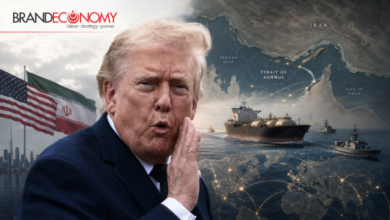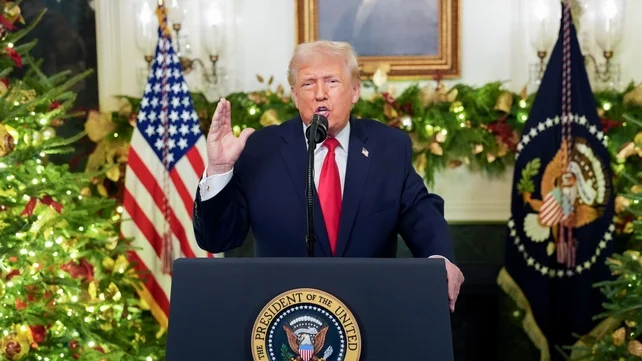
U.S. President Donald Trump has renewed his promise of a historic economic boom, even as public anxiety over rising living costs continues to shadow his second-term agenda. In a nationally televised address marking his first year back in office, Trump sought to reassure Americans that price pressures are easing—while placing responsibility for lingering inflation squarely on his Democratic predecessor, Joe Biden.
“Eleven months ago, I inherited a mess, and I’m fixing it,” Trump declared from the White House, framing his presidency as a corrective phase following what he described as years of economic mismanagement.


The Affordability Problem Trump Cannot Wish Away
Despite the confident tone, Trump’s address comes against a backdrop of deep voter unease over affordability, particularly food, fuel and household essentials. These concerns have begun to weigh heavily on Republican strategists, who fear backlash in the 2026 midterm elections if inflationary pressures persist.
Trump insisted that prices are “falling rapidly,” arguing that progress is underway even if it is not yet fully felt by households. However, the messaging appeared conflicted: while claiming rapid price declines, the president also acknowledged ongoing inflation—though he maintained that wage growth is outpacing price increases.
For many economists, the lived reality for consumers remains more complex.
Tariffs, Patriotism and the ‘Warrior Dividend’
In a surprise move aimed at galvanising support, Trump announced a $1,776 ‘warrior dividend’ bonus for 1.45 million U.S. military service members, to be paid before Christmas. The amount, he explained, symbolises 1776, the year of America’s founding, ahead of the country’s 250th anniversary celebrations in 2026.
Trump said the payments would be funded by tariff revenues, reinforcing his long-standing belief that tariffs serve as both an economic and geopolitical weapon. He argued that import levies are boosting domestic manufacturing, funding government priorities and strengthening America’s negotiating position abroad.
Many economists, however, counter that tariffs are ultimately import taxes that tend to raise consumer prices—an irony not lost on voters already struggling with costs.
Jobs, Growth and Uneven Economic Signals
The president painted an optimistic picture of the labour market, but recent data tells a more uneven story. U.S. employers added 64,000 jobs in November, driven largely by healthcare and construction hiring. Manufacturing, however, has shed jobs for seven consecutive months, raising questions about the durability of Trump’s industrial revival narrative.
While the overall economic impact of tariffs has so far been less severe than early forecasts predicted, price pressures remain most visible in trade-exposed sectors—fueling scepticism among consumers and analysts alike.
Politics Never Far From the Economics
Much of Trump’s address reverted to familiar political combat. He repeatedly attacked Democrats, migrants and the Biden administration, accusing undocumented workers of displacing American jobs and blaming past policies for present economic pain.
At the same time, Trump positioned 2026 as a breakout year—promising an economic surge coinciding with the FIFA World Cup, which the United States will co-host with Canada and Mexico.
Yet public opinion remains stubbornly unconvinced. Recent polls show a majority of Americans disapprove of Trump’s handling of the economy, with cost-of-living pressures cited as the dominant concern.
Republican Jitters and the Road to 2026
The warning signs are already flashing for the Republican Party. Recent electoral losses in key states and underwhelming performances in traditionally safe territories have heightened anxiety within the party’s ranks.
Trump has responded by ramping up domestic travel, delivering campaign-style speeches focused on a renewed promise to “make America affordable again.” Vice-President JD Vance, increasingly visible as the administration’s economic messenger and a potential 2028 contender, has urged voters to show patience as reforms take hold.
BRANDECONOMY Insight
Trump’s economic messaging reveals a central contradiction: tariffs are being sold as both inflation-fighting tools and revenue engines, even as voters experience them as cost drivers. The president’s challenge is no longer persuasion but credibility. History shows that electorates rarely vote on forecasts—they vote on grocery bills. Unless affordability visibly improves, Trump’s promised boom risks becoming a political liability long before it materialises.