The FCT Minister argues that opposition disarray has strengthened President Bola Tinubu’s 2027 prospects, but beneath the political bravado lies a deeper question about whether Nigeria’s opposition can rebuild trust, structure and strategic coherence before the next electoral cycle.
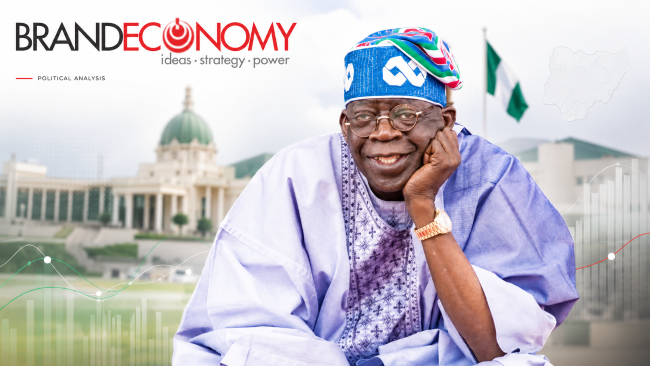 The FCT Minister argues that opposition disarray has strengthened President Bola Tinubu’s 2027 prospects, but beneath the political bravado lies a deeper question about whether Nigeria’s opposition can rebuild trust, structure and
 The Minister of the Federal Capital Territory, Nyesom Wike, has declared that the political pathway to President Bola Tinubu’s re-election in 2027 is already clear, dismissing opposition parties as fragmented platforms incapable of mounting a credible challenge.
Wike made the remarks while speaking with journalists after inspecting projects in Abuja, where he took aim at what he described as the internal confusion, distrust and weak structures within rival political groups.




According to him, recent developments within the opposition have vindicated his long-held view that talk of a formidable anti-Tinubu coalition was built on fragile foundations.
The former Rivers State governor mocked opposition figures who had presented themselves as the new face of political change, saying they appeared to have lost clarity about their own mission.
“They all gathered and said this government is not doing well and that they were the ones who would give Nigerians the change they require,” Wike said. “But they have forgotten what they want.”
His comments came against the backdrop of the reported exit of former Secretary to the Government of the Federation, Babachir Lawal, from the African Democratic Congress, after alleging that the party’s presidential primary process was manipulated in favour of former Vice President Atiku Abubakar.
Wike seized on the allegation as evidence that the opposition’s coalition experiment had collapsed before it could mature into a credible political force.
He argued that experienced politicians could see from the beginning that the structure was tilted in favour of Atiku, the former presidential candidate of the Peoples Democratic Party.
“I said it in the morning: if you are a politician, you will understand that the structure was set for Abubakar. There is no need to worry yourself to say you want to participate as a coalition party. There is no coalition,” Wike said.
The FCT Minister said criticism emerging from within opposition ranks showed that the situation inside the rival parties was worse than outsiders had imagined.
For Wike, the opposition’s problem is not merely ideological. It is organisational. In his view, the parties lack the discipline, internal trust and leadership consensus required to challenge an incumbent president with control of federal machinery, a national party structure and the advantage of incumbency.
“So, we are happy. You can see the coast is very clear for the President to be re-elected in 2027,” he said.
The Politics Behind Wike’s Confidence
Wike’s statement is not surprising. He has become one of the most forceful political voices defending the Tinubu administration, despite his long association with the PDP. His appointment as FCT Minister under an APC-led government has also made him one of the most visible symbols of Nigeria’s increasingly fluid post-2023 political realignment.
His remarks therefore carry two layers.
The first is partisan messaging. By projecting confidence, Wike is helping to shape an early narrative that Tinubu’s re-election is inevitable because the opposition is too divided to compete.
The second is strategic pressure. By publicly ridiculing opposition coalition efforts, he is seeking to deepen suspicion among rival camps and exploit the internal tensions that have historically weakened opposition politics in Nigeria.
In Nigerian elections, political momentum is often built not only through performance, but also through perception. If voters, donors, power brokers and party structures begin to believe that a coalition is doomed, the coalition may struggle to attract the very support it needs to survive.
That is why Wike’s comments matter beyond rhetoric. They are part of the early psychological contest ahead of 2027.
Opposition’s Recurring Burden
Nigeria’s opposition has repeatedly struggled with the challenge of building durable coalitions. The political arithmetic is familiar: several parties and personalities agree that the ruling party must be challenged, but often fail to agree on leadership, candidate selection, structure, funding, ideology and regional balancing.
This is not a new problem. Coalitions in Nigeria are frequently born from opposition to power rather than agreement on governance. Once the question of who leads emerges, unity often weakens.
Wike’s criticism speaks directly to that weakness. His argument is that any coalition designed around one dominant aspirant cannot credibly present itself as an open democratic alternative.
Whether his claim is fair or self-serving, the opposition has a real credibility challenge. To mount a serious challenge in 2027, it must show Nigerians that it can offer more than elite negotiations, recycled grievances and anti-incumbent slogans.
It must present a disciplined political structure, a credible economic message, an inclusive leadership process and a candidate who can build trust across regions, generations and interest groups.
Tinubu’s Advantage — and the Limits of Inevitability
Wike’s confidence also reflects the structural advantages available to an incumbent president. Tinubu enters the road to 2027 with federal visibility, ruling-party machinery, state-level alliances and the ability to shape policy, projects and political incentives.
The APC also benefits from an opposition landscape that remains unsettled.
But re-election is never automatic. The economy, security, cost of living, food prices, inflation, employment, public trust and regional political calculations will all shape the eventual contest.
A fractured opposition gives Tinubu an advantage. It does not eliminate voter dissatisfaction where hardship remains severe. It does not substitute for performance. It does not remove the need for the administration to show measurable progress before the campaign season fully begins.
Wike may be right that the opposition is disorganised. But the ruling party must still contend with the lived experience of Nigerians.
That is the real battlefield: not only party headquarters and coalition meetings, but markets, farms, workplaces, petrol stations, schools and households.
BRANDECONOMY Insight
The Opposition’s Biggest Enemy May Not Be Tinubu — It May Be Itself
Wike’s declaration that the “coast is clear” for Tinubu’s re-election is politically loaded, but it contains a hard truth: Nigeria’s opposition has a structure problem.
Opposition politics cannot survive on anger alone. Public frustration with government may create an opening, but it does not automatically produce an electoral alternative. To convert dissatisfaction into power, opposition parties need organisation, credibility, message discipline, trusted leadership and a transparent process for choosing candidates.
That is where many opposition projects fail.
Coalitions often begin with broad language about rescuing Nigeria, but quickly become trapped in the politics of ambition. Once aspirants begin to suspect manipulation, imposition or hidden control, unity collapses.
The ruling party understands this weakness and will continue to exploit it.
For Tinubu, opposition fragmentation is a major advantage. But it should not become an excuse for complacency. The 2027 election will ultimately be shaped by economic pain, security, infrastructure delivery, jobs, inflation and public confidence.
For the opposition, the lesson is urgent: Nigerians will not be persuaded by a coalition that looks like a quarrel over tickets. They will listen to a movement that looks organised, serious and ready to govern.
Until that happens, Wike’s boast will carry political weight.