CBN’s PSV 2028 Will Position Nigeria as Africa’s Payments Hub – Cardoso
Payments System Vision 2028 for Digital Economic Growth

 The Central Bank’s new payments roadmap seeks to turn Nigeria’s fintech energy into a more secure, inclusive and globally competitive infrastructure for trade, remittances, investment and digital economic growth.
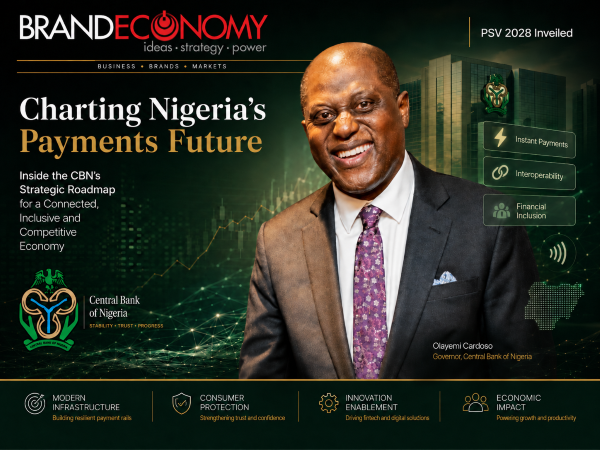 The Central Bank’s new payments roadmap seeks to turn Nigeria’s fintech energy into a more secure, inclusive and globally competitive infrastructure for trade, remittances, investment and
 The Governor of the Central Bank of Nigeria, Olayemi Cardoso, has said the newly unveiled Payments System Vision 2028 will position Nigeria as Africa’s leading payments hub, deepen the digital economy and strengthen the country’s role in regional and global trade.
Cardoso spoke in Abuja at the launch of PSV 2028, describing the roadmap as a strategic framework for building a payments ecosystem that is secure, resilient, innovative, inclusive and globally competitive.




According to him, Nigeria’s payments industry has evolved over the past two decades into one of the most dynamic and innovative segments of the economy. Digital payments, he said, are no longer peripheral financial services. They have become critical infrastructure for commerce, investment, transparency and national productivity.
“Payment systems now serve as platforms for innovation and critical infrastructure for economic growth,” Cardoso said.
He noted that efficient payment systems reduce business costs, improve productivity, enhance transparency and create stronger confidence in the financial system. He added that PSV 2028 aligns with the CBN’s broader reform agenda introduced in 2023 and will support trade, remittances, investor confidence and Nigeria’s balance-of-payments position.
For Cardoso, the ambition is clear: Nigeria must consolidate its leadership in Africa’s digital payments landscape and build the infrastructure required to compete globally.
A Roadmap for Inclusion, Trade and Digital Growth
Cardoso said PSV 2028 would strengthen payment infrastructure, expand financial inclusion and deepen Nigeria’s integration with regional and global payment systems.
He linked the vision to opportunities under the African Continental Free Trade Area, noting that seamless payments would enable Nigerian businesses to access markets across Nigeria, Africa and beyond.
“Seamless payments will enable businesses to access new markets across Nigeria, Africa and beyond,” he said.
The governor explained that faster settlements, interoperable systems and improved digital channels would support entrepreneurship, job creation and poverty reduction.
Nigeria, he said, already has the scale, talent and entrepreneurial capacity to lead Africa’s next phase of payments innovation. But he stressed that the country must combine innovation with trust, security and effective oversight.
Cardoso reaffirmed the CBN’s commitment to encouraging innovation while maintaining financial stability. He urged government agencies, banks, fintech firms, development partners and other stakeholders to support implementation.
“The success of PSV 2028 will depend on execution, collaboration and commitment from all stakeholders,” he said.
From Cash-Based Economy to Payments Powerhouse
The CBN Director of Payment System Policy, Musa Jimoh, traced Nigeria’s payments reform journey to 2007, when the country began a long-term process of modernising what was then a largely cash-based financial system.
He said limited access to electronic payment channels, high service costs, strict account-opening requirements and low banking penetration had once constrained financial inclusion.
According to him, the CBN introduced several reforms to address these barriers, including the cashless policy launched in 2012, which helped reduce dependence on physical cash and lowered transaction costs.
Jimoh said agent banking had also transformed access, with Nigeria’s agent network growing from about 50,000 agents to more than two million nationwide.
This expansion, he said, enabled millions of Nigerians to access financial services through mobile phones, agent outlets and simplified identification processes.
He added that trust remains central to the growth of digital payments. Without trust, users hesitate; with trust, digital payments become part of everyday economic life.
PSV 2028, he said, is therefore designed to improve efficiency, competitiveness and public confidence in the financial system.
SEC: Payments Are Critical to Capital Market Efficiency
The Director-General of the Securities and Exchange Commission, Emomotimi Agama, said collaboration among regulators would be essential to building a resilient financial ecosystem.
He explained that payment systems and capital-market operations are inseparable, describing the relationship as “delivery versus payment.”
In capital-market transactions, securities delivery cannot be completed without corresponding payment settlement. That makes payment infrastructure central to market confidence, settlement efficiency and investor protection.
Agama urged regulators to speak with one voice, deepen cooperation and improve public education around Nigeria’s payment ecosystem.
He said Nigeria had recorded major achievements in digital payments, attracting global attention and recognition, but must now build stronger integration to project the country more positively and accelerate development.
NCC: Broadband and Cybersecurity Will Determine Success
The Executive Vice Chairman of the Nigerian Communications Commission, Aminu Maida, described PSV 2028 as a critical roadmap for secure and inclusive digital payments.
Maida said trust, security and growth are central to achieving President Bola Tinubu’s ambition of building a $1 trillion economy.
He warned that fraud and cyber threats were becoming more sophisticated, increasingly crossing sectors and national borders.
“No regulator or government can tackle emerging cyber threats alone,” he said.
Maida stressed that inter-agency cooperation would be critical to securing the payments system and sustaining growth.
He said the NCC was expanding broadband infrastructure through fibre-connectivity projects nationwide, with particular focus on improving affordable internet access in underserved communities.
He added that wider access to 4G and 5G technologies would support financial inclusion, digital payments and broader economic transformation.
Maida also urged stakeholders to look beyond transaction volumes and focus on measurable economic impact, saying payment reforms must ultimately improve national productivity and economic growth.
BRANDECONOMY Insight
Nigeria Must Turn Payments Leadership into Economic Power
Cardoso’s message is timely. Nigeria has already built one of Africa’s most energetic digital-payments markets. The challenge now is to convert that energy into deeper economic value.
PSV 2028 must therefore move Nigeria beyond transaction growth. It must support trade, exports, remittances, credit access, capital-market settlement, consumer protection, cross-border commerce and digital inclusion.
The country’s fintech ecosystem has shown impressive creativity, but scale brings new risks. Failed transactions, fraud, cybercrime, weak consumer redress, poor broadband access and trust gaps can slow adoption if not addressed decisively.
This is where the CBN’s balancing act becomes critical. Regulation must protect the system without suffocating innovation. Fintech firms need room to build, but consumers need confidence that their money, data and transactions are safe.
The NCC’s role is equally important. Digital payments cannot become truly inclusive without reliable broadband, affordable data and wider 4G and 5G access. Financial inclusion now depends as much on telecom infrastructure as on banking regulation.
For Nigeria, the opportunity is significant. A strong payments ecosystem can lower business costs, improve formalisation, support SMEs, expand AfCFTA trade, deepen capital markets and strengthen economic transparency.
If PSV 2028 is properly executed, Nigeria will not merely process more payments. It will build a payments architecture that helps move the economy itself.