

 By Abiemwense Moru
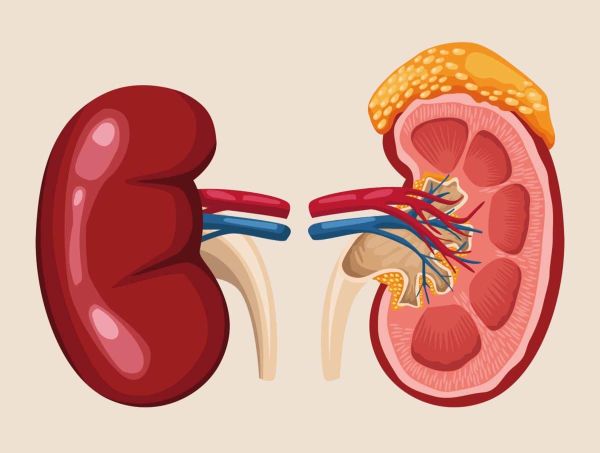
A 69-year-old patient in Abuja was dying slowly of kidney failure.




Then, a 39-year-old relative made a choice that saved his life; donating a kidney at the Federal Medical Centre (FMC) Abuja.
No money changed hands. No broker was involved. Just a family member willing to give up a healthy organ so another could live.
That operation is the story Nigeria wants to tell about organ donation.
But it sits alongside a very different story; one of brokers, desperate patients, and vulnerable people persuaded or pressured to sell a piece of their bodies for cash.
Untangling the two, and making sure the first story stays the norm while the second becomes impossible, is the challenge now facing Nigerian policymakers, hospitals and law enforcement.
The gap between people who need organs and organs that are available legally and ethically is not unique to Nigeria; it’s the engine driving trafficking worldwide.
Global estimates suggest roughly 157,000 solid organ transplants are performed each year, according to the WHO’s Global Observatory on Donation and Transplantation, yet that meets no more than 10 percent of actual need.
Patients on waiting lists can wait three to five years, with annual mortality on those lists estimated at 15 to 30 percent.
That shortage has created a black market.
The World Health Organisation (WHO) has estimated that somewhere between 5 and 10 percent of transplants performed globally each year involve illegally sourced organs from paid donors.
That amounts to roughly 10,000 to 12,000 procedures annually, about two-thirds of them kidneys.
Global Financial Integrity puts the illicit trade’s annual profits conservatively at $840 million to $1.7 billion.
Yet, accountability is almost nonexistent, as only 17 organ-trade convictions have ever been logged in the UN Office on Drugs and Crime’s global case-law database.
Health experts say it is a strong signal that enforcement worldwide, not just in Nigeria, is failing to keep pace with the crime.
According to them, Nigeria’s exposure to this problem starts with the underlying disease.
Studies on Chronic Kidney Disease (CKD) in Nigerian adults have found prevalence rates as high as 10 to 19 percent, driven largely by hypertension and, most importantly, diabetes.
Hospital-based data cited from the National Kidney Foundation put the incidence of kidney failure at around 100 new cases per million people each year.
Total prevalence is estimated at 300 to 400 cases per million, meaning tens of thousands of Nigerians are living with kidney failure at any given time.
Most of them cannot access dialysis or transplantation domestically at a price they can afford, which for years has pushed patients toward medical tourism; and, for some, toward brokers offering a faster, cheaper, and far more dangerous route to a kidney.
Nigeria’s National Health Act 2014 is the backbone of its response.
It bans commercialising human organs, restricts transplants to authorised hospitals and registered medical practitioners, and sets penalties; fines, imprisonment, or both for violations.
It recognises both living and deceased donation.
Where the law is thinner is on verifying consent.
It does not spell out, in much detail, how hospitals should confirm that a donor’s agreement is genuinely free of coercion, debt pressure, or family obligation.
That gap matters most for donors who are poor, young, dependent, or otherwise vulnerable, since a signature on a consent form doesn’t guarantee the decision behind it was truly voluntary.
Children and people who lack capacity to consent need protections the current framework doesn’t spell out in enough detail either.
Closing that gap, experts and health advocates argue, means multidisciplinary teams screening every donation for coercion and financial pressure.
It also means independent donor advocates who can advise prospective donors confidentially and let them withdraw without consequence, plus financial monitoring that flags suspicious payments or intermediaries around transplant cases.
The public anxiety around this issue is real, and sometimes runs ahead of the evidence.
Earlier this year, the FCT Police had to publicly deny reports that young people in Abuja’s Nyanya area were selling their kidneys for money, saying no such case had been received or confirmed and urging residents to disregard unverified claims circulating on social media.
Whether or not that specific claim was true, its spread shows how easily fear about organ harvesting can blur the line between legitimate transplant medicine and criminal exploitation.
It also revealed why authorities need to communicate clearly about how legal transplantation actually works, and where people can report real concerns.
Albeit all these, Nigeria is expanding its transplant capacity.
FMC Abuja’s kidney transplant, done in partnership with Manipal Hospitals India, is meant to build local specialist training and reduce the need for patients to travel abroad.
Ahmadu Bello University Teaching Hospital in Zaria has been developing similar infrastructure and training.
Borno State has taken a different, complementary approach through funding.
Its Governor, Babagana Zulum pledged N1 billion to the University of Maiduguri Teaching Hospital to cover kidney transplants for indigent patients, with an initial N250 million released to cover 50 patients and the remaining N750 million to follow in installments.
The logic is straightforward; when legitimate transplant care is unaffordable, patients and families become more vulnerable to brokers offering an illegal shortcut, so public funding that closes the affordability gap is also, in effect, a trafficking-prevention tool.
None of this capacity-building solves the oversight problem on its own.
Stakeholders insist that what’s missing, more than hospitals or money, is coordination between health regulators, hospitals, police, immigration officials and professional medical bodies.
It is to track donor-recipient relationships, monitor referrals, and investigate the intermediaries who profit from vulnerable people.
Hospitals and medical practitioners must apply the National Health Act’s safeguards consistently and screen every donor for coercion, not just eligibility.
Regulators and lawmakers need to close the consent-verification gap in the law and build the national data systems that let progress be measured.
Also, Law enforcement and immigration authorities have to treat organ trafficking as the trafficking crime it is, investigating brokers and intermediaries with the same urgency given to other forms of exploitation.
State and federal governments can widen access the way Borno has, through direct funding that removes the financial desperation traffickers exploit.
And the public has a role too; reporting suspicious cases rather than unverified rumors, and understanding that legitimate donation, freely given, is what keeps patients like the two at FMC Abuja alive.
Only with every stakeholder pulling in the same direction can Nigeria make ethical donation the rule and the underground organ trade a dead end.