

Only One in Four Men Had Optimal Semen Quality in a Major Study. Why Male Fertility Can No Longer Be Treated as a Women’s Burden

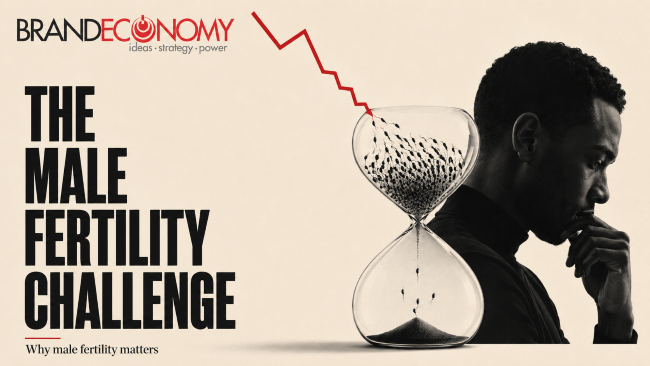 By BRANDECONOMY Health & Human Capital Desk
For decades, infertility has been discussed in many homes, clinics and communities as though it were principally a woman’s condition. Women have often borne the tests, the medications, the invasive procedures, the whispered judgments and the emotional labour of trying to conceive.




But a growing body of medical evidence is steadily dismantling that old and costly assumption.
At a recent webinar organised by Nordica Fertility Centre, Consultant Gynaecologist and fertility specialist, Dr Victor Ajayi, drew attention to a striking finding from a 2012 population-based study: only about one in four young men in that study had what researchers classified as optimal semen quality.
The figure is attention-grabbing, but it requires careful interpretation. It was not a survey of Nigerian men or a global census of male fertility. It came from a Danish study involving 4,867 young men. Yet its wider message remains highly relevant: male reproductive health deserves far greater attention than it currently receives.
The fertility conversation must stop treating men as spectators.
The Bigger Story Behind the “One in Four” Finding
The Danish research that inspired the “one in four” claim did not conclude that three-quarters of men were infertile. Rather, it found that only 23 per cent of participants met the study’s definition of optimal sperm concentration and morphology.
That is an important distinction.
Fertility is not determined by sperm count alone. It is shaped by several variables, including sperm concentration, movement, shape, volume, DNA integrity, hormonal balance, reproductive anatomy, sexual health, age, infections, lifestyle, environmental exposure and the fertility profile of both partners.
A man can have a semen result within a reference range and still experience delayed conception. Equally, a man with one borderline result may later conceive naturally or after treatment for a reversible condition.
The key lesson is not panic. It is responsibility.
Male fertility should be treated as a health issue, a family issue, a mental-health issue and increasingly, an economic issue.
The Sperm Count Debate: A Warning Signal, Not a Verdict
Global research has raised concern about declining sperm counts over several decades. A major meta-analysis published in 2023 found evidence of significant declines in sperm concentration among unselected men across several regions of the world, including South/Central America, Asia and Africa.
But the science requires balance.
Falling sperm counts do not automatically mean that every man will become infertile. Nor do they justify sensational claims that humanity is approaching reproductive collapse. What they do suggest is that male reproductive health deserves stronger surveillance, better research, earlier intervention and a more serious place within public health planning.
The human body is not an industrial machine. It reflects the accumulated consequences of nutrition, stress, sleep, chronic disease, medication, pollution, physical inactivity, smoking, alcohol misuse, infections and delayed medical care.
Sperm quality may therefore be telling us something larger about the state of men’s health.
The Missing Half of the Fertility Conversation
Dr Ajayi’s central point is difficult to ignore: male factors account for a substantial share of infertility cases.
Yet in many marriages, the woman is still the first person sent for tests, the first blamed when pregnancy does not happen and the first expected to undergo treatment.
That imbalance is medically inefficient and emotionally unfair.
Male infertility may arise from low sperm production, poor sperm movement, abnormal sperm shape, hormonal disorders, varicocele, obstruction of reproductive pathways, untreated infections, genetic conditions, certain medications, anabolic steroid use and other health conditions.
Some factors are reversible. Others can be managed. Some cases may require assisted reproduction. But many couples lose valuable time because the man delays a basic fertility assessment.
The result is often a familiar and painful cycle: repeated treatment for the woman, escalating costs for the household and a silent male partner who has never undergone a semen analysis.
That approach is not only unfair. It is bad medicine.
Sexual Performance Is Not the Same as Fertility
One of the most damaging myths around male fertility is the belief that sexual performance automatically means reproductive capacity.
It does not.
A man may have normal sexual desire and erectile function yet still have reduced sperm concentration, impaired movement, poor morphology or other reproductive challenges. Fertility is not a measure of masculinity, strength, virility or social worth.
It is a medical issue.
That distinction matters because stigma often delays care. Many men avoid testing because they fear being judged, embarrassed or regarded as less masculine. Some become emotionally distant. Others respond with anger, denial, secrecy or blame.
Clinical psychologist Mr Gbolahan Pilot’s observation at the Nordica webinar is therefore significant: infertility can produce depression, anxiety, shame and isolation in men, even where those emotions are never openly expressed.
A man who refuses to discuss infertility is not necessarily unaffected by it. He may simply have no safe language for the experience.
Nigeria’s Quiet Fertility Burden
In Nigeria, where childbearing is often deeply connected to family identity, inheritance, social standing and marriage stability, infertility can create enormous emotional and financial pressure.
For many couples, the burden is compounded by the cost of diagnostics, specialist consultations, surgery, medication, laboratory services and assisted reproductive treatment. These expenses are often paid directly by households, with limited insurance support.
The consequences are not merely private.
Infertility can affect productivity, household savings, marital stability, mental health and women’s safety. It can also push families toward unproven remedies, exploitative practitioners and expensive interventions that delay proper diagnosis.
This is why male fertility must move beyond the narrow language of private embarrassment. It is part of reproductive health policy, family wellbeing and national human-capital development.
A country that wants healthier families must make it easier for couples to access early, respectful and evidence-based fertility care.
What a Modern Fertility Assessment Should Look Like
A responsible fertility pathway begins with both partners.
For couples who have had regular, unprotected intercourse for 12 months without pregnancy, an assessment should not begin and end with the woman. Where the female partner is older or there are known medical concerns, earlier consultation may be appropriate.
For men, assessment may include medical history, reproductive history, physical examination and semen analysis. Depending on findings, clinicians may recommend hormonal tests, ultrasound, infection screening, genetic testing or referral to a urologist or fertility specialist.
The treatment pathway depends on the cause.
Some men may benefit from lifestyle changes. Others may need medication, treatment for infections, surgery for conditions such as varicocele, or assisted reproductive options including intrauterine insemination, IVF or ICSI.
There is no universal solution. Fertility care works best when it is individualised, evidence-led and designed around the couple rather than one partner.
What Men Can Do Now
Male fertility is not fully within anyone’s control. Genetics, age, medical conditions and past exposures matter. Still, there are practical steps that can support reproductive health.
Men who are planning a family should take their general health seriously. That includes maintaining a healthy body weight, avoiding smoking and illicit substances, moderating alcohol intake, protecting against sexually transmitted infections, sleeping well, exercising consistently and seeking medical attention for persistent pain, swelling, hormonal symptoms or sexual-health concerns.
Men should also be cautious about anabolic steroids and unsupervised testosterone products. A substance marketed as a shortcut to strength or vitality may interfere with sperm production and undermine fertility goals.
Above all, men should not self-diagnose through social media or buy expensive “fertility boosters” based on advertising claims. Proper assessment should come before treatment.
The Market Opportunity: From IVF-Centred Care to Men’s Reproductive Health
The fertility industry has historically focused much of its communication on women, pregnancy and assisted reproduction. That is changing.
There is a growing opportunity for hospitals, diagnostic laboratories, insurers, pharmaceutical companies, wellness providers and digital-health platforms to build credible male fertility services around prevention, testing, counselling and treatment navigation.
The strongest brands in this space will not trade in fear.
They will offer privacy, clinical credibility, compassionate communication, transparent pricing and practical support for couples. They will understand that male fertility is not simply a laboratory category. It is tied to identity, confidence, family expectations and trust.
For fertility clinics, this means moving beyond marketing IVF as the first answer. The more powerful model is a couples-first pathway that begins with timely diagnosis and avoids unnecessary emotional and financial strain.
Investor Relevance: Fertility Care Is Becoming a Health-System Priority
Fertility care is increasingly emerging as an important segment of reproductive healthcare, diagnostics, specialist medicine and digital-health innovation.
The demand drivers are clear: delayed parenthood, lifestyle-related health risks, rising awareness, changing family structures, stronger diagnostic capacity and growing willingness among men to seek care when services are private and respectful.
The opportunity extends beyond high-cost assisted reproduction. It includes semen analysis, diagnostics, urology, endocrinology, counselling, telemedicine, laboratory services, health education, insurance products and fertility-preservation solutions.
The most attractive businesses will be those that reduce uncertainty early, deliver trustworthy care and help couples avoid the financial shock of late-stage intervention.
BRANDECONOMY Insight
The real significance of the “one in four” sperm-quality headline is not that men should panic.
It is that societies must stop asking women to carry the entire burden of infertility.
Male fertility is not a niche issue. It sits at the intersection of health, family stability, mental wellbeing, gender equity, healthcare financing and consumer trust.
For Nigeria, the urgent task is not merely to build more fertility clinics. It is to build a more intelligent fertility culture: one where men test early, couples seek care together, clinics offer psychological support, insurers recognise infertility as a serious health concern and brands communicate without shame or exaggeration.
The conversation has been delayed for too long.
Men are not bystanders in fertility. They are half of the equation.