
Demola Aladekomo to Chair QEDNG Creative Powerhouse Summit 2.0 as Nigeria’s Creative Economy Seeks Its Next Growth Engine

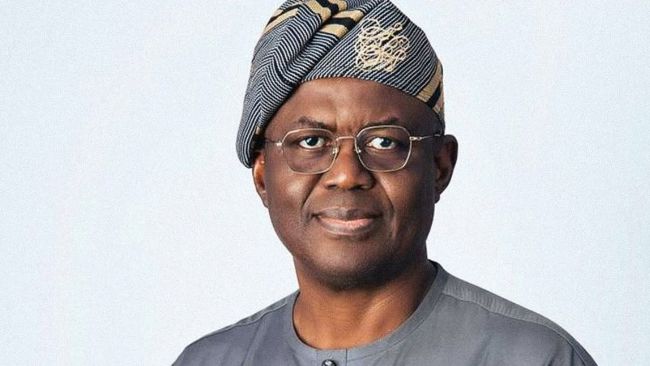
Technology pioneer and Chams founder Sir Demola Aladekomo will chair the second QEDNG Creative Powerhouse Summit in Lagos, bringing a digital-infrastructure perspective to a growing debate over how Nigeria can convert creativity, culture and talent into enduring economic value.
Nigeria’s creative economy is preparing for another high-level conversation on the policies, capital, infrastructure and institutional support required to transform cultural influence into a more durable engine of jobs, exports and national competitiveness.


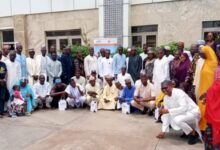
Sir Demola Aladekomo, founder of Chams Holding Company Plc and one of Nigeria’s early technology entrepreneurs, will chair the QEDNG Creative Powerhouse Summit 2.0 scheduled for August 11 at the Radisson Blu Hotel, Ikeja, Lagos.
The summit, organised by Mighty Media Plus Network Limited, publishers of QEDNG, will convene policymakers, business leaders, investors, technology professionals and creative-industry practitioners around the theme: “Creativity, Culture and Nigeria’s Next Chapter.”
For the organisers, Aladekomo’s selection is intentional. The creative economy is increasingly being shaped not only by artistic talent, but by the systems that make talent commercially scalable: digital payments, intellectual-property protection, data access, production infrastructure, audience analytics, artificial intelligence, distribution platforms and investment-ready business models.
Benefits of Demola Aladekomo Chairmanship
Publisher of QEDNG and summit convener, Olumide Iyanda, said Aladekomo’s record in enterprise-building, innovation and institutional development made him particularly suited to lead conversations around Nigeria’s creative future.
“Sir Demola Aladekomo has spent decades building businesses, championing innovation and supporting institution building,” Iyanda said. “His experience will add real value to the conversations we want to have about the future of Nigeria’s creative economy.”
Sir Demola Aladekomo accepted the invitation, describing the theme as timely and commending QEDNG for sustaining a platform focused on practical ideas for the sector. He said he looked forward to contributing to discussions that could help shape more effective outcomes for Nigeria’s creative and cultural industries.
His career offers a useful bridge between technology and creativity.
Sir Demola Aladekomo founded Chams in 1985 as an indigenous computer-maintenance business at a time when Nigeria’s technology sector was still in its infancy. Chams later became associated with landmark projects in computer networking, electronic payments, identity management and digital infrastructure. The company played a role in Nigeria’s pioneering Valucard payment initiative and later participated in identity, SIM-registration and banking-verification projects that helped deepen the country’s digital operating environment.
That experience is increasingly relevant to the creative sector.
The next stage of Nigeria’s cultural economy will depend less on whether the country has talent—it clearly does—and more on whether creators can reliably own, monetise, protect, distribute and finance their work.
From Creative Energy to Creative Enterprise
Nigeria’s music, film, fashion, visual arts, literature, gaming, digital content and cultural experiences have developed substantial global visibility. Yet the commercial foundations beneath that visibility remain uneven.
Many creators still face inconsistent access to finance, weak intellectual-property enforcement, high production costs, limited studio and distribution infrastructure, difficult cross-border payment channels, platform monetisation gaps and poor data on audience value.
The country’s creator economy has expanded rapidly, particularly through video, comedy, music, lifestyle content, digital publishing and social media. However, many creators continue to earn modest incomes despite high audience engagement, partly because monetisation systems, advertising yields and commercial structures remain underdeveloped.
This is the central challenge that the QEDNG summit is expected to interrogate.
The conversation must move beyond celebrating “Nigerian creativity” and towards building the business architecture that allows creative work to become sustainable enterprise.
That includes:
- Better access to patient capital and project finance
- Stronger intellectual-property protection and licensing systems
- More efficient payment and royalty-tracking infrastructure
- Professional management, accounting and legal support for creators
- Easier export pathways for Nigerian content and cultural products
- Creative hubs, studios and production facilities
- Brand partnerships built around long-term cultural value, not one-off celebrity endorsements
- Better data to help investors understand audience, revenue and growth potential
A Summit at a Strategic Moment
The summit’s theme, Creativity, Culture and Nigeria’s Next Chapter, places culture at the centre of national development rather than at the margins of entertainment.
That framing matters. Culture shapes how nations are seen, what they export, where investors look and how young people imagine opportunity. It is also a source of soft power.
Afrobeats, Nollywood, Nigerian fashion, comedy, food, publishing and digital storytelling have expanded the country’s cultural footprint across Africa and beyond. But international attention alone does not automatically create local prosperity.
The real opportunity lies in converting cultural relevance into scalable businesses, protected intellectual property, export earnings, formal jobs and stronger local value chains.
The inaugural QEDNG Creative Powerhouse Summit in 2025 focused on financing as a catalyst for a thriving creative economy. The second edition is expected to widen that debate to include the relationships between creativity, culture, public policy, institutional capacity and private investment.
The summit will examine opportunities across music, film and television, fashion and design, gaming, publishing, literature, visual arts, content creation and technology innovation.
The Technology-Creativity Connection
Aladekomo’s chairmanship also underlines a fundamental truth: the boundary between technology and creativity has largely disappeared.
A musician now needs digital distribution, data dashboards, payment systems and rights management. A filmmaker needs streaming platforms, visual-effects capacity, cloud storage and sophisticated audience targeting. A fashion brand needs e-commerce, logistics, creator partnerships and international payments. A writer needs digital publishing tools, community building and intellectual-property protection.
Even the smallest creator now operates, in effect, as a media company.
The future belongs to creative entrepreneurs who can combine artistic excellence with commercial discipline.
It also belongs to the institutions that can help them do so.
Market Implications
For investors, Nigeria’s creative economy is increasingly becoming a serious, if still under-structured, opportunity set.
The strongest prospects are likely to emerge in businesses that solve practical problems around content production, talent management, payments, rights administration, audience data, distribution, live experiences, gaming, media technology and digital advertising.
The sector also creates opportunity for banks, fintech firms, telecom operators, consumer brands, streaming platforms, insurance companies and property developers.
A serious creative economy requires more than grants. It needs financial products designed for irregular earnings, rights-backed revenues, project financing, equipment leasing, working capital and export transactions.
The market is therefore not simply about funding artistes or influencers. It is about building a complete commercial ecosystem around creativity.
Brand Implications
For brands, culture has become one of the most powerful routes to relevance.
Consumers increasingly reward brands that understand their language, aspirations, entertainment habits and social identity. But the era of random influencer spending is giving way to a more strategic question:
How can a brand build cultural value that also creates measurable commercial value?
The best partnerships will be those that respect creators as business partners, not merely media channels.
Brands that invest in original storytelling, talent development, cultural experiences and creator-led innovation can build trust that lasts longer than a single campaign cycle.
Investor Relevance
Investors should look beyond the glamour of celebrity and assess the fundamentals:
- Is the creator or company building defensible intellectual property?
- Is there a recurring revenue model?
- Is audience ownership clear?
- Are contracts, royalty structures and rights properly documented?
- Is the business export-ready?
- Can the model scale beyond one personality or one viral moment?
- Does the venture have sound governance and financial reporting?
Nigeria’s creative economy has immense promise. But promise becomes investable only when it is organised.
BRANDECONOMY Insight
The QEDNG Creative Powerhouse Summit 2.0 arrives at an important point in Nigeria’s development story.
The country has already proved that it can produce global stars, compelling stories and powerful cultural moments. What it must now prove is that it can build the infrastructure, policy environment and investment frameworks that allow creative brilliance to generate durable national wealth.
Sir Demola Aladekomo’s involvement signals that the discussion is shifting from applause to architecture.
Nigeria’s next creative chapter will not be written by talent alone.
It will be written by talent supported by technology, capital, institutions, trust, intellectual-property protection and a clear commercial vision.