Nigeria’s Animation Industry Needs Investment and Stronger IP Protection to Scale

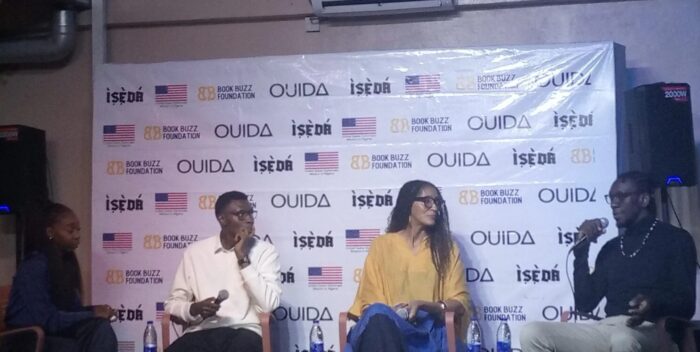 Stakeholders at the third edition of Iseda in Lagos say Nigeria has the stories, youthful talent and creative energy to build globally competitive animation franchises—but without patient investment, enforceable intellectual-property rights and coordinated public support, much of that value may remain unrealised.
Nigeria’s animation industry is beginning to emerge from the margins of the creative economy.


Long viewed as a niche segment between children’s entertainment, film production and digital design, animation is increasingly being recognised as a commercial platform with the capacity to create jobs, export African stories, support education, strengthen brands and build globally valuable intellectual property.
But a major challenge remains: turning creative promise into investible enterprise.
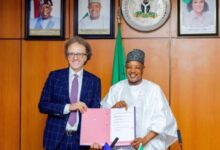
At the third edition of Iseda, held Thursday night in Lagos, animation professionals, policy advocates and creative-industry stakeholders called for more investment, stronger protection for intellectual property and clearer government support to help Nigeria build an animation ecosystem capable of competing internationally.
Iseda is an initiative of the U.S. Consulate General in Lagos, in partnership with Ouida House. The platform has explored different creative sectors, including music and fashion, and this edition turned attention to animation as a growing frontier for storytelling, skills development and youth enterprise.
The discussion made one point particularly clear: Nigeria has no shortage of stories. What it needs is a stronger commercial system for owning, financing, protecting and distributing them.
From Creative Talent to Creative Assets
Animation is not merely about drawing characters or producing cartoons.
It is about intellectual property.
A successful animated character can become a film, series, book, game, educational product, toy line, advertising platform, digital collectible, music property or global licensing franchise. In the world’s strongest animation markets, the highest value is not created only at the point of production. It is created over time through ownership, distribution, merchandising, adaptation and audience loyalty.
That is the strategic opportunity for Nigeria.
The country has a deep reservoir of myths, languages, humour, urban culture, history and contemporary experiences that can travel across borders when properly interpreted for global audiences. From folklore and fantasy to family entertainment, education, gaming and social-impact storytelling, Nigerian creators possess raw material with immense commercial potential.
Yet creative potential alone does not produce sustainable businesses.
Animation requires time, technical infrastructure, specialist talent, financing, marketing, legal protection and patient investors who understand that the rewards may take longer to materialise than in faster-turnaround sectors.
U.S. Consulate Sees Creative Collaboration as a Growth Channel
Julie McKay, Public Affairs Officer at the U.S. Consulate General in Lagos, said the programme was designed to encourage creativity and deepen collaboration between Nigeria and the United States through the creative industries.
“It is an inspiration and a partnership that we have with BookBuzz Foundation and Ouida House,” McKay said.
“We’ve done music, we’ve done fashion, and today we did animation. All of it is part of our Freedom 250 celebration of the 250th anniversary of U.S. independence.”
McKay said the U.S. Mission was also creating opportunities for young Nigerians through American Spaces across the country, where participants can access free training, internet resources and learning opportunities in animation, artificial intelligence and entrepreneurship.
“They are free, open to the public, provide training, free internet,” she said. “Young people can learn things like AI, they can learn animation. They can get business skills that can help them start a business, grow a business.”
The wider importance of such programmes lies in access.
For many young Nigerians, entry into animation is constrained not only by talent but by the cost of software, hardware, high-speed internet, mentorship and exposure to commercial production standards. Accessible training platforms can help reduce those barriers and introduce more young people to creative careers that sit at the intersection of storytelling, design, technology and business.
The Investor Problem: Creativity Is Not Yet Seen as Collateral
Tolu Olowofoyeku, Co-founder of Kugali Ltd., identified investment as one of the industry’s most persistent obstacles.
According to him, many African investors still do not see animation as a commercially credible asset class, particularly where projects are driven by original African intellectual property rather than outsourced service work.
“African investors, right now are not interested in investing in animation but once one of our IPs hits that site and becomes recognisable across the world, that is when we will start seeing brands really ready to exploit that IP,” Olowofoyeku said.
His observation captures a familiar cycle in Nigeria’s creative economy.
Investors often hesitate because there are too few proven local examples of blockbuster returns. But the absence of investment makes it harder for studios to produce the kind of work that can generate those proven examples.
Breaking that cycle will require more than optimism.
It will require studios to present stronger business cases, investors to understand the long-term economics of intellectual property, and public institutions to create financial and legal structures that reduce risk.
Olowofoyeku advised creators to build their projects with commercial strategy in mind from the beginning.
“You need to go where they are. Investors are more interested in how your money comes back for them,” he said.
That is a critical lesson.
For creators, a compelling story is only one part of the pitch. Investors also want to understand audience size, distribution plans, production budgets, revenue models, licensing opportunities, ownership structures, brand partnerships and exit pathways.
Why Intellectual Property Protection Is the Industry’s Foundation
In animation, intellectual property is not a legal afterthought. It is the business.
The characters, worlds, scripts, visuals, sounds, formats and story concepts that studios create can become long-term revenue-generating assets. But only when rights are properly registered, documented, licensed and defended.
Weak IP protection can make investors nervous because it raises the risk that a successful concept will be copied, misused or commercially exploited without fair compensation to its creators.
That is why stronger copyright enforcement, better contract practices and IP literacy are essential for Nigeria’s animation economy.
Creators need to know what they own. They need to understand co-creation agreements, licensing rights, distribution contracts, adaptation rights, merchandising rights and investor terms. They must also be able to negotiate from a position of knowledge when dealing with broadcasters, streamers, agencies, studios and financiers.
Tonye Faloughi-Ekezie, author and disability advocate, urged creators to pay close attention to IP protection during investor negotiations.
Her warning speaks to a wider concern across Nigeria’s creative industries: talent without ownership can create visibility, but ownership creates wealth.
A Global Hit Could Change the Investment Conversation
Stanley Ojika of Magic Carpet Studios said a breakthrough property with global recognition could help shift investor attitudes towards animation.
“We become more believable to them when you’ve done something that is really remarkably successful,” Ojika said.
“That’s why our work matters, because eventually, when we do something and put it out there, and the world likes it, then we can boldly and confidently go to these people and show them what’s possible.”
This is how creative ecosystems often evolve.
One successful studio, franchise or globally recognised property can unlock confidence for an entire sector. It can prove that local stories can travel, that audiences will pay, that distribution partners can be secured and that investment can generate returns.
Nigeria has seen versions of this transformation in music and film. Afrobeats created a new global perception of Nigerian sound. Nollywood demonstrated that Nigerian storytelling can command continental and international audiences. Animation could be the next frontier—provided the industry develops structures that allow local creators to retain, scale and monetise their work.
Animation as an Inclusion and Education Tool
The conversation at Iseda also highlighted animation’s social value beyond entertainment.
Faloughi-Ekezie shared how animation and music became powerful learning tools after she found it difficult to explain Down syndrome to her son following the birth of her daughter with the condition.
“I saw how powerful music and animation was, and the two together, animated music videos, I could get her to grasp concepts,” she said.
“I could get her to do things that she wouldn’t ordinarily do.”
Her experience demonstrates the wider potential of animation in education, health communication, inclusion, public awareness and behavioural change.
Faloughi-Ekezie said her work had expanded from children’s publishing into animation projects and a neurodiverse creators lab, where young people with Down syndrome, autism, ADHD and other developmental conditions receive training in animation, music and film production.
This is a powerful reminder that animation can also create access.
It can simplify complex ideas, make learning more engaging, support children with diverse learning needs and open professional pathways for young people who are often excluded from conventional employment structures.
For brands, development agencies, schools, healthcare organisations and public institutions, this creates a growing opportunity to use animation not just for promotion, but for meaningful communication and social impact.
The Market Opportunity: African Stories, Global Demand
The global appetite for distinctive cultural storytelling is growing, particularly as streaming platforms, gaming companies, digital publishers and consumer brands seek new voices and original intellectual property.
Nigeria’s advantage lies in authenticity.
The country’s storytellers do not need to imitate foreign animation models. Their opportunity is to develop work that is globally accessible but culturally rooted: stories with local language, humour, music, history, mythology and contemporary African experience.
The commercial possibilities are broad:
- Original animated series and films
- Children’s education content
- Gaming and interactive media
- Branded entertainment
- Character licensing and merchandising
- Comics and graphic novels
- Music-led animation
- Tourism and cultural storytelling
- Public-health and development communication
- AI-assisted creative production
- Corporate learning and internal communication
The real prize is not simply employment in studios. It is ownership of properties that can generate royalties over many years that will make the animation industry blossom.
What Government and Investors Must Do
Nigeria’s animation industry does not need charity. It needs an enabling environment.
Government support should focus on practical tools: clearer intellectual-property enforcement, production incentives, training partnerships, export support, access to affordable digital infrastructure, creative-industry financing and better policy coordination across culture, technology, education and trade.
There is also a role for development-finance institutions, banks and private investors.
Creative projects do not always fit traditional lending models because their value may sit in future rights rather than physical collateral. That means financing structures must evolve to recognise intellectual property, contracts, licensing revenues and distribution agreements as parts of a project’s commercial value.
Investors, meanwhile, must begin to see animation as more than entertainment. It is a technology-enabled content business with the potential to build durable intellectual-property portfolios.
For studios, the assignment is equally clear: build stronger commercial discipline around budgeting, rights ownership, investor reporting, distribution strategy, audience analytics and brand partnerships.
Brand Implications: The Next Nigerian Global Brand May Be a Character
The brand implications are profound.
Nigeria’s next globally recognised cultural brand may not be a musician, a film star or a fashion label. It may be an animated character.
A well-built character can become a national asset—recognisable across continents, adaptable across formats and valuable to brands, broadcasters, educators and consumers.
For Nigerian companies, animation also offers a fresh route to relevance. Brands can partner with local studios to create culturally grounded content that speaks to younger audiences in more memorable ways than conventional advertising.
This could reshape how brands approach youth marketing, education campaigns, financial literacy, health communication, environmental awareness and family entertainment.
The best partnerships will not treat animation as decoration. They will treat it as a storytelling platform.
Investor Relevance
For investors, the animation industry remains an emerging but potentially high-upside part of Nigeria’s broader creative economy.
The sector carries clear risks: long production cycles, infrastructure costs, uncertain distribution, piracy, weak local monetisation and limited specialist finance.
But it also offers unique upside.
Unlike a one-off service business, original animated IP can generate multiple revenue streams across licensing, streaming, publishing, advertising, games, consumer products and international partnerships. The key is ownership.
Investors should look closely at studios with strong story development, technical execution, credible distribution partners, documented IP rights, disciplined budgets and clearly defined monetisation plans.
The most investible studios will be those that combine creative quality with commercial structure.
BRANDECONOMY Insight
Nigeria’s animation industry is not asking for applause. It is asking for architecture.
The country has creative talent, stories, youthful energy and growing digital audiences. What remains underdeveloped is the system that turns these advantages into protected intellectual property, investible studios, exportable content and enduring brands.
The next phase must move beyond celebrating creativity.
It must build financing models that understand IP. It must strengthen copyright enforcement. It must create production pipelines, training ecosystems and distribution channels. And it must ensure that Nigerian creators own more of the value they generate.
Nigeria’s animation revolution will not be powered by talent alone.
The animation industry will be powered by capital, copyright and the confidence to build African stories into global assets.