A proposed memorandum of understanding between Washington, Tehran and regional powers could ease one of the world’s most dangerous maritime chokepoint crises. But the emerging bargain remains fragile, contested and loaded with nuclear, legal, military and energy-market consequences.
 A proposed memorandum of understanding between Washington, Tehran and regional powers could ease one of the world’s most
 United States President Donald Trump says a peace framework with Iran has been “largely negotiated”, raising hopes that months of conflict, maritime disruption and regional anxiety may be edging toward a diplomatic pause.
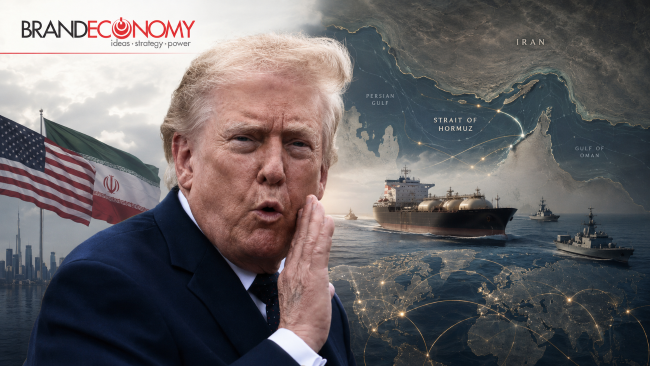
The proposed arrangement, according to Trump, would include the reopening of the Strait of Hormuz, the critical Gulf waterway through which a significant share of global oil and liquefied natural gas trade ordinarily moves. Final details, he said, are still being discussed among the United States, Iran and several regional stakeholders.



Trump announced the development after speaking with leaders and officials from Saudi Arabia, the United Arab Emirates, Qatar, Pakistan, Egypt, Jordan, Bahrain and other regional actors, and after a separate call with Israeli Prime Minister Benjamin Netanyahu. He described the emerging document as a “Memorandum of Understanding pertaining to peace” and said the “final aspects and details” would be announced shortly.
The announcement marks a dramatic shift in tone after weeks of threats, military pressure and economic blockade. Yet it is not a settled peace. Iranian officials have been more cautious, saying positions have moved closer but warning that convergence should not be mistaken for agreement on all core issues. Tehran has also disputed elements of Trump’s claim regarding the reopening and control of the Strait of Hormuz.
For global markets, the difference matters. A reopened Hormuz would relieve pressure on energy shipping, maritime insurance, freight planning and Gulf security calculations. A failed deal could return the region to confrontation — with consequences far beyond the Middle East.
A Deal in Outline, Not Yet in Law
The proposed framework is being presented as a memorandum of understanding rather than a full treaty. That matters legally and diplomatically. An MOU can create political commitments, guide implementation and open the door to more detailed negotiations, but it may lack the binding force, enforcement architecture and legislative durability of a formal international agreement.
Iranian foreign ministry spokesman Esmaeil Baqaei has acknowledged discussions around a framework, reportedly structured around multiple points, but said further talks would still be required before a final agreement could be reached. Reuters reported that the framework under discussion may include a ceasefire extension, reopening of the Strait of Hormuz, movement toward restored Iranian oil sales, and follow-on negotiations over nuclear limitations and sanctions relief.
That structure suggests a phased bargain: first, stabilise the war and maritime corridor; second, reopen trade and energy flows; third, negotiate the harder files — nuclear enrichment, sanctions, frozen funds, regional influence and the future of U.S. military posture in the Gulf.
It is a practical approach, but also a risky one. The easiest items may be announced first. The issues that can collapse the process may come later.
Why Hormuz Is the Centre of Gravity
The Strait of Hormuz is not merely a maritime passage. It is one of the world’s most strategic economic arteries. When it is threatened, oil markets shudder, shipping insurers reprice risk, Gulf producers reassess export routes, and import-dependent economies from Asia to Europe begin calculating exposure.
Iran’s effort to assert control over transit through the strait, alongside the U.S. blockade of Iranian ports, turned the conflict into a maritime and energy-security crisis. Washington and Gulf allies have rejected Tehran’s attempt to impose authority over passage, while U.S. military officials have said the blockade has sharply restricted Iranian trade flows.
From a legal perspective, the dispute sits at the intersection of freedom of navigation, coastal-state security claims, sanctions enforcement and the laws governing straits used for international navigation. Even where states disagree over the precise legal framing, the commercial reality is straightforward: uncertainty in Hormuz increases the cost of global trade.
That is why reopening the strait is not a diplomatic detail. It is the economic core of the deal.
Pakistan’s Quiet Mediation Role
One of the most striking features of the emerging diplomacy is the role of Pakistan. Prime Minister Shehbaz Sharif publicly congratulated Trump’s peace efforts and said Pakistan would continue facilitating dialogue, with Islamabad hoping to host further talks. Reports also point to Pakistani military and diplomatic engagement as part of the back-channel architecture behind the framework.
Pakistan’s involvement is not accidental. It maintains relationships across the Muslim world, has working channels with Tehran and Washington, and can sometimes operate in diplomatic spaces where direct U.S.–Iran engagement is politically constrained.
For Gulf monarchies, Pakistan’s mediation may also offer a face-saving bridge: a regional-adjacent actor helping to lower temperature without making the process look like a unilateral concession to either Washington or Tehran.
The Nuclear File Remains the Hardest Test
Trump has insisted that any deal must prevent Iran from obtaining a nuclear weapon. That requirement is politically unavoidable in Washington and strategically essential for Israel and Gulf states.
But the nuclear question has not disappeared simply because the maritime issue has taken centre stage. Reports suggest that follow-on negotiations may address uranium enrichment, highly enriched stockpiles and verification mechanisms. Iran, for its part, continues to deny seeking nuclear weapons and has historically resisted arrangements it considers a disguised surrender of sovereign rights.
This is where the deal could either mature or fracture. A Hormuz reopening may be possible through reciprocal de-escalation. A nuclear settlement requires deeper trust, intrusive verification and politically painful concessions.
The difference between those two tracks should not be underestimated.
The Israel Factor
Trump also said his call with Netanyahu “went very well”. That reassurance matters because Israel’s security calculus will shape whether any U.S.–Iran framework holds.
Israel is unlikely to accept a deal it believes leaves Iran with a credible pathway to nuclear weapons or allows Tehran to rebuild regional deterrence without restraint. Yet a prolonged conflict also carries risks: missile exchanges, Gulf instability, global energy pressure and the possibility of escalation beyond intended limits.
The Trump administration therefore faces a familiar diplomatic balancing act: de-escalate the maritime and energy crisis without alienating Israel or appearing to reward Iran’s coercive leverage over Hormuz.
That is not simply a foreign-policy problem. It is a political-management problem across multiple capitals.
Markets Want Clarity, Not Rhetoric
For oil traders, shipping lines, insurers, refiners and governments, the key question is not whether political leaders sound optimistic. It is whether ships can move safely, port access can resume predictably, sanctions conditions are clear, and military risks decline.
Even if the blockade ends and Hormuz reopens, trade may not normalise immediately. Shipping companies will need assurances. Insurers will review risk premiums. Energy buyers will seek clarity on sanctions waivers. Gulf producers will assess whether the corridor is genuinely secure or merely temporarily calmer.
This is why the “final details” matter. A vague MOU can calm headlines for a day. A credible implementation mechanism can calm markets for longer.
BRANDECONOMY Insight
Hormuz Is the World’s Reminder That Maritime Security Is Economic Security
The emerging U.S.–Iran framework is important because it recognises a truth often forgotten until crisis erupts: maritime chokepoints are not regional assets; they are global economic infrastructure.
The Strait of Hormuz is where geopolitics, energy, maritime law, military deterrence and consumer prices meet. When it closes or becomes contested, the cost is carried by oil importers, airlines, manufacturers, shipping companies, insurers and households far from the Gulf.
Trump’s claim that an agreement has been “largely negotiated” may mark a turning point. But the optimism should be measured. Iran’s cautious response and dispute over control of the strait show that the political theatre is ahead of the legal and operational settlement.
The deal’s success will depend on four things: credible reopening of Hormuz, enforceable de-escalation, a serious nuclear pathway, and regional buy-in from Israel and Gulf powers.
For Africa — and Nigeria in particular — the implications are direct. Oil prices, shipping costs, energy imports, investor sentiment and inflation expectations are all sensitive to Gulf instability. A calmer Hormuz supports global trade stability. A failed agreement could reprice risk across energy and maritime markets.
The lesson is clear: in the modern economy, a narrow waterway can move the world — or unsettle it.