AfCFTA and Bergmans Sign Customs Modernisation Deal to Power Africa’s Digital Trade Backbone
Will Make African Borders Smarter, Faster and More Connected

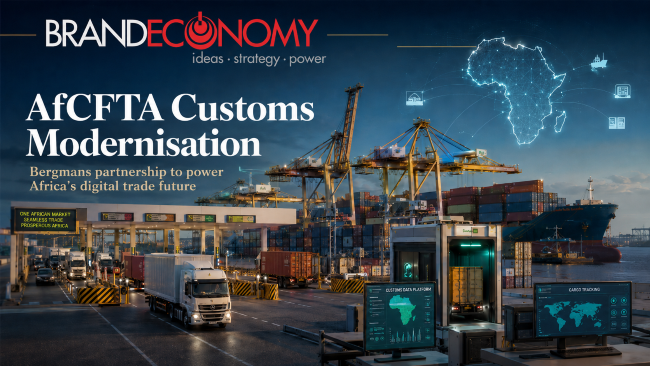
Landmark customs modernisation partnership positions Nigeria-led private-sector expertise at the heart of Africa’s push for seamless, secure and digitally enabled commerce
Africa’s most ambitious trade agreement is moving closer to a more practical commercial reality.

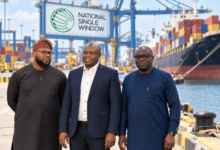


The African Continental Free Trade Area Secretariat has signed a landmark Memorandum of Understanding with Bergmans Security Consultant and Supplies Limited for the implementation of the AfCFTA Customs Modernisation Project, a potentially transformational initiative designed to strengthen customs cooperation, modernise trade corridors and make the movement of goods across African borders faster, smarter and more predictable.
The agreement, signed in Lagos on the sidelines of the Digital Trade Forum 2026, brings together the AfCFTA Secretariat and a Nigerian private-sector player with hands-on experience in customs transformation, digital public infrastructure and trade facilitation.
At the signing ceremony, AfCFTA Secretary-General, His Excellency Wamkele Mene, and the Chairman of Bergmans Security Consultant and Supplies Limited, Alhaji Saleh Ahmadu, OON, described the agreement as an important milestone in the digital transformation of African trade and customs infrastructure, and a practical contribution to the African Union’s Agenda 2063 vision of a more integrated, prosperous and globally competitive continent.
The MoU provides the foundation for a Public-Private Partnership (PPP) through which Bergmans is expected to deploy a broad digital and physical customs infrastructure across participating African markets. The objective is clear: harmonise customs procedures, improve trade-corridor performance, reduce avoidable delays and support the seamless cross-border movement of goods among AfCFTA State Parties.
For Africa, this is more than a technology announcement. It is a serious attempt to build the operating infrastructure of a continental market through globally sound digitally driven customs trade modernisation solutions
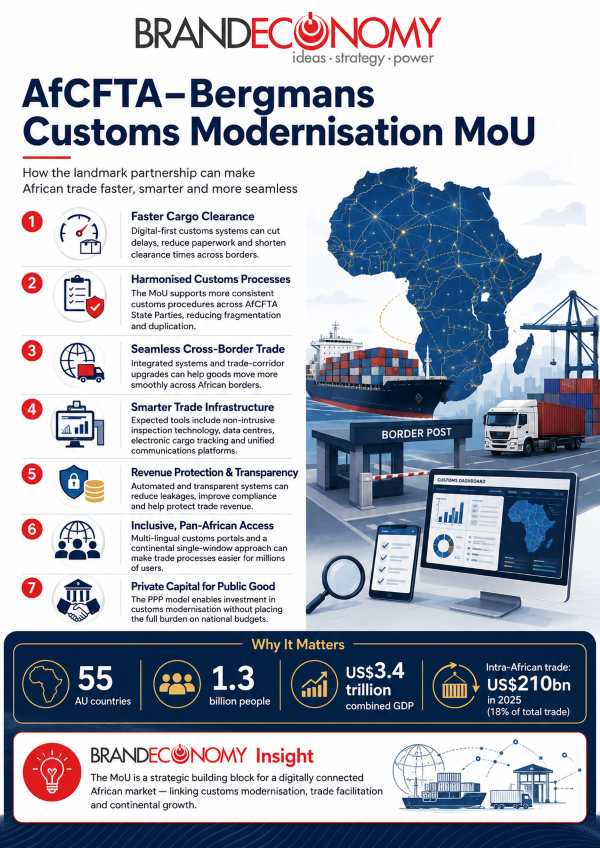
The World Bank estimates that full AfCFTA implementation could raise African incomes by about seven per cent, or roughly $450 billion, by 2035. Importantly, improvements in trade facilitation account for a substantial share of the projected gains because they reduce the delays, uncertainty and compliance costs that limit African commerce.
The MoU provides opportunities for young African technology businesses developing supply-chain, payments, documentation and compliance solutions.
It also matters to consumers whose purchasing power is weakened when inefficiencies make goods unnecessarily expensive.
The intra-African trade stood at about $210 billion in 2025, representing only 18 per cent of the continent’s total trade. Afreximbank separately reported that intra-African merchandise trade rose to $220.3 billion in 2024, confirming both the momentum already building and the scale of opportunity still available.
The Bergmans Advantage: A Nigerian Customs Modernisation Story Goes Continental
A defining strength of the new partnership is Bergmans’ existing connection to Nigeria’s customs modernisation journey.
Bergmans Security Consultant and Supplies Limited is the parent company of Trade Modernisation Project Limited, the concessionaire to the Federal Government of Nigeria for the implementation of the Nigeria Customs Service Modernisation Project. That relationship places the company at the centre of one of Nigeria’s most important institutional reform initiatives in trade, revenue administration, border security and ease of doing business.
The Nigeria Customs Service Modernisation Project is a Presidential initiative built around a private-sector-led partnership model. Its broad ambition is to replace outdated, fragmented and paper-heavy customs processes with an integrated system capable of improving cargo clearance, strengthening revenue assurance, enhancing transparency, reducing leakages and creating a more predictable environment for traders.
The Trade Modernisation Project has been associated with the development and deployment of Nigeria’s Unified Customs Management System, known as B’Odogwu, which is positioned as a central platform for customs declarations, trade documentation, cargo visibility and broader border-management processes.
That experience gives the AfCFTA Customs Modernisation Project a particularly compelling proposition.
Rather than beginning solely as a theoretical continental blueprint, the initiative is being advanced by a company whose subsidiary is already involved in a large-scale customs modernisation programme in Africa’s biggest economy.
Bergmans therefore enters the AfCFTA conversation with a practical institutional story: Nigerian experience, African relevance and continental ambition.
The company says its model is built on the ability to combine technical capacity, digital infrastructure, security expertise and private financing to help sovereign institutions solve complex trade and border-management challenges.
That proposition matters because the future of African trade will depend not only on policy declarations, but on reliable systems that work at ports, airports, land borders, warehouses, dry ports and logistics corridors.
 A Continental Single Window for Africa’s Next Trade Era
 A Continental Single Window for Africa’s Next Trade Era
The proposed project is expected to deploy an ambitious blend of trade-facilitation infrastructure.
These include advanced Non-Intrusive Inspection technology, integrated data centres, electronic cargo-tracking systems, unified communications platforms and multilingual customs portals designed to accommodate Africa’s official languages.
It also envisages an Africa-centred and digitally sovereign Continental Single Window. This phrase deserves attention.
A single-window environment enables traders to submit required trade information through a coordinated point rather than repeatedly presenting similar documents to multiple agencies. The World Customs Organization identifies this approach as a major trade-facilitation tool because it can reduce duplication, improve data quality and make regulatory compliance more efficient.
The most powerful aspect of the proposed AfCFTA model is its emphasis on connecting systems across different countries rather than assuming that every country must abandon its existing technology.
The World Customs Organization’s Data Model is built around a similar principle: a common language for cross-border information exchange that supports national single-window systems, reduces compliance costs and improves interoperability among customs and other border agencies.
For Africa, the opportunity is immense.
A Ghanaian exporter should be able to send goods to Nigeria, Rwanda, Kenya, Senegal, Morocco or South Africa without being trapped in a maze of repetitive documentation and incompatible border processes. A Nigerian manufacturer should be able to plan regional distribution with greater certainty. A small trader should be able to understand requirements more easily and participate in formal trade with less friction.
That is the market promise behind digital customs.
The Real AfCFTA Prize Is Not Only Tariff Reduction
AfCFTA was created to build a single continental market for goods and services and deepen African economic integration. Trading under the agreement began in January 2021, but the practical work of making African commerce faster, cheaper and more predictable remains unfinished.
The major constraint is not merely the existence of tariffs. It is the cumulative cost of delay.
A shipment can leave Lagos, Tema, Mombasa, Durban or Abidjan with a valid invoice and still lose commercial value through duplicated inspections, inconsistent data requirements, fragmented clearance processes, poor coordination among border agencies, weak transit monitoring and incompatible customs platforms.
The World Bank has consistently argued that a large share of AfCFTA’s potential gains will come from reducing red tape and trade costs rather than tariff cuts alone. Its estimates suggest full implementation could raise African incomes by about seven per cent, or roughly $450 billion, by 2035; trade-facilitation measures account for the larger share of those projected gains.
This is where customs modernisation becomes more than a technology conversation.
It becomes industrial policy. It becomes logistics policy. It becomes food-security policy.
It becomes a competitiveness strategy for African producers trying to sell more reliably into neighbouring markets.
Why the Customs Modernisation Project Is Relevant
The AfCFTA legal architecture already points in this direction. Its Trade Facilitation Annex encourages State Parties to use modern information technology, enable electronic documentation, share trade data and collaborate on compatible electronic systems. It also calls for single-window arrangements that allow traders to submit documentation through one entry point rather than repeat the same information across multiple agencies.
The Bergmans-AfCFTA initiative is therefore important because it seeks to convert these policy commitments into an operating system for continental trade.
The central proposition is interoperability.
Africa does not necessarily need every country to abandon its existing customs platform. What it needs is an agreed technical language through which national systems can exchange trusted data, validate declarations, recognise origin documentation, manage transit cargo and reduce the need for traders to restart the clearance process at every frontier.
That distinction is crucial.
The future is not one rigid platform imposed across 54 markets. The more practical path is a network of interoperable systems built on common data standards, shared governance rules and mutual recognition protocols.
The World Customs Organization has made a similar argument: electronic single-window systems create the greatest value when they can connect with one another through interoperable technology, data standards and genuine public-private cooperation.
The Blue Economy Dimension: Ports Are Only as Efficient as Their Borders
For Africa’s Blue Economy, the project’s relevance is immediate.
Ports are not just waterfront assets. They are commercial gateways connecting ships to factories, warehouses, farms, markets, rail corridors, trucking networks and inland consumer centres.
When customs data is fragmented, cargo becomes slower. When cargo becomes slower, demurrage rises, terminal storage costs increase, working capital is trapped and shelf-life-sensitive goods lose value. For exporters of perishables, pharmaceuticals, manufactured goods and time-sensitive inputs, border friction can erase margins entirely.
A modern customs system can therefore improve much more than border administration. It can strengthen port competitiveness, reduce congestion pressure, improve cargo predictability and make regional trade corridors more commercially attractive.
The proposed investment in one-stop border posts is especially significant. Physical one-stop border posts reduce duplication by bringing relevant agencies closer together. But without digital interoperability, traders can still face repeated data submission and clearance delays.
The real prize is a seamless movement chain: port to customs platform, customs platform to transport operator, transport operator to inland border, border to receiving market.
That is how Africa converts geography into trade advantage.
The Commercial Reality Check
The proposed project carries enormous promise, but the harder work begins after the signing ceremony.
The MoU announcement outlines the project vision but does not disclose key commercial and operational details such as participating countries, financing structure, user-fee arrangements, data-governance rules, implementation timetable, performance guarantees or the final legal architecture for participating customs administrations.
Those issues will determine whether the project becomes a continental breakthrough or another ambitious integration plan slowed by national sensitivities.
Five questions now matter:
First, will participating countries commit quickly? Customs is sovereign territory. Each government will need confidence that integration does not weaken national security, revenue control or policy autonomy.
Second, will interoperability take priority over platform replacement? The winning model should connect existing national systems where possible, rather than force every country into an expensive technological reset.
Third, who owns and governs trade data? Customs information is commercially sensitive and strategically important. Data residency, cybersecurity, access rights, retention rules and audit mechanisms must be clear from the beginning.
Fourth, what will traders pay? AfCFTA rules emphasise that fees and charges connected to trade should be transparent and proportionate to services rendered. The project must avoid becoming an additional cost layer for small businesses and informal cross-border traders.
Fifth, how will success be measured? The project needs public performance indicators: average clearance time, number of documents eliminated, cross-border declaration recognition rates, cargo dwell-time reductions, dispute-resolution speed and trader-satisfaction scores.
Without measurable outcomes, “digital transformation” can easily become an attractive phrase without commercial substance.
Market Implications
For logistics operators, the opportunity is lower turnaround time, better cargo visibility and more efficient corridor planning.
For manufacturers, it could mean easier access to regional customers and a stronger case for building African supply chains rather than relying excessively on imports from outside the continent.
For banks and trade-finance institutions, standardised and verifiable customs data could improve risk assessment, invoice financing and the monitoring of cross-border transactions.
For SMEs, the greatest gain may be certainty. Small businesses are often less damaged by tariffs than by unpredictable delays, documentation confusion and unofficial costs.
For ports and terminal operators, faster customs processing could improve throughput, reduce cargo congestion and strengthen competitiveness against alternative gateways.
For technology companies, the project opens a wider conversation around cybersecurity, trade-data analytics, digital identity, inspection technology, e-payments, logistics software and supply-chain visibility platforms.
Brand Implications: Trust Will Become a Trade Advantage
The best brands in the AfCFTA era will not only sell quality products. They will sell reliability.
A manufacturer able to assure distributors in Ghana, Kenya, Côte d’Ivoire, Rwanda or South Africa that its goods can be tracked, cleared and delivered predictably will have an advantage over competitors operating through opaque or unreliable channels.
For African brands, logistics credibility is becoming part of brand equity.
A product delayed at a border is not simply a supply-chain issue. It can become a consumer-trust issue. Empty shelves damage confidence. Erratic delivery weakens distributor loyalty. Repeated documentation problems make a company appear smaller, less organised and less dependable.
The modern African brand must therefore think beyond advertising. It must build operational trust.
Investor Relevance
The investment case is not confined to customs technology itself.
The more important opportunity is the ecosystem that grows around faster, more predictable African trade: warehousing, trucking, cold-chain logistics, cargo tracking, trade finance, insurance, port services, export manufacturing, digital compliance platforms and regional distribution networks.
However, investors should watch implementation discipline rather than headlines.
The strongest early indicators will be the naming of pilot countries, publication of technical standards, clarity on financing and fees, data-governance safeguards, customs-agency commitments and proof that a declaration initiated in one market can be recognised in another without duplication.
The first truly interoperable cross-border transaction will matter more than the signing ceremony.
BRANDECONOMY Insight
The AfCFTA-Bergmans partnership represents a confident and timely move towards building the digital backbone of African commerce.
Its deeper significance lies in the fact that it connects three powerful ideas: continental integration, Nigerian private-sector capability and technology-enabled trade facilitation.
The involvement of Bergmans, as parent company of Trade Modernisation Project Limited—the concessionaire for Nigeria’s Customs Modernisation Project—adds a particularly strong African proof point to the initiative.
Africa does not need to wait for external systems to define its trade future.
It can build home-grown, internationally compatible and digitally sovereign infrastructure capable of making trade faster, safer and more inclusive.
The AfCFTA Customs Modernisation Project offers an opportunity to turn African borders from points of friction into gateways of growth.
That is not simply a customs reform story. It is a continental competitiveness story. It is a Blue Economy story. It is a Nigerian innovation story.
However, the success of this project will depend on whether African states, customs authorities, private investors and traders can agree on a shared operating model built on trust, transparency, common standards and measurable results.
Africa does not need another declaration of integration.
It needs a border system that makes integration visible to the trader with goods on a truck, the exporter waiting for a certificate of origin, the manufacturer planning inventory and the consumer paying for the final product.
That is the real promise of digital customs.
And, if successfully implemented, it could become one of the most important institutional building blocks of Africa’s economic future.