The renewed evacuation of African migrants from South Africa exposes a deeper continental failure: weak protection for migrants, strained intra-African trust, economic frustration, poor social integration and the fragility of Africa’s people-to-people promise under AfCFTA.
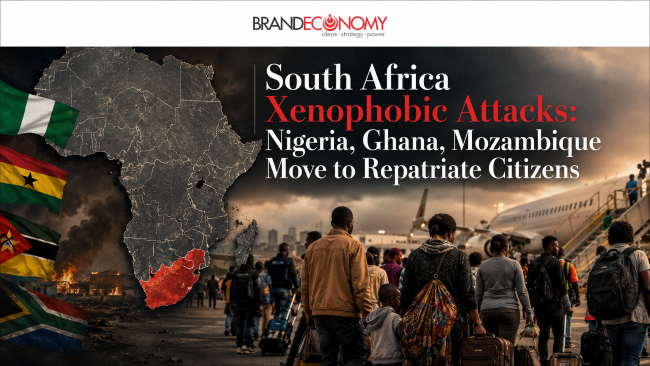 The renewed evacuation of African migrants from South Africa exposes a deeper continental failure: weak protection for migrants, strained intra-African trust, economic frustration, poor social integration and the fragility of Africa’s people-to-people promise under AfCFTA.
Nigeria, Ghana, Mozambique and other African countries have begun urgent diplomatic and evacuation responses as a fresh wave of anti-immigrant violence in South Africa forces several nationals to seek return to their home countries.
For Nigeria, the Federal Government has rescheduled the airlifting of the first batch of citizens who indicated willingness to leave South Africa. The evacuation, earlier planned for Monday, was shifted to Wednesday because of logistical considerations.




According to Kimiebi Ebienfa, spokesman of the Ministry of Foreign Affairs, President Bola Tinubu approved five evacuation flights to be operated by Air Peace. The first flight is expected to carry about 270 passengers from Johannesburg once permits and aircraft clearances are secured.
Nigeria’s mission in Pretoria also extended the screening of Nigerians seeking evacuation to Wednesday, with more than 500 persons already screened and cleared.
The development comes amid renewed concern by Nigerian community organisations in South Africa that at least 105 Nigerians have been killed in the country over the past seven years through incidents linked to xenophobic violence, mob attacks, vigilante actions, shootings, alleged extra-judicial conduct and unresolved violent encounters.
Mozambique, Ghana Also Move Citizens
Nigeria is not alone.
Mozambique has announced plans to repatriate nearly 1,000 citizens affected by the violence. Its government said hundreds had already returned voluntarily, while those arriving at border posts were being provided with food and support before proceeding to their final destinations, mainly in the southern provinces of Maputo, Gaza and Inhambane.
Ghana has also repatriated citizens after recent anti-immigration protests in South Africa. Ghanaian officials framed the departures as part of efforts to reduce tensions while preserving diplomatic ties with South Africa.
The protests were reportedly driven by groups demanding stricter controls on undocumented migrants and accusing foreigners of contributing to crime and unemployment. Migrant-rights advocates, however, argue that foreign nationals are being scapegoated for South Africa’s deeper economic problems, particularly unemployment, inequality and social frustration.
A Continental Crisis of Mobility and Trust
South Africa remains one of Africa’s most important economies and a destination for migrants, students, traders, professionals and entrepreneurs from across the continent. But repeated waves of anti-immigrant hostility have damaged its moral authority and strained relations with countries whose citizens live and work there.
This is not merely a humanitarian issue. It is a continental integration issue.
Africa cannot credibly pursue free trade, investment mobility, regional value chains and people-to-people commerce while African migrants live in fear in another African country. The promise of the African Continental Free Trade Area is not only about goods crossing borders. It is also about trust, skills, labour, services, enterprise and mobility.
When xenophobia erupts, it undermines that trust.
It also damages South Africa’s brand as a constitutional democracy, investment destination and continental leader. For African governments, it raises the urgent need for stronger consular protection, migrant documentation, labour diplomacy and bilateral early-warning systems.
Nigeria’s Diplomatic Test
Nigeria’s decision to approve evacuation flights is a necessary emergency response. It signals that the state must be seen to protect citizens abroad when their safety is at risk.
But evacuation is only the first layer of responsibility.
The harder diplomatic task is sustained engagement with South African authorities to ensure accountability, protection, justice and prevention. Nigerian community groups in South Africa have called for thorough investigations into reported killings, transparent outcomes and stronger action against mob justice, vigilantism and unlawful conduct.
Nigeria must also improve its own data systems on citizens abroad. In moments of crisis, accurate registration, contact channels and consular mapping become essential. Many African missions struggle to track nationals until emergencies occur. That must change.
For Air Peace, the evacuation also carries brand significance. The airline has previously played symbolic roles in repatriation efforts. Once again, it is positioned as a national carrier in moments of distress, even though it remains a private airline.
Policy Implications for South Africa
South African authorities have condemned violence and xenophobic attacks against foreign nationals and affirmed that xenophobic attacks have no place in a constitutional democracy. But statements are no longer enough.
The country must confront the domestic conditions that make migrants easy targets: unemployment, crime, weak service delivery, local political opportunism, poor policing, misinformation and resentment in under-served communities.
At the same time, South Africa must distinguish between legitimate immigration enforcement and mob-driven hostility. Immigration management is a state function. Violence against migrants is not policy; it is lawlessness.
The South African state must therefore strengthen policing, prosecute perpetrators, protect vulnerable communities, counter inflammatory narratives and promote local dialogue between citizens and migrant groups.
Investor Relevance and Market Consequences
 Investor Relevance and Market Consequences
Violence, especially xenophobic attacks against migrants carries real economic costs.
South Africa’s economy depends on regional trade, foreign investment, tourism, education, retail, logistics and services. Xenophobic violence weakens investor confidence by raising questions about social stability, rule of law and business continuity.
For Nigerian, Ghanaian, Mozambican and other African entrepreneurs operating in South Africa, the risks are immediate: business disruption, asset loss, insecurity, forced relocation and reduced confidence in cross-border enterprise.
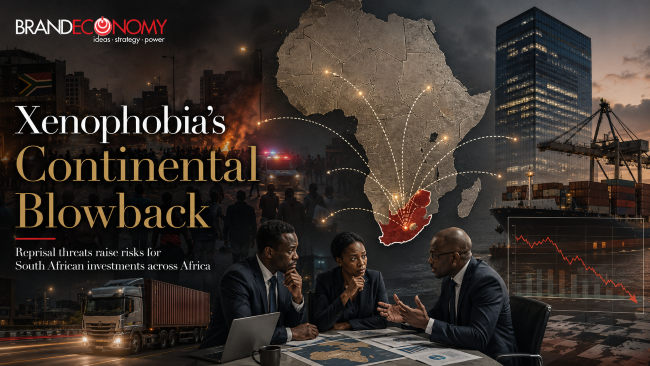
For South African companies operating across Africa, the reputational risk is also significant. Anti-immigrant violence can trigger resentment against South African brands in other African markets, as has happened in previous episodes.
Africa’s consumer markets are increasingly interconnected. A social crisis in one country can quickly become a brand risk for companies operating across the continent.
BRANDECONOMY Insight
Xenophobia Is Bad Economics, Bad Diplomacy and Bad Branding
The evacuation of Nigerians, Ghanaians and Mozambicans from South Africa is a painful reminder that Africa’s integration project remains fragile.
Xenophobia is not only a moral failure. It is bad economics.
Migrants trade, work, study, invest, rent homes, pay for services, run businesses and create networks across borders. When they are attacked, the damage spreads beyond immediate victims. It weakens commerce, scares investors, disrupts communities and reduces the confidence needed for regional growth.
South Africa must address its domestic frustrations without engaging in xenophobic attacks and turning African migrants into convenient targets. Unemployment, inequality and crime are real issues, but blaming migrants will not fix them. It only deepens social division and damages the country’s continental standing.
Nigeria and other affected countries must also move beyond episodic outrage. They need stronger diaspora databases, better consular response systems, structured bilateral protection agreements and sustained diplomacy.
The bigger African lesson is clear: AfCFTA cannot thrive on paper while Africans fear one another in practice.
Africa’s future depends on trade, mobility and trust. Xenophobia destroys all three.