

NASENI Spotlights Research Commercialisation With Pineapple-Leaf Nanocellulose Breakthrough

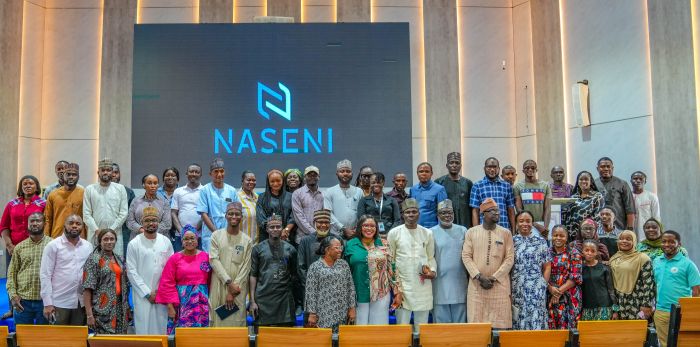 A seminar at the National Agency for Science and Engineering Infrastructure has renewed attention on a central challenge in Nigeria’s innovation journey: how to move promising laboratory discoveries from research benches into viable industrial products, enterprises and jobs.
Nigeria does not lack scientific ideas. What it has often lacked is a reliable bridge between research, industrial adoption, investment and market-scale production.




That bridge was at the heart of discussions at the NASENI Hybrid Scientific Engagement Programme: Science Perspective, held on June 30, 2026, as the National Agency for Science and Engineering Infrastructure, NASENI, renewed its call for more research-led technological breakthroughs capable of strengthening the country’s industrial base.
The seminar, organised by NASENI’s Science Infrastructure Directorate, brought researchers together to share knowledge, interrogate emerging discoveries and reinforce the agency’s focus on innovation as a practical contributor to national economic development.
For a country seeking to reduce import dependence, create skilled jobs and build more competitive manufacturing value chains, the significance goes beyond a departmental seminar.
The real issue is commercialisation.
From Scientific Discovery to Market Value
Declaring the programme open, the Director of NASENI’s Nano Science Department, Dr Chika Ezeanyanaso, described the engagement as a strategic platform for scientific exchange, stronger collaboration and ideas capable of supporting Nigeria’s industrialisation ambitions.
She said the initiative expanded the department’s regular seminar series to encourage broader participation across the NASENI system.
“This seminar provides an opportunity for colleagues to learn from one another and generate ideas that will support innovation and national economic growth,” Ezeanyanaso said.
Her point was direct: knowledge-sharing must not be constrained by hierarchy.
“There is no seniority here; what matters is knowledge sharing,” she added.
The statement captures an important truth about modern innovation ecosystems. Breakthroughs rarely emerge from isolated departments or individual brilliance alone. They are more likely to come from interdisciplinary teams—scientists, engineers, designers, manufacturers, investors, regulators and market-development specialists—working around a common commercial problem.
Ezeanyanaso also acknowledged the support of NASENI’s Executive Vice Chairman and Chief Executive Officer, Mr Khalil Suleiman Halilu, for research and innovation, as well as the Overseeing Officer of the Advanced Manufacturing Technology Development Institute, Jalingo, Mr Barkindo Abdulrahman Bawuro.
Pineapple Leaves and the Promise of a Circular Economy
One of the most compelling presentations came from Engr. Dr Samuel Wadzani Gadzama, Chief Engineer at the Scientific Equipment Development Institute, SEDI, Enugu.
Gadzama presented an overview of nanoscience research carried out since 2013, with particular attention to work involving the extraction of nanocellulose fibre from pineapple leaves.
The research, he said, followed extensive laboratory testing in Nigeria and internationally, leading to the development of a sustainable material with potential industrial uses.
Nanocellulose is derived from cellulose, the natural structural material found in plants. Because it can possess high strength at very low weight, it is attracting research interest for uses ranging from biodegradable packaging and plastics to composites, coatings and other advanced materials.
For Nigeria, the relevance is strategic.
Pineapple leaves are typically treated as agricultural residue after harvest. But in a more circular industrial economy, that residue could become feedstock for higher-value materials.
That is the difference between an agricultural economy that exports raw produce and one that builds industries around every useful by-product.
The possibility of producing biodegradable plastics or environmentally friendlier materials from agricultural waste aligns with growing global concern over single-use plastics, waste pollution and the need for more sustainable manufacturing inputs.
But potential is not yet a product.
The next stage must involve product development, standardisation, pilot production, intellectual-property management, quality testing, industrial partnerships and customer validation.
The Commercialisation Test
Nigeria has produced many research outputs over the years. The harder question is how many have found their way into factories, homes, farms, hospitals, construction sites and export markets.
Research becomes commercially meaningful when it answers practical questions:
- What industry problem does the innovation solve?
- Can it be produced consistently at competitive cost?
- Who is willing to buy it?
- Can it meet local and international standards?
- Is the technology protected through patents, trade secrets or licensing?
- Is there a business model around it?
- Can private capital support scale-up?
This is where institutions such as NASENI can play a more transformative role.
The agency’s mandate is not simply to produce papers, prototypes or laboratory demonstrations. Its greater mission is to help create the technical and manufacturing infrastructure through which Nigerian ideas can become Nigerian products.
That requires closer links with manufacturers, universities, development-finance institutions, venture builders, raw-material suppliers and state governments.
Why Interdisciplinary Collaboration Matters
In his vote of thanks, Dr Hassan Bakare, Deputy Director of the Research Laboratory Department, commended the Science Infrastructure Directorate for creating a space for scientific exchange and collaborative learning.
He also proposed a joint seminar platform involving the Science and Engineering Infrastructure Directorates, arguing that stronger interdisciplinary interaction could accelerate innovation and deepen NASENI’s contribution to industrial growth.
The proposal deserves serious consideration.
Science without engineering may remain an interesting discovery. Engineering without market understanding may remain a prototype. Commercialisation without rigorous science may produce weak products.
But when these disciplines work together, a pathway begins to emerge:
Research → Prototype → Testing → Product Design → Certification → Pilot Manufacturing → Market Entry → Scale.
Nigeria needs more of these pathways.
Market Implications: Agriculture Could Feed New Industries
The nanocellulose work points to an important market opportunity at the intersection of agriculture, materials science and green manufacturing.
Nigeria produces large volumes of agricultural residue—leaves, stalks, husks, shells and fibres—that are often discarded, burnt or left to decay. Some of those materials could become inputs for packaging, bio-composites, textiles, construction materials, filters, coatings and other industrial applications.
For agro-processing businesses, this opens a wider conversation about value addition.
A pineapple farm should not be seen only as a source of fruit. It can also become a source of fibre, bio-materials, processing inputs and industrial innovation.
That model could create new revenue lines for farmers, processors, cooperatives and manufacturers while reducing waste-management pressures.
Brand Implications: Innovation Must Be Seen, Trusted and Adopted
For NASENI, the branding challenge is not merely visibility. It is proof.
The agency’s public reputation will increasingly depend on how clearly Nigerians can see the results of its work in everyday life: better local equipment, reliable technologies, industrial partnerships, jobs, patents, production facilities and businesses built around home-grown innovation.
For private companies, the lesson is equally relevant.
Sustainability claims are becoming less persuasive when they are not backed by real material innovation. Brands that can replace imported or environmentally harmful inputs with locally developed, high-performing alternatives may gain both consumer trust and strategic resilience.
A biodegradable material made from Nigerian agricultural waste could become more than a scientific achievement. It could become a powerful industrial and brand story.
Investor Relevance: The Opportunity Is in the Scale-Up Layer
For investors, the investable opportunity does not begin and end with the research paper.
It lies in the scale-up layer:
- Pilot plants for sustainable materials
- Local processing equipment
- Packaging conversion facilities
- Agricultural-waste collection networks
- Quality-assurance and testing services
- Licensing and technology-transfer ventures
- Green manufacturing partnerships
The most attractive opportunities will be those with credible technical validation, protected intellectual property, reliable feedstock, clear cost advantages and identifiable buyers.
Nigeria’s green-industrial future will not be built only by funding research. It will be built by financing the journey from research to revenue.
BRANDECONOMY Insight
The real value of scientific research is not measured only by the sophistication of the laboratory.
It is measured by whether it improves production, creates jobs, substitutes imports, expands exports and solves practical problems.
NASENI’s renewed emphasis on research engagement is therefore welcome. But the greater test lies ahead.
Can Nigeria turn pineapple leaves into industrial materials? Can a scientific seminar produce partnerships that lead to pilot plants? Can research institutions become more active engines of commercial innovation?
The answer will determine whether the country remains a consumer of other nations’ technology—or becomes a producer of its own.