Shakira, Burna Boy Give FIFA World Cup 2026 Its Global Soundtrack with “Dai Dai”
FIFA’s Global-Culture Strategy

 The official tournament song blends pop royalty, Afrobeats power and FIFA’s growing ambition to turn football’s biggest spectacle into a global cultural and social-impact platform.
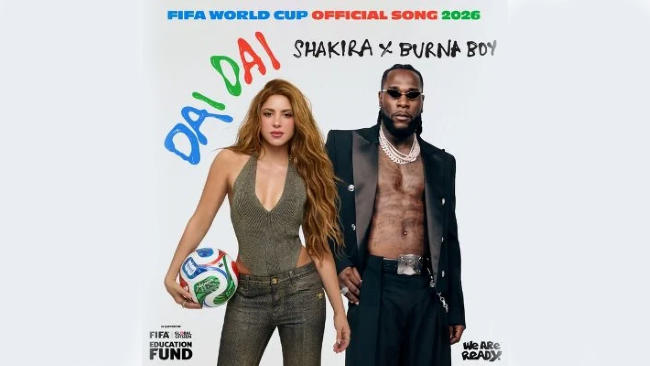 The official tournament song blends pop royalty, Afrobeats power and FIFA’s growing ambition to turn football’s biggest spectacle into a global cultural and social-impact platform.
The 2026 FIFA World Cup has found its official song — and, fittingly for the first 48-team edition of football’s grandest tournament, it arrives as a deliberately global collaboration. Colombian music icon Shakira and Nigerian superstar Burna Boy have released “Dai Dai,” the official song of the FIFA World Cup 2026, a track designed to carry the tournament’s message of energy, unity and cross-cultural celebration.
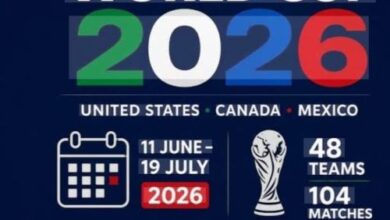
Released through Sony Music Latin, the song is now available across major streaming platforms, as FIFA intensifies the entertainment build-up to the tournament scheduled for June 11 to July 19, 2026, across Canada, Mexico and the United States. FIFA describes the song as a meeting point of Shakira’s global pop appeal and Burna Boy’s African-inflected sonic reach, framed as a celebration of football, culture and unity.
For FIFA, “Dai Dai” is more than a musical release. It is part of a broader commercial and cultural strategy to expand the World Cup beyond the pitch — into streaming platforms, halftime programming, opening ceremonies, social-impact campaigns and the increasingly valuable economy of global entertainment.
A World Cup Song Built for a Wider World
The phrase “Dai Dai” is presented as an energetic call to action, and the song’s positioning reflects the scale of the 2026 tournament itself: the largest World Cup in history, staged across three countries and designed to reach audiences well beyond traditional football territories. FIFA says the track captures the “energy, passion and global spirit” it wants associated with the competition.
The song’s release also reinforces the centrality of music to modern sports mega-events. World Cup songs have long functioned as emotional shorthand for tournaments, attaching rhythm, memory and identity to football’s most widely watched moments. Shakira understands that territory better than almost any contemporary artist. Her “Waka Waka (This Time for Africa)” became one of the defining cultural exports of the 2010 South Africa World Cup, while she also participated musically in FIFA’s 2006 and 2014 tournament spectacles.
Her return for 2026 therefore carries both nostalgia and brand logic. FIFA is reviving an artist whose World Cup association already has global recall, but this time pairing her with one of Africa’s most internationally visible music stars. In Burna Boy, the federation gains an artiste who speaks to the contemporary force of African music in global pop culture, particularly the commercial and cultural rise of Afrobeats and related African sounds.
Burna Boy’s World Cup Moment and Nigeria’s Growing Cultural Export Power
Burna Boy’s inclusion is a significant cultural win for Nigeria. It places one of the country’s most internationally recognised entertainers at the heart of FIFA’s flagship music property and deepens the visible presence of Nigerian artistes in World Cup entertainment.
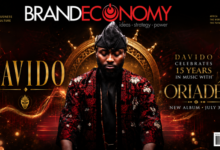
His appearance on “Dai Dai” follows Davido’s involvement in “Hayya Hayya (Better Together),” the first single from the FIFA World Cup Qatar 2022 Official Soundtrack, performed with Trinidad Cardona and Aisha. Burna Boy’s role in 2026 therefore extends Nigeria’s growing foothold in FIFA’s global music ecosystem, moving the country from participation in a soundtrack era to presence on the tournament’s official song itself.
This matters beyond celebrity prestige. Nigerian music has become one of the country’s most persuasive soft-power exports. It travels faster than policy documents, enters markets that formal trade diplomacy may not easily reach, and gives the country a cultural relevance that can influence tourism, brand perception and creative-economy investment. Burna Boy’s World Cup collaboration with Shakira is therefore not just a pop event. It is another marker of Nigeria’s growing cultural capital in the global marketplace. This is an inference grounded in the prominence FIFA has given to the collaboration and Nigeria’s recent representation in official World Cup music programming.
Music, Education and FIFA’s Social-Impact Play
FIFA has tied “Dai Dai” directly to the FIFA Global Citizen Education Fund, an initiative that aims to raise $100 million by the end of the tournament to expand access to quality education and football opportunities for children around the world. Royalties from the song will support the fund. Shakira is donating her royalties from the release, while Sony Music will match the first $250,000 raised with an additional donation.
That social-impact framing is central to FIFA’s 2026 entertainment rollout. The governing body has also announced that Shakira will co-headline the first-ever FIFA World Cup Final Halftime Show on July 19, 2026, alongside Madonna and BTS, with the event produced in support of the same education fund. FIFA says the halftime initiative is intended to fuse football, music and social purpose on the sport’s largest stage.
The strategy is commercially astute. A global sports tournament now competes not only for live attendance and television audiences, but also for digital engagement, music streams, social-media conversation and cultural relevance. By attaching its official song to a philanthropic fund, FIFA is turning entertainment into a values-led extension of the World Cup brand.
A Tournament Increasingly Built Around Entertainment Spectacle
The 2026 World Cup is shaping up as FIFA’s most entertainment-forward tournament yet. Beyond “Dai Dai” and the final halftime show, FIFA has confirmed multiple opening ceremonies across the three host countries. The United States ceremony in Los Angeles on June 12 will feature an all-star lineup including Katy Perry, Future, Anitta, LISA, Rema and Tyla.
The inclusion of Rema, another Nigerian global star, further underlines Nigeria’s relevance to the tournament’s cultural programme. It also reflects how FIFA is leaning into contemporary global music markets, especially artists with strong youth appeal and transcontinental fan bases.
The tournament itself begins a day earlier, on June 11, when Mexico face South Africa in the opening match at Mexico City Stadium, the venue historically associated with World Cup grandeur and the renamed successor to the iconic Azteca setting.
Shakira’s Return to the World Cup Stage
Shakira’s re-entry into FIFA’s official music universe is one of the release’s strongest narrative hooks. Her relationship with the World Cup stretches across two decades, but 2010’s “Waka Waka” remains the benchmark: a tournament song that outgrew the event and became a generational pop-cultural artefact.
The challenge for “Dai Dai” is therefore formidable. It will not merely be judged as a song; it will be measured against memory. Can it create the kind of emotional association that fans carry long after the final whistle? Can it match the tournament’s energy across three host countries and 48 teams? Can Burna Boy’s global rhythm and Shakira’s World Cup pedigree produce a song that lives beyond rollout week?
Those answers will unfold in the months ahead. But from a branding standpoint, FIFA has made a powerful opening move: it has combined history, contemporary cultural reach and social purpose in one flagship release.
BRANDECONOMY Insight
“Dai Dai” Is Not Just a Song — It Is FIFA’s Global-Culture Strategy in Three Minutes
The release of “Dai Dai” reveals how profoundly the business of football has changed. The modern World Cup is no longer marketed only through fixtures, stadiums and star players. It is packaged through music, philanthropy, celebrity, social media and cultural symbolism.
By pairing Shakira, arguably the most recognisable musical face of recent World Cup history, with Burna Boy, one of Africa’s most influential contemporary artistes, FIFA has produced more than a soundtrack. It has created a carefully calibrated global brand asset.
For Nigeria, the collaboration carries real soft-power value. The country’s artistes are no longer occasional guests at global platforms; they are increasingly being used to define the sound of those platforms. Davido’s 2022 World Cup soundtrack appearance, Burna Boy’s 2026 official-song collaboration and Rema’s place in FIFA’s Los Angeles opening-ceremony lineup together suggest that Nigerian music has become part of the commercial vocabulary of global sport.
That is a business story as much as an entertainment story. Cultural visibility drives streaming, fashion influence, diaspora engagement, sponsorship value and global brand partnerships. Nigerian music’s rise is helping to reposition the country as a serious exporter of intangible value — ideas, sound, identity and emotional connection. This is an inference based on the expanding World Cup roles accorded to Nigerian artistes and FIFA’s own emphasis on cross-cultural reach.
FIFA, for its part, is clearly building a World Cup that intends to feel like a sports tournament, entertainment franchise and global social-impact campaign all at once. “Dai Dai” is the opening note of that ambition. Whether it becomes as enduring as “Waka Waka” will depend on the audience. But strategically, the song has already achieved something important: it has made the road to 2026 sound unmistakably global — and unmistakably African too.