


 The latest wave in the nicotine economy is being sold as discreet, modern and lifestyle-friendly. The World Health Organisation warns that it may instead be building a new generation of dependence.
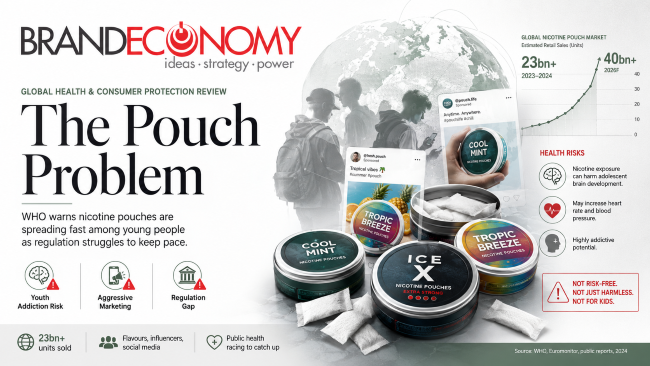 The latest wave in the nicotine economy is being sold as discreet, modern and lifestyle-friendly. The World Health Organisation warns that it may instead be building a new generation of dependence.
The World Health Organisation has issued a sharp global warning over the rapid spread of nicotine pouches, cautioning that the products are expanding at extraordinary speed while regulation in many countries remains weak, fragmented or entirely absent. The agency is especially concerned that adolescents and young adults are being aggressively targeted through flavours, social media campaigns, influencer promotion and lifestyle branding that can make nicotine use appear harmless, fashionable and easy to normalise.
The warning, released ahead of World No Tobacco Day 2026, comes as the health body intensifies its campaign against what it describes as the tobacco and nicotine industry’s effort to “unmask the appeal” of newer products aimed at recruiting fresh users. This year’s theme focuses squarely on how product design, marketing and digital culture are being used to draw young people into cycles of addiction.




Nicotine pouches are oral nicotine products typically packaged in small sachets and marketed as smoke-free, discreet and modern. WHO notes that they often contain nicotine, flavourings, sweeteners and other additives, and are now being sold in volumes that reflect a fast-growing global business. Retail sales surpassed 23 billion units in 2024, rising by more than 50 per cent from the previous year, while the global market was valued at nearly $7 billion in 2025.
For public-health authorities, those figures point to more than a successful consumer product. They suggest the emergence of a highly scalable nicotine category with the potential to expand addiction among young people before regulators have fully understood, classified or controlled it.
A Product Category Moving Faster Than Regulation
WHO’s first global report dedicated to nicotine pouches, titled “Exposing Marketing Tactics and Strategies Driving the Global Growth of Nicotine Pouches,” was prepared in response to requests from countries seeking guidance on how to regulate a rapidly expanding category of nicotine products. The report warns that tobacco companies are using digital channels, youth-oriented imagery and gaps in existing laws to expand the market quickly across jurisdictions.
The regulatory imbalance is stark. Around 160 countries currently have no specific rules governing nicotine pouches. Only 16 countries have banned their sale outright, while 32 countries regulate them in some form. Among those with partial controls, very few have comprehensive restrictions covering flavours, youth access and marketing together.
That patchwork matters. Products that are tightly restricted in one market can be promoted aggressively through cross-border digital advertising in another. WHO’s report highlights how social media platforms and online influencer ecosystems allow nicotine brands to reach young audiences beyond the practical reach of traditional advertising controls.
This is one of the defining regulatory challenges of the modern consumer economy. Public policy still often moves at the speed of legislation. Marketing now moves at the speed of algorithms.
Why WHO Is Worried About Young Users
WHO’s central concern is not merely that nicotine pouches exist, but that they are being positioned in ways that lower perceived risk among younger consumers. The organisation reiterates that nicotine is highly addictive, with particular concern for children, adolescents and young adults whose brains are still developing. Exposure during adolescence may affect attention and learning, increase the risk of long-term dependence and raise cardiovascular risks.
The public-health worry is therefore twofold. First, nicotine pouches could encourage first-time use among people who may not previously have used nicotine products. Second, their branding may create a false impression that “smoke-free” means “risk-free,” a framing WHO explicitly rejects.
Some products are also sold in tiered strength categories described in ways that appear tailored to new and more experienced users. WHO says nicotine levels in certain products can reach very high amounts, increasing concerns about dependence and product escalation.
The issue, then, is not simply product novelty. It is the possibility that a new generation may be ushered into nicotine dependence through packaging that looks contemporary, claims that sound reassuring and marketing that blends seamlessly into everyday digital life.
The Marketing Playbook: Flavours, Influencers and Lifestyle Seduction
The WHO report devotes considerable attention to the commercial strategies being used to accelerate adoption. These include sleek and discreet packaging, sweet or youth-friendly flavours, aspirational branding, social media promotion, influencer partnerships and sponsorships linked to entertainment or sporting events.
The agency says some campaigns associate nicotine pouches with glamorous lifestyles, social belonging, pleasure, popular music and high-energy sporting culture. That style of promotion echoes older tobacco-marketing techniques, repackaged for the digital age.
WHO also warns that some packaging resembles sweets or candy products, raising concern not only about youth appeal but also about exposure risks to younger children.
This is a classic industry pattern: reframe dependence as convenience, recast risk as lifestyle and surround the product with cues that imply modernity and control. The difference in 2026 is that such messages can be amplified instantly through short-form video, creator marketing and algorithmic distribution.
World No Tobacco Day 2026: A Wider Fight Against Addiction-by-Design
The timing of WHO’s warning is deliberate. World No Tobacco Day 2026, marked on May 31, is themed “Unmask the appeal – countering tobacco and nicotine addiction.” WHO says nicotine and tobacco industries design products in ways that entice young people and sustain dependence.
The campaign also draws attention to a broader youth addiction challenge. WHO says 15 million adolescents aged 13–15 worldwide already use e-cigarettes, while 40 million adolescents in the same age group use tobacco. In countries where data is available, adolescents are on average nine times more likely to vape than adults.
Nicotine pouches now enter that already crowded risk environment. Rather than replacing one harmful pattern neatly with another, WHO fears they could widen the overall market for nicotine use, especially among young people who are increasingly exposed to product marketing before regulation catches up.
WHO’s Recommended Policy Response
The health body is urging governments to act decisively and comprehensively. Its recommended measures include:
- strong restrictions or bans on youth-appealing flavours;
- bans on advertising, promotion and sponsorship, including influencer marketing;
- robust age-verification and retail controls;
- plain packaging and clear health warnings;
- limits on nicotine content;
- taxation to reduce affordability;
- monitoring of use patterns and industry tactics;
- and stronger enforcement of existing and future rules.
WHO’s position is not that regulators should wait for the market to mature before responding. It is that delayed intervention risks allowing a potentially addictive product class to establish cultural legitimacy before public-health protections are in place.
The logic is clear: once a product becomes normalised in youth culture, regulation becomes politically harder and socially less effective.
The Business of Nicotine Reinvention
Behind the health warning lies a wider business story. The global tobacco and nicotine industry is reinventing itself as cigarette consumption falls in many markets and public-health rules tighten. Nicotine pouches form part of that reinvention: a category marketed as cleaner, more discreet and easier to integrate into modern social routines. WHO’s report argues that major transnational companies are actively using these products to expand new markets and protect long-term commercial relevance.
This is precisely why the issue belongs not only on health pages, but also in business and regulatory coverage. Nicotine pouches are becoming a multi-billion-dollar consumer category built at the intersection of product innovation, regulatory ambiguity and youth-facing digital marketing.
The policy question is whether governments will view them through the lens of ordinary consumer goods — or through the lens of addiction economics, where commercial growth can translate into long-term public-health costs.
BRANDECONOMY Insight
Nicotine Pouches Reveal How Fast Consumer Markets Can Outrun Public Protection
The WHO warning on nicotine pouches is not simply a health advisory. It is a case study in how rapidly a new consumer category can scale before governments decide what it is, how it should be regulated and who is most at risk.
The product’s growth is commercially impressive. More than 23 billion units sold in 2024 and a market nearing $7 billion in 2025 signal serious global momentum. But those numbers also point to a deeper imbalance: industry speed is outpacing public safeguards.
WHO’s concern is especially compelling because the pouch market appears to be borrowing from a well-worn playbook — attractive flavours, high-visibility sponsorships, influencer culture, aspirational messaging and design cues that soften perceptions of risk. The result is a product category that can appear socially light while carrying the capacity for dependence.
For governments, the policy lesson is urgent. Emerging nicotine products cannot be treated as harmless innovations by default. They require pre-emptive regulation, not reluctant clean-up after youth uptake becomes widespread.
For businesses, the lesson is broader. Consumer growth built on regulatory blind spots and youth appeal may deliver rapid revenues, but it also invites reputational, legal and policy backlash. In an era of heightened scrutiny around public health and responsible marketing, industries that blur the line between innovation and addiction risk eventually paying a much steeper price.
The global nicotine economy is changing. Public protection must change faster.