Carnival Calabar Moves Beyond Entertainment With 2026 Essay and Creative Writing Contest

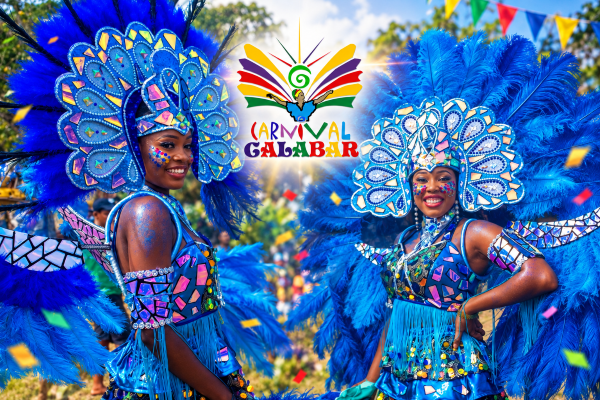 The Cross River State Carnival Commission has unveiled the 2026 Carnival Calabar Essay and Creative Writing Competition, an initiative designed to use the state’s most visible cultural platform to revive reading, writing and intellectual expression among students and young people.
Sir Gabe Onah, Chairman of the Cross River State Carnival Commission, disclosed the initiative in Calabar during an interview with the News Agency of Nigeria, saying the programme would give young Cross Riverians a structured opportunity to demonstrate creativity, critical thinking and writing ability.




For a brand long associated with colour, costume, dance, tourism, entertainment and spectacle, the move is strategically significant. It suggests that Carnival Calabar is being pushed beyond its traditional identity as Africa’s biggest street party into a wider developmental platform for education, youth empowerment and creative-economy talent discovery.
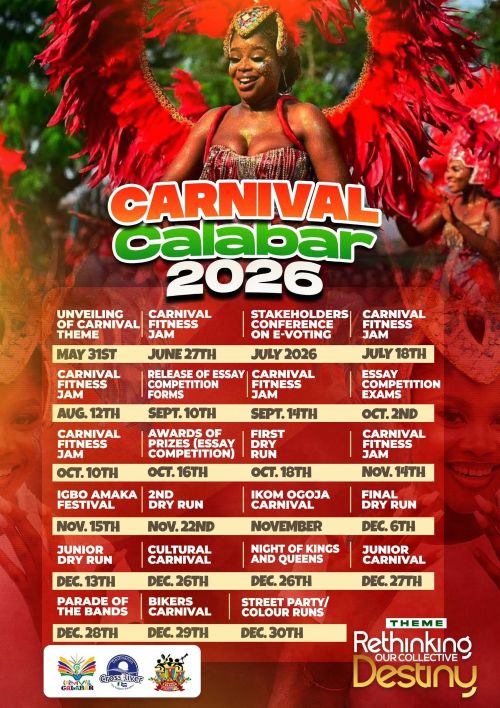 According to Onah, the competition is part of efforts to promote human capital development in Cross River State. He said the Commission wants to leverage the Carnival Calabar platform to create opportunities that extend beyond tourism and entertainment into education, creativity and intellectual development.
The competition will be conducted under standardised examination conditions across six centres in the state’s three senatorial districts. The Northern Senatorial District will have centres in Obudu and Ogoja; the Central Senatorial District will host centres in Ikom and Ugep; while the Southern Senatorial District will have centres in Akamkpa and Calabar.
This spread is important. By taking the competition beyond Calabar, the Commission is signalling that the carnival brand belongs to the entire state, not just the capital city. It also improves access for students who may otherwise be excluded by distance, transport costs or urban concentration of cultural opportunities.
The contest will have two categories. Category A will be open to secondary school students, while Category B will target students of tertiary institutions. Entries will be independently assessed by the Department of Theatre and Media Studies, University of Calabar, a move Onah said would help protect credibility, fairness and transparency.
The reward structure also shows that the programme is designed to leave institutional value behind, not just celebrate individual winners. In the secondary school category, the overall best contestant will receive a scholarship, while the top three winners will get laptops. The schools of the three winners will also receive laptops to support digital learning and teaching.
In addition, the top 10 schools will receive textbooks, branded exercise books, school bags, pens and mathematical sets. In the tertiary category, the overall best contestant will also receive a scholarship, while the top three winners will receive laptops. The top five departments represented by contestants will get branded hardcover books to support academic activities.
The design is thoughtful because it links talent recognition with resource support. Too many youth competitions end with trophies, certificates and photo opportunities. By adding scholarships, laptops, textbooks and school materials, the Commission is making a modest but meaningful investment in the learning ecosystem around the contestants.
The deeper issue is that Nigeria’s reading and writing culture is under pressure. The digital age has expanded access to information, but it has also shortened attention spans and weakened sustained reading habits among many young people. Social media has democratised expression, but it has not always strengthened grammar, argument, research discipline or creative depth.
This is where a writing competition connected to a major cultural brand can matter. Carnival Calabar already commands attention. If properly executed, it can convert entertainment visibility into intellectual participation. It can tell young people that creativity is not only about dance, costume and performance, but also about language, imagination, storytelling, analysis and cultural interpretation.
For Cross River, this is also a creative-economy strategy. The future of tourism is content-rich. Destinations now compete not only through scenery and events, but through stories, digital narratives, films, documentaries, essays, reviews, travel writing, photography, podcasts and cultural scholarship. A state that wants to sustain a leading carnival brand must also cultivate the writers, critics, creators, digital storytellers and cultural entrepreneurs who can interpret and export its identity.
Carnival Calabar has long been one of Nigeria’s strongest subnational brands. It is a tourism asset, a city-marketing tool and a cultural export. But every major destination brand eventually faces the same question: how does it remain fresh, relevant and economically productive beyond annual spectacle? This competition is one answer. It roots the carnival in education and youth development.
The initiative also offers a useful template for other state-owned festivals. Cultural events should not be treated as isolated entertainment expenses. They can become platforms for skills, enterprise, identity-building and investment attraction. A festival with strong brand equity can support writing contests, fashion incubators, film labs, music workshops, hospitality training, digital storytelling challenges and tourism entrepreneurship bootcamps.
The challenge will be continuity. One edition can generate publicity; a sustained programme can build a pipeline. For the Carnival Calabar Essay and Creative Writing Competition to become truly transformative, it should be documented, digitised, archived and scaled. Winning essays should be published. Students should be mentored. Schools should be tracked. Alumni should be invited into media, tourism, publishing, theatre, content creation and civic leadership opportunities.
Market Implications
The competition can strengthen the market value of Carnival Calabar by widening its stakeholder base. Sponsors that previously saw the carnival only as an entertainment or tourism platform can now engage it as an education, youth empowerment, technology and corporate social responsibility property.
Banks, telecoms companies, technology firms, publishing houses, education brands, airlines, hotels, beverage companies and development organisations could find strong sponsorship logic in a competition that connects youth, learning, culture and digital inclusion.
The provision of laptops also opens a technology angle. Writing is no longer only pen-and-paper expression; it now connects to digital publishing, blogging, AI-assisted research, multimedia storytelling and creative entrepreneurship. The market opportunity lies in linking literacy with digital productivity.
Brand Implications
For Carnival Calabar, the initiative deepens brand meaning. It shifts the brand from spectacle alone to social impact. That is important because modern destination brands are judged not only by visitor numbers, but by how they improve local communities and create opportunities for young people.
For Cross River State, the competition strengthens the state’s identity as a place of culture, education, tourism and creativity. It also helps reposition the carnival as a year-round platform rather than a December-only attraction.
The involvement of the University of Calabar adds credibility. Independent evaluation is crucial because youth competitions can quickly lose public trust if judging is perceived as opaque or politically influenced.
Investor Relevance
Investors in hospitality, tourism, media, education technology and the creative economy should watch this initiative closely. It may appear small, but it points to how Cross River can build a stronger ecosystem around its cultural assets.
If the state can connect Carnival Calabar to content production, skills development, destination marketing and digital storytelling, it can attract more sustainable investment into hotels, transport, event infrastructure, publishing, film, merchandising and youth-focused technology.
The broader investor message is that culture becomes more investable when it is organised, inclusive and linked to human capital.
BRANDECONOMY Insight
Carnival Calabar’s writing competition is a smart reminder that a great cultural brand must feed the mind as much as it delights the eye. The carnival’s costumes and floats may pull crowds, but the stories, essays, scripts, reviews and ideas around it can create lasting intellectual and economic value.
For Cross River, the opportunity is bigger than prizes. This can become a talent-discovery engine, a literacy revival platform and a bridge between tourism and the knowledge economy. The carnival already has visibility. The next task is to turn that visibility into capability.