
Afri Invoice Accredited to Connect Businesses to NRS Real-Time Invoicing Platform

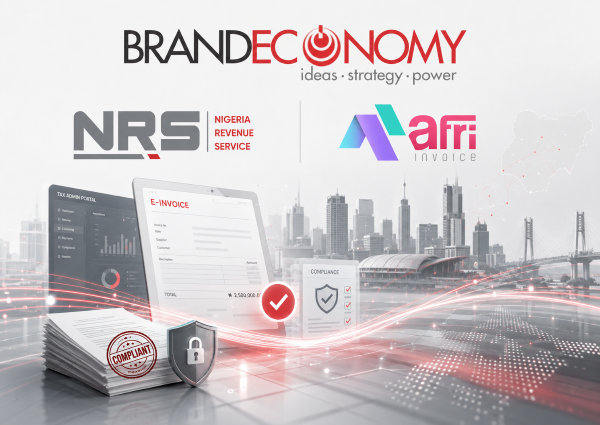 Afri Invoice Nigeria Ltd has secured accreditation from the Nigeria Revenue Service as a system integrator for the country’s mandatory electronic invoicing framework under the Merchant Buyer Solution. The approval positions the company to connect businesses to the NRS real-time invoicing infrastructure, helping firms comply with emerging tax-reporting requirements while supporting government’s wider push to reduce revenue leakages, improve transparency and modernise tax administration.
A New Player in Nigeria’s E-Invoicing Architecture
Nigeria’s digital tax reform agenda has taken another step forward with the accreditation of Afri Invoice Nigeria Ltd by the Nigeria Revenue Service as a system integrator for the country’s mandatory electronic invoicing platform.




The accreditation authorises Afri Invoice to connect businesses directly to the NRS real-time invoicing infrastructure under the Merchant Buyer Solution, the digital framework designed to improve transaction visibility, strengthen tax compliance and support more transparent revenue administration.
The Founder of Afri Invoice, Mr Mark Odenore, described the approval as a major milestone for the company and a significant development in Nigeria’s journey toward technology-enabled tax governance.
For businesses, the implication is straightforward: tax reporting is moving from periodic paperwork to real-time digital visibility. For government, the opportunity is larger: electronic invoicing can strengthen the integrity of transaction data, reduce under-reporting, improve audit trails and deepen revenue mobilisation without necessarily raising tax rates.
That is the real importance of the NRS e-Invoicing project. It is not merely a technology upgrade. It is part of a wider re-engineering of the relationship between businesses, transactions and the tax authority.
Why E-Invoicing Matters
Across the world, tax authorities are shifting from retrospective tax administration to real-time or near-real-time transaction monitoring. The reason is simple. Traditional tax systems often depend heavily on self-reporting, manual reconciliation and post-transaction audits. In economies with large informal segments, weak documentation and complex business chains, that model creates gaps through which revenue can leak.
Electronic invoicing seeks to close some of those gaps.
By requiring businesses to issue and transmit invoices through approved digital systems, the tax authority can obtain clearer visibility into taxable transactions, reduce fake invoicing, improve VAT compliance, strengthen corporate tax reporting and support more accurate data for policy planning.
For Nigeria, where the pressure to increase non-oil revenue has become more urgent, this is strategically important. The country needs better tax collection, but it also needs a smarter and less arbitrary compliance environment. A digital invoicing architecture can help achieve both if it is properly implemented.
The promise is not only higher revenue. It is better transparency.
Afri Invoice’s Role
According to Odenore, Afri Invoice’s accreditation enables the company to help organisations integrate with the NRS invoicing infrastructure and comply with the mandatory reporting framework.
He said the NRS e-Invoicing initiative reflects a global movement toward greater transparency and real-time oversight. Afri Invoice’s role, he explained, is to help businesses manage that transition, reduce operational complexity, protect value and build trust across the tax ecosystem.
This is where system integrators become important.
Many businesses do not have the internal technical capacity to connect their existing accounting, enterprise resource planning, billing and tax systems directly to government platforms. Others operate across multiple branches, sales channels, customers and payment systems. Without the right integration partner, compliance can become slow, error-prone and expensive.
Afri Invoice says it combines tax, regulatory and technology expertise to deliver accurate and seamless e-Invoicing processes for businesses. That positioning places it at the intersection of tax advisory, software integration, regulatory technology and enterprise compliance.
From Compliance Burden to Business Infrastructure
For many companies, mandatory e-Invoicing may initially feel like another regulatory burden. That is understandable. Businesses already face multiple taxes, levies, filings, audits, documentation requirements and cost pressures.
But well-designed e-Invoicing can also create value.
It can improve internal record keeping, reduce invoice disputes, strengthen receivables tracking, improve audit readiness, limit manual errors and enhance tax documentation. For larger companies, it can support better enterprise data governance. For smaller firms, it may help formalise operations and improve access to credit by creating clearer transaction histories.
The challenge is implementation.
If the system is difficult to use, poorly integrated, expensive or unstable, it could frustrate businesses and weaken confidence. If it is reliable, secure and simple, it could become part of Nigeria’s broader business-formalisation infrastructure.
That is why the quality of accredited integrators will matter.
Data Governance and Error-Free Transmission
The Strategic Lead and Operations Director of Afri Invoice, Ms Fatimata Niang, said the company would support organisations in integrating their invoicing systems with the NRS Merchant Buyer Solution platform.
She said Afri Invoice would also help businesses improve data governance, ensure error-free invoice transmission and remain compliant as regulations evolve.
Her emphasis on data governance is critical. In digital tax administration, bad data can quickly become a business risk. Incorrect invoice transmission, wrong tax classifications, duplicated entries, incomplete customer records or system mismatches can create audit exposure and compliance disputes.
Companies must therefore treat e-Invoicing as more than an IT project. It is a finance, tax, operations, legal and governance project.
The Chief Financial Officer, tax manager, compliance officer, IT lead and internal auditor must all understand how the system works. Invoice data must be accurate. Controls must be strong. Integration must be tested. Staff must be trained. Exceptions must be monitored.
Digital compliance rewards discipline.
Nigeria Joins the Global Digital Tax Movement
Odenore noted that Nigeria’s e-Invoicing direction aligns the country with trends already visible in parts of Europe, Asia and Africa.
That is an important point. Tax digitisation is no longer experimental. Countries are increasingly using digital tools to improve compliance, widen the tax net, strengthen VAT administration and limit leakages. For developing economies, the appeal is particularly strong because manual tax systems often struggle to capture the full scale of commercial activity.
Nigeria’s adoption of the Merchant Buyer Solution therefore reflects a larger policy shift: the tax authority wants to see transactions earlier, more clearly and more systematically.
But international experience also offers a warning. E-Invoicing reforms succeed when they are phased properly, communicated clearly and supported by reliable technology. They fail when taxpayers are forced into poorly explained systems without adequate preparation.
The NRS must therefore balance ambition with practical support.
The Business Readiness Question
The biggest question now is readiness.
Are Nigerian companies ready to connect? Are their accounting systems clean? Are their invoice templates compliant? Are their tax codes properly configured? Are their staff trained? Are their customers and suppliers aligned? Can small and medium-sized enterprises afford the transition?
These are not minor questions.
Large companies may have the resources to adapt quickly. Smaller businesses may struggle. The government and accredited integrators must therefore ensure that compliance support is not limited to big corporates. MSMEs will need affordable tools, simple onboarding, technical guidance and clear timelines.
If the transition is handled well, e-Invoicing could improve compliance while reducing friction. If handled poorly, it could become another layer of confusion in an already complex tax environment.
BRANDECONOMY Insight
Afri Invoice’s accreditation by the Nigeria Revenue Service is significant because Nigeria’s tax system is entering a new digital phase.
The old tax model was built on declarations, paperwork, audits and after-the-fact reconciliation. The new model is moving toward real-time transaction visibility. That shift can transform revenue collection, but it will also transform how businesses manage their books.
For government, electronic invoicing offers a powerful tool to reduce leakages, improve VAT and income-tax compliance, and build a richer database of commercial activity. In a country under pressure to fund infrastructure, health, education, security and social investment, smarter tax administration is no longer optional.
For businesses, the lesson is equally clear. Compliance is becoming digital, traceable and data-driven. Companies that still treat tax records as manual, fragmented or casual will face increasing risk. The future belongs to firms that can integrate finance, technology and regulatory compliance.
Afri Invoice’s opportunity is therefore not just to connect companies to the NRS platform. It is to help businesses modernise their compliance architecture.
But the wider success of Nigeria’s e-Invoicing reform will depend on trust. Businesses must believe that the system is secure, efficient, predictable and fairly applied. The NRS must avoid using digital visibility as a tool for arbitrary pressure. Instead, it should use it to create a cleaner, more transparent and more efficient tax ecosystem.
Digital tax reform should not only make government stronger. It should make doing business clearer.
That is the real test.