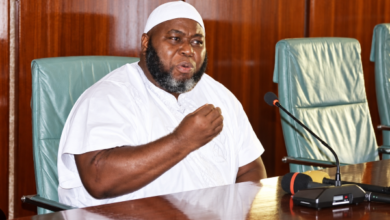
The Taiwo Oyedele Challenge: After Creating the Taxes, Can He Create the Economy?
New Face of Nigerian Economy

 By Nnanke Harry Willie
“It always seems impossible until it’s done” – Nelson Mandela
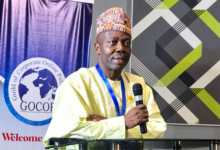



Some appointments merely fill an office. Then some other appointments create ripple consequences: for good or for ill.
Taiwo Oyedele’s emergence as Nigeria’s Minister of Finance and Coordinating Minister of the Economy belongs to the second category. It is not just another cabinet movement. It is one of the most consequential tests of the Tinubu administration’s reform philosophy: the elevation of the country’s most visible tax reform advocate into the larger, harsher, more unforgiving arena of national economic management.
It is one thing to design taxes. It is another thing to create prosperity. That is the Oyedele challenge.
For a man whose public reputation has been built largely around fiscal reform, tax policy, revenue administration and public finance advocacy, the question before him is now deeper than professional competence. Nigeria is no longer asking whether Taiwo Oyedele understands taxation. That question has been answered repeatedly by his career, his committee work, his policy visibility and his professional record. The more urgent question is whether he can help midwife an economy in which taxation becomes a dividend of growth rather than an extraction from hardship.
A tax master knows how the state collects. A prosperity master knows how a nation produces.
Nigeria needs the second.
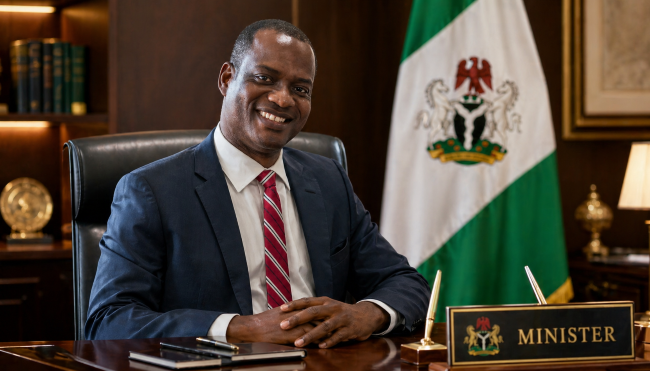
Oyedele enters the finance ministry with a formidable professional story. Starting from an HND in Accountancy and Finance, he has built a career that has travelled far beyond the limiting imagination of those who still worship first credentials as final destiny. Over more than two decades, he acquired additional qualifications, built global exposure, operated within one of the world’s most competitive consulting environments, held senior advisory and leadership roles, and became a familiar voice in Nigeria’s fiscal policy conversations.
His critics who insist on reducing him to an old HND certificate miss the point. At senior levels of public and professional life, the more serious question is no longer merely where a person started, but what he has mastered, influenced, built, led and delivered. A certificate may open the first door. Performance determines whether one is invited into the room where consequences are decided.
Henry Wadsworth Longfellow’s old line remains useful here: “The heights by great men reached and kept were not attained by sudden flight.” Oyedele’s rise did not come by accident. It came through technical mastery, intellectual reinvention, strategic networking, institutional relevance and consistent public usefulness.
But let us not confuse biography with destiny.
A strong résumé is not an economic plan. A decorated career is not a guarantee of national delivery. A tax reformer can be brilliant and still fail as a prosperity builder if he does not understand that the economy is not a spreadsheet but a living organism of people, anxieties, businesses, households, risks, ambitions and expectations.
That is where the real work begins.
From Revenue Architect to Economic Statesman
Oyedele’s most visible public achievement is his leadership of the Presidential Committee on Fiscal Policy and Tax Reforms. That committee’s work helped reshape Nigeria’s tax conversation and pushed forward a broad reform agenda around fiscal governance, revenue transformation and economic growth facilitation. The issues arising from alleged alteration has nothing to do with Oyedele. What he put together and defended before the National Assembly was largely hailed and accepted.
On paper, the reform logic is hard to dismiss. Nigeria’s tax system has long been fragmented, confusing, duplicative and too often hostile to formal businesses already carrying the burden of visibility. A serious economy cannot forever depend on oil volatility, borrowing and arbitrary levies. A country that wants modern infrastructure, stronger institutions and sustainable public services must eventually confront the revenue question.
But taxation is never merely technical. It is moral. It is political. It is emotional.
To government, tax reform may sound like efficiency. To the struggling citizen, it may sound like another deduction from a life already under pressure. To the small business owner, it may sound like one more compliance burden. To the young entrepreneur, it may sound like the state arriving early to share in income it did little to help create.
That is the brand problem of tax reform in Nigeria.
The average Nigerian does not first hear “fiscal modernisation.” He hears, “Government wants more money.” The trader does not first hear “revenue optimisation.” She hears, “Another agency may soon come knocking.” The worker does not first hear “progressive taxation.” He hears, “My already shrinking income is being noticed.”
This is the gap Oyedele must close. To paraphrase a popular song: “Now that you’ve got the tax, what are you going to do with it?”
He must make taxation feel connected to value. He must help Nigerians see a credible line between what government collects and what citizens experience. Otherwise, even the best-designed tax reforms will be remembered not as national renewal, but as elegant extraction.
And once reform is branded as extraction, resistance becomes emotionally legitimate.
The Edun Inheritance
Wale Edun’s tenure unfolded in the difficult theatre of economic stabilisation. He had to operate amid subsidy removal, exchange-rate turbulence, inflationary pain, fiscal stress, public anger and investor caution. In many ways, Edun’s task was to hold the frame while the administration attempted to reset the fundamentals, albeit with alleged misplaced priorities for expenditures.
Oyedele now inherits the more delicate phase: conversion.
The administration’s argument has been that tough reforms have begun restoring macroeconomic stability. But macroeconomic stability is not the same thing as household relief. A neater fiscal chart does not fill a pot. A more unified exchange rate does not automatically employ a graduate. A higher revenue target does not immediately reduce transport fare. A new tax law does not restart a small manufacturer whose power, logistics, credit and insecurity costs remain brutal.
That is why Oyedele’s ministry must not become a cathedral of impressive numbers disconnected from lived reality.
Nigeria has had enough statistics that do not shake hands with the poor.
The next finance ministerial brand must be built on translation: translating reform into jobs, discipline into trust, revenue into services, stability into confidence, and taxation into shared prosperity.
That is the burden of this moment.
The Qualification Debate: Shallow Question, Deeper Concern
The argument that Taiwo Oyedele is unqualified because of his earlier HND background is intellectually lazy. It belongs to a narrow worldview that confuses early academic classification with lifelong capability. Anyone who has worked seriously in professional life knows that after a certain point, evidence of performance, depth of experience, leadership exposure and problem-solving capacity matter more than the certificate with which one entered the race.
By the record available, Oyedele is not an accidental appointee. He has worked in tax policy, fiscal advisory, public finance advocacy, professional education, reform design and institutional leadership. He has operated in the private sector, engaged the public sector, and built enough visibility to become one of Nigeria’s most recognisable fiscal policy voices.
But there is a more legitimate question hiding behind the shallow one.
Does a tax-heavy background adequately prepare a person to coordinate a full national economy?
That is the question worth asking.
A finance minister is not merely the nation’s chief tax explainer. He is a confidence manager. He must understand debt, inflation, markets, investment, public spending, productivity, employment, state finances, private sector sentiment, donor relations, vulnerable households and the psychology of national sacrifice.
He must speak to investors without sounding indifferent to the poor. He must speak to citizens without frightening capital. He must defend fiscal discipline without looking like the face of austerity. He must raise revenue without killing enterprise. He must coordinate growth without mistaking policy language for productive action. He must settle local debts as much as he does the foreign ones.
This is the transition Taiwo Oyedele must now make. He must evolve from fiscal technician to economic statesman.
After the Tax Net, the Wealth Net
Here is the memo: Nigeria does not merely need a wider tax net. It needs a wider wealth net. Then the rest will follow.
More taxpayers are important. But more productive citizens are more important. More efficient collection matters. But more profitable businesses matter even more. More tax compliance is useful. But more jobs, exports, factories, farms, digital enterprises, bankable SMEs and investable states are the true foundations of a sustainable fiscal future.
A country cannot tax its way into prosperity if productivity is weak. It cannot audit poverty into abundance. It cannot squeeze enterprise and then wonder why investment hides.
That is why Taiwo Oyedele must resist the temptation to see the economy mainly through the lens of revenue. Revenue is an outcome of economic vitality. It should not become a substitute for it.
If Nigeria wants more tax revenue, it must create more taxable prosperity. That means fewer dead businesses, fewer frightened investors, fewer informal enterprises hiding from predatory enforcement, fewer young people locked out of productive opportunity, and fewer states behaving like allocation recipients rather than economic engines.
The task, therefore, is not simply revenue mobilisation. It is prosperity mobilisation.
The First Statement and the Brand Opportunity
Oyedele’s first public communication on assuming office carried the right vocabulary: productivity and growth, policy coherence, fiscal discipline, fair taxation, revenue optimisation, stronger coordination, public-private partnership, disciplined implementation, accountability and measurable results.
The most important phrase in that communication was simple: moving from reform to result.
That phrase should become the operating brand of his ministry.But it must not remain a slogan. It must become a scoreboard.
What will change in 100 days? What will businesses feel in one year? What spending leakages will be blocked? What tax burdens will be rationalised? What state-level coordination will improve? What investment bottlenecks will be removed? What household pressures will begin to ease? What evidence will show that reform is no longer just pain with grammar?
Peter Drucker once observed that plans are only good intentions unless they become hard work. Oyedele has the plans. Nigeria now needs the hard work, the proof and the measurable improvement.
Taiwo Oyedele must coordinate the economy beyond the Ministry of Finance. Growth does not live in one building. It depends on power, roads, ports, digital infrastructure, agriculture, industry, trade, credit, security, education, states and regulators. As Coordinating Minister of the Economy, Oyedele must become the conductor of a difficult orchestra.
Finally, he must communicate like a reform statesman. Nigerians do not merely need technical explanation. They need meaning. They need to know where the pain is going, how long the bridge is, what the destination looks like, and why the sacrifice is not another elite experiment.
Oyedele has the additional challenge of not letting election-season politics turn fiscal policy into reckless spending. He must guard the treasury with the discipline of a man who understands that credibility, once lost, becomes painfully expensive to recover.
Above all, remember that Nigeria is not a spreadsheet. It is a stressed society.
It is a country of exhausted households, resilient entrepreneurs, angry youths, brilliant professionals, underfunded dreams and battered optimists who have heard too many promises delivered in the language of tomorrow.
Oyedele must make tomorrow feel nearer. That is the challenge. After creating the taxes, can he create the economy?
His answer will not be found in speeches, tax laws or official statements. It will be found in whether Nigerians begin to experience an economy that rewards work, encourages enterprise, disciplines waste, protects the vulnerable and gives prosperity a fighting chance.
Because in the end, the finance minister’s real brand is not what he knows. It is what the country becomes under his watch.
Get The Memo Takeaway
Taiwo Oyedele does not have a qualification problem. He has a transition challenge. He must move from tax reformer to prosperity reformer; from revenue architect to confidence builder; from fiscal technician to economic statesman. Nigeria has had enough pain explained by policy. It now needs results justified by lived improvement.
Nnanke Harry Willie
Veteran Brand Strategist | Public Commentator
Founder, HQSC | Publisher, brandeconomy.com
Email: [email protected]