
Adeleye Falade Takes Helm at NLNG as Train 7 Nears Completion
Falade assumes leadership at a pivotal juncture

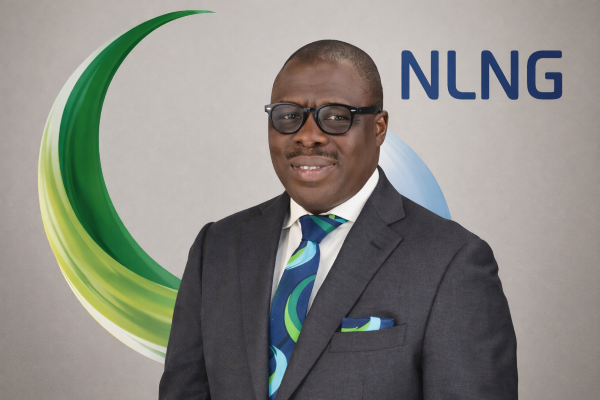
At a moment of renewed global appetite for liquefied natural gas—and intensifying competition among suppliers—Adeleye Falade has assumed office as Managing Director and Chief Executive Officer of Nigeria LNG Limited, inheriting both momentum and mounting expectations.
Falade succeeds Philip Mshelbila, who departs to take up a strategic multilateral role at the Gas Exporting Countries Forum—a transition that subtly underscores Nigeria’s growing relevance within the global gas diplomacy architecture.

A Technocrat at the Helm
Falade’s appointment is less a leap than a return. A veteran of nearly three decades within the Shell ecosystem, his career has traversed upstream, midstream and LNG operations across Europe, Asia, the Middle East and Africa.
His technical pedigree—spanning production optimisation, engineering systems and operational excellence—is matched by executive exposure in complex, multinational joint ventures. Most recently, he led Brunei LNG, one of Asia’s established export platforms, and briefly served as Country Chair for Shell Namibia, navigating frontier energy development and stakeholder engagement.
Crucially, he is no outsider to NLNG. His earlier tenure as General Manager, Production, and Operations Manager on Bonny Island places him among a rare cadre of leaders with deep institutional memory of Nigeria’s flagship gas asset.
Timing Is Everything
Falade assumes leadership at a pivotal juncture. The long-anticipated Train 7 expansion—designed to significantly boost liquefaction capacity—is nearing completion, promising to elevate Nigeria’s standing in an increasingly competitive LNG market.
Simultaneously, NLNG has secured long-term gas supply agreements with multiple third-party producers, addressing one of the sector’s most persistent constraints: feedgas reliability.
Together, these developments reposition NLNG from a mature exporter to a growth platform—if execution remains disciplined.
Nigeria’s LNG Moment
The global LNG market is undergoing structural recalibration. Europe’s post-crisis energy diversification, Asia’s sustained demand growth, and the gradual retreat from coal have collectively tightened the supply-demand balance.
For Nigeria, this presents a strategic opening. With abundant gas reserves but historically constrained infrastructure, the country has long underperformed relative to its potential.
NLNG—Nigeria’s most successful energy joint venture—remains the country’s primary vehicle for monetising gas at scale. The challenge now is to expand capacity, deepen upstream integration, and compete with aggressive exporters from Qatar, the United States and Australia.
Indigenous Leadership, Strategic Continuity
Falade’s emergence as part of an all-Nigerian executive leadership team reflects a deliberate shift toward indigenous capacity building within NLNG. It is both symbolic and strategic: a signal that Nigeria’s energy future will increasingly be managed by homegrown expertise with global exposure.
His academic grounding—an engineering degree from the University of Ibadan and an MBA from Henley Business School—complements a career built at the intersection of technical depth and strategic execution.
BRANDECONOMY Insight
- Train 7 Is the Real Story
Falade’s tenure will ultimately be judged by the successful delivery and optimisation of Train 7. Completion is only the beginning; efficiency, uptime and feedgas stability will determine real value. - Feedgas: The Persistent Constraint
Recent gas supply agreements are encouraging, but Nigeria’s upstream challenges—pipeline integrity, investment gaps, and regulatory uncertainty—remain critical risks. - Nigeria’s Narrow LNG Window
The global push for cleaner energy has elevated gas as a transition fuel—but the window is finite. Nigeria must accelerate monetisation before long-term demand begins to plateau. - Competition Is Intensifying
With Qatar and United States expanding LNG capacity aggressively, NLNG must compete on reliability, pricing and contract flexibility—not just reserves. - Indigenous Leadership as Strategic Capital
A fully Nigerian leadership team could enhance local stakeholder alignment, policy coherence and execution speed—provided governance standards remain globally competitive. Adeleye Falade has his job well cut out for him.