 A night designed to celebrate press freedom, political ritual and democratic spectacle turned into a security drama after shots were reported near the White House Correspondents’ Association dinner at the Washington Hilton. President Donald Trump, the First Lady and senior administration figures were moved to safety, while authorities detained a suspect. Beyond the immediate relief that top officials were unharmed, the incident has reopened a larger American argument: how a divided democracy secures its leaders, protects public events and preserves civic life under the shadow of political violence.
A Gala Interrupted by Fear
Washington’s most theatrical political night rarely lacks tension. But on Saturday evening, that tension moved from rhetoric to security alarm.


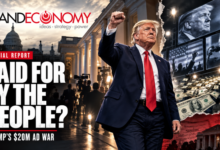
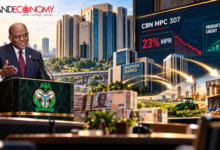
President Donald Trump was hurried from the White House Correspondents’ Association dinner at the Washington Hilton after a shooting incident disrupted the annual gathering of journalists, politicians, senior officials and media executives. Trump and First Lady Melania Trump were reported safe, along with Vice President JD Vance and senior administration figures who were also moved from the venue by security agents.
The suspect was taken into custody, and initial reports said no senior federal official was injured. One security officer was reported to have been protected by a bullet-resistant vest after being struck, according to major wire reports.
The dinner was eventually cancelled, with reports indicating that it may be rescheduled. What began as a symbolic return by Trump to one of Washington’s most watched media rituals became instead another reminder of the fragility surrounding American political life.
The Dinner That Became a Security Test
The White House Correspondents’ Association dinner is more than a glamorous Washington banquet. Officially, the annual dinner helps fund WHCA scholarships, journalism awards and activities supporting White House coverage and public understanding of the First Amendment and a free press. The 2026 dinner was scheduled for April 25 at the Washington Hilton.
That context matters. The incident did not take place at a random political rally, but at an event built around the uneasy intimacy of American power: journalists, lawmakers, diplomats, cabinet officials, celebrities and presidents sharing one room under the bright lights of Washington theatre.
The symbolism was therefore difficult to miss. A gathering meant to celebrate the democratic role of the press was overtaken by the very insecurity that now shadows American public life.
Trump’s Return, and America’s Political Temperature
Trump’s attendance was itself politically significant. It marked a rare appearance by a president who has had a long and often combative relationship with the press. Ahead of the dinner, Reuters reported that his return had already generated debate within media circles, with some journalists and organisations raising concerns about press freedom and the administration’s posture toward news institutions.
That backdrop gave the evening an unusual charge even before the security incident. The dinner was not merely a social engagement. It was a stage on which the presidency, the press and America’s bitterly divided political culture were expected to perform their ritual dance.
Instead, security became the story.
A Crisis of Civic Space
The most important issue now is not only what happened, but what it represents.
Modern democracies depend on public space. Presidents must attend events. Journalists must gather. Citizens must protest. Opponents must disagree. Institutions must continue to function even under pressure. But when political violence or the fear of violence begins to shape public life, democracy becomes smaller, more guarded and more suspicious.
The White House Correspondents’ dinner has often been described as Washington’s “nerd prom,” a phrase that captures its mixture of glamour, self-parody and elite theatre. Yet it also performs a serious democratic function: it reminds the public that the presidency and the press, however adversarial, belong to the same constitutional ecosystem.
Saturday’s incident turned that ecosystem into a security perimeter.
Security, Symbolism and the Presidency
For the Secret Service and wider law-enforcement architecture, the episode will likely trigger a full review of event security, access points, hotel procedures, credentialing and coordination among federal and local agencies. Major reports indicate that the incident occurred around the security area of the venue, before the suspect was detained.
The central question will be whether security planning matched the risk profile of the event. A sitting president, a vice president, senior cabinet officials, congressional leaders and hundreds of journalists under one roof represent an unusually concentrated target environment.
But the deeper challenge is political, not merely operational. America is trying to run normal democratic rituals in an abnormal political climate. That requires not just tighter security, but a serious civic reset.
Development Economist’s Lens: Instability Has a Cost
Political violence is usually discussed in moral or security terms. It also carries economic consequences.
Countries pay a premium for instability. Investors watch political temperature. Markets watch institutional confidence. Businesses watch social risk. Tourism, conferences, media events, diplomatic engagements and major conventions all depend on the belief that public spaces remain safe and institutions remain predictable.
For the United States, the cost is not only reputational. A democracy that appears unable to secure its highest-profile civic events risks exporting an image of volatility at a time when global confidence in democratic governance is already under strain.
The dollar may remain dominant. Wall Street may remain deep. Silicon Valley may remain powerful. But political risk is no longer something America only analyses abroad. Increasingly, it must manage it at home.
The Press Freedom Irony
The WHCA dinner exists to celebrate the role of journalism in holding power to account. That mission has grown more urgent in an era of misinformation, institutional distrust and political polarisation.
Yet the incident also exposed the vulnerability of journalists themselves. Reporters increasingly cover politics not only as observers but as participants in a contested public space where distrust of media can become intensely personal.
The lesson is not that political events should retreat behind walls. The lesson is that democratic societies must defend both speech and safety. A free press cannot flourish in fear. Nor can elected leaders govern effectively if every public appearance becomes an exercise in survival planning.
BRANDECONOMY Insight
The shooting scare at the White House Correspondents’ dinner is not just another dramatic Washington headline. It is a mirror held up to America’s current democratic condition.
This was a night designed to showcase institutional confidence: the president in the room with the press, political rivals and power brokers laughing uneasily under one roof. Instead, the evening became a case study in how fragile democratic performance has become.
For America, the immediate relief is that the president, first lady, vice president and senior officials were safe. But relief should not become complacency. The more serious question is how political culture became so combustible that events of civic symbolism increasingly require crisis-level security readiness.
For the rest of the world, the episode will be read through a wider lens. America remains the world’s most powerful democracy, but it is also a democracy wrestling openly with anger, distrust and institutional strain. When violence intrudes into spaces designed for dialogue, the cost is borne not only by those in the room but by the global idea of democratic stability.
The lesson is simple but profound: security can move a president out of danger, but only politics, leadership and civic restraint can move a country away from the edge.
Editorial Takeaway
The incident at the White House Correspondents’ dinner should be treated as both a security warning and a democratic warning. The security system worked in the immediate sense: top officials were protected and the suspect was detained. But the broader system—America’s civic culture—requires deeper repair.
Democracy cannot survive on protocols alone. It needs trust, restraint, credible institutions and a public culture that rejects violence as political language.