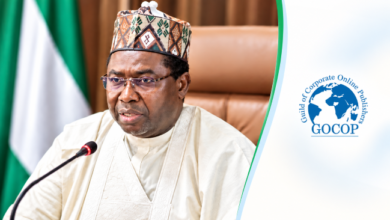
Saudi–Nigeria Economic Ties Enter New Phase as Envoy, Dangote Explore Partnership

 A meeting between Saudi Arabia’s Ambassador to Nigeria, Yousef bin Mohammed Al-Balawi, and Dangote Group Chairman, Aliko Dangote, signals a deeper push to convert diplomatic warmth into investment, industrial cooperation and private-sector-led economic partnership across energy, infrastructure, manufacturing and trade.
A Meeting Beyond Courtesy
The meeting between Saudi Arabia’s Ambassador to Nigeria, Yousef bin Mohammed Al-Balawi, and Africa’s foremost industrialist, Aliko Dangote, was more than a diplomatic courtesy call. It was a subtle but important marker of the new economic geography taking shape between Nigeria and the Gulf.

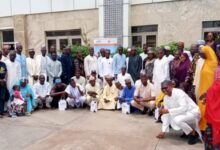
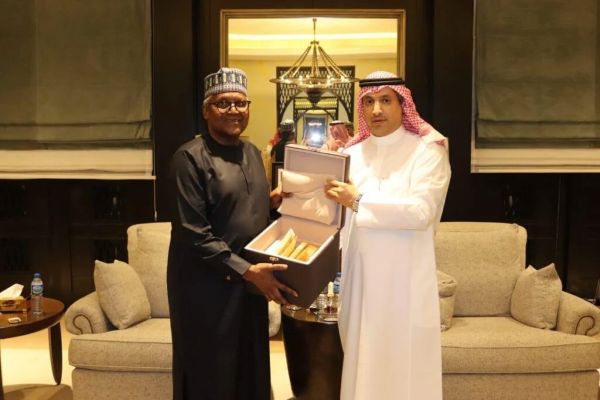
Al-Balawi received Dangote at his residence in Abuja’s Diplomatic Quarter, where discussions focused on deepening Saudi–Nigerian economic cooperation across strategic sectors, including energy, industry, infrastructure and investment partnerships.
The engagement reflects a growing recognition on both sides: Nigeria is searching for long-term capital, industrial capability and market-expanding partnerships, while Saudi Arabia is increasingly looking beyond oil wealth into global investment, food security, energy diversification, logistics, manufacturing and emerging-market influence.
In that context, Dangote is not just another private-sector visitor. He represents one of Africa’s most consequential industrial platforms.
The Dangote Factor in Gulf–Africa Economics
The Dangote Group sits at the centre of Nigeria’s industrial ambition. Its interests across cement, sugar, salt, fertiliser, logistics, oil refining and petrochemicals make it a natural partner for any country seeking deeper economic engagement with Africa’s largest population market.
For Saudi Arabia, a closer relationship with Dangote Group offers a possible route into Nigeria’s real economy—not merely through trade, but through production, infrastructure, supply chains and strategic investment.
For Nigeria, the meeting matters because Gulf capital has become increasingly important in the global search for patient, large-ticket investment. Saudi Arabia’s economic diversification drive creates opportunities for African businesses that can demonstrate scale, credibility and execution capacity.
Dangote’s recent visit to the Kingdom provided a foundation for the latest engagement, with the Abuja meeting reviewing opportunities available to the Dangote Group in Saudi Arabia, as well as openings for Saudi investors within the Group’s companies and wider Nigerian industrial ecosystem.
Energy, Industry and Infrastructure in Focus
The sectors discussed—energy, industry and infrastructure—are not accidental. They represent the hard spine of economic transformation.
Nigeria’s development challenge is not a shortage of ambition; it is the persistent gap between potential and execution. Energy constraints, logistics bottlenecks, weak industrial depth and infrastructure deficits continue to limit productivity and raise the cost of doing business.
Saudi Arabia, meanwhile, is pursuing a post-oil economic strategy that prizes industrial diversification, strategic investment and global commercial partnerships. This gives both countries a natural meeting point: Saudi capital and institutional ambition on one side; Nigerian scale, demand and industrial opportunity on the other.
The Dangote platform could serve as a bridge between these priorities. Its operations in refining, fertiliser, cement and logistics are closely aligned with sectors that matter to Saudi investors seeking exposure to African growth.
From Diplomacy to Deals
The dinner hosted in Dangote’s honour and the presentation of a commemorative gift gave the meeting the warmth of diplomatic ceremony. But the real significance lies in whether such engagements can move from goodwill to structured deals.
For Nigeria, that means turning high-level visits into investable projects, clear regulatory pathways, bankable partnerships and measurable outcomes. For Saudi Arabia, it means identifying credible Nigerian partners capable of absorbing large-scale investment and converting it into productivity, jobs and long-term returns.
This is where Dangote’s presence becomes commercially strategic. Few African private-sector groups can offer the scale, balance-sheet relevance and continental visibility required to attract serious sovereign, institutional or industrial capital.
A New South–South Economic Corridor
The deeper story is the emergence of a stronger South–South economic corridor between the Gulf and Africa.
For years, Africa’s development finance conversation was dominated by Western institutions, Chinese capital and multilateral lenders. That map is changing. Gulf states are becoming more assertive economic actors, deploying capital, diplomacy and industrial partnerships into Africa, Asia and emerging markets.
Nigeria, if it plays its cards well, can position itself as one of the key African anchors of this shift. But that will require more than diplomatic enthusiasm. It will require policy consistency, improved investor protection, better infrastructure planning, and stronger coordination between government and serious private-sector champions.
The Saudi–Dangote engagement is therefore a reminder that private capital increasingly shapes diplomacy. In the modern economy, ambassadors do not only host ministers; they host industrialists.
BRANDECONOMY Insight
The meeting between Ambassador Al-Balawi and Aliko Dangote should be read as part of a larger shift in global economic power.
Saudi Arabia is no longer engaging the world only through the lens of crude oil. It is repositioning itself as a global investment, logistics, industrial and technology player. Nigeria, on the other hand, is trying to reposition itself from a consumption-heavy economy into one capable of producing, exporting and attracting long-term capital.
That is why the Dangote connection matters.
Dangote Group represents the kind of industrial scale Nigeria needs more of: large factories, heavy infrastructure, value chains, export potential and high-impact employment. If Saudi–Nigerian cooperation is to become meaningful, it must move beyond diplomatic language into joint ventures, infrastructure finance, energy partnerships, manufacturing expansion and market access.
The opportunity is real. Saudi investors could find in Nigeria a large domestic market and a gateway to West Africa. Nigerian industrial groups could find in Saudi Arabia access to capital, technology, logistics networks and new markets.
But the test will be execution. Nigeria must make itself easier to invest in. Saudi partners must move beyond ceremonial engagement. And private-sector champions such as Dangote must help translate diplomacy into factories, financing, trade flows and jobs.
This meeting may not yet be a deal. But it is an important signal: the next chapter of Nigeria–Saudi relations may be written not only by presidents and diplomats, but by investors, industrialists and builders.
Strategic Takeaways
For Nigeria:
Saudi engagement offers a potential pipeline for industrial capital, infrastructure partnerships and non-Western investment diversification.
For Saudi Arabia:
Nigeria provides scale, demographics, resource depth and access to one of Africa’s most important consumer and industrial markets.
For Dangote Group:
The meeting strengthens the Group’s positioning as a continental industrial gateway for global investors seeking serious African exposure.
For investors:
Energy, infrastructure, fertiliser, refining, logistics and manufacturing remain the most likely sectors to benefit from deeper Saudi–Nigeria cooperation.