Ports Rehabilitation: NPA Promises Seamless Operations when Apapa, Tin Can Upgrade Begins
A Necessary Upgrade...

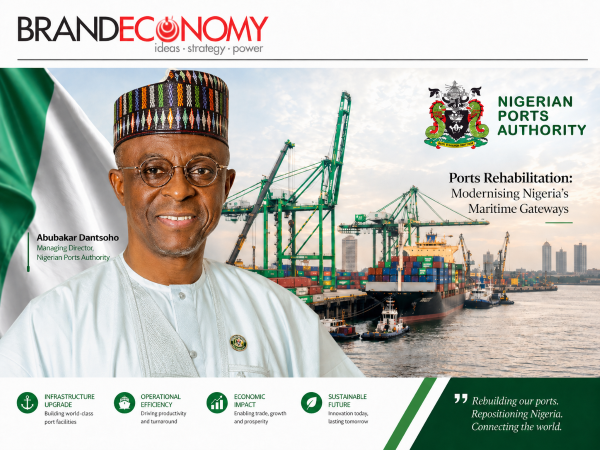 The Nigerian Ports Authority has assured port users that cargo operations will continue without disruption during the planned rehabilitation of Apapa and Tin Can Island ports. Backed by a major Nigeria–UK financing arrangement, the project is expected to modernise Lagos’ busiest maritime gateways over 48 months. The deeper test is whether Nigeria can upgrade critical port infrastructure without triggering congestion, delays or revenue losses.
A Necessary Upgrade for Nigeria’s Maritime Backbone
Nigeria is preparing for one of the most consequential port rehabilitation programmes in recent memory, with the Nigerian Ports Authority assuring importers, exporters, terminal operators, shipping lines and freight forwarders that operations at Apapa and Tin Can Island ports will remain seamless throughout the exercise.



The rehabilitation of the two Lagos port complexes is expected to begin before the end of the second quarter of 2026 and run for about 48 months. For an economy heavily dependent on these ports for imports, industrial inputs, consumer goods, exports and customs revenue, the project is not merely an infrastructure upgrade. It is a competitiveness test.
The NPA’s General Manager, Corporate Communication and Strategy, Mr Ikechukwu Onyemekara, said the rehabilitation would be handled in phases to ensure that cargo discharge continues across terminals. Under this approach, work will be carried out in selected areas while other berths remain operational. Once one section is completed, contractors will move to the next.
This phased model is critical because ports cannot be shut down casually. Apapa and Tin Can are not just maritime assets; they are the lungs of Nigeria’s trade system. Any extended disruption could increase demurrage, delay raw materials, worsen logistics costs, disrupt manufacturers and weaken government revenue.
The Financing Behind the Project
The port rehabilitation is supported by a major export-finance arrangement between Nigeria and the United Kingdom. The deal is valued at £746 million and is structured to support the redevelopment of the Apapa and Tin Can Island port complexes.
As part of the financing framework, UK Export Finance is expected to provide guarantees for loans supporting the refurbishment. The agreement also includes a supply arrangement under which British Steel will provide about 120,000 tonnes of steel for the project, with the steel component valued at about £70 million.
The transaction is also expected to generate supplier contracts for British firms, as a portion of the Ports Rehabilitation project components will be sourced from the UK.
For Nigeria, however, the main concern must be value delivery. The financing will only make economic sense if the rehabilitation improves port capacity, reduces vessel delays, strengthens berth productivity, supports larger ships, enhances cargo-handling efficiency and lowers the hidden cost of trade.
Why the Ports Rehabilitation Matters
Nigeria’s ports have operated under severe pressure for years. Ageing infrastructure, congestion, inefficient cargo movement, poor road connectivity and limited capacity have weakened the country’s maritime competitiveness.
In practical terms, weak port infrastructure raises costs across the economy. Importers pay more. Manufacturers wait longer for inputs. Exporters lose competitiveness. Consumers eventually absorb the cost through higher prices.
Modern ports are no longer just places where ships berth and cargo is unloaded. They are integrated logistics platforms connected to technology, warehousing, customs systems, road networks, rail lines, industrial clusters and export corridors.
Onyemekara’s argument is therefore straightforward: if Nigeria wants to lead maritime trade in West and Central Africa, its ports must be modern enough to receive larger vessels and handle cargo more efficiently.
This is particularly important as other countries in the region continue to upgrade their maritime facilities. If Nigeria’s ports remain slow or constrained, cargo owners may increasingly route goods through competing ports with better infrastructure, faster turnaround and lower total logistics cost.
The Phased Approach: The Right Strategy, But Not an Easy One
NPA’s plan to rehabilitate the ports in batches is sensible. It reduces the risk of total shutdown and allows port operations to continue while reconstruction progresses.
But the strategy will require strong coordination.
Terminal operators must know the work schedule. Shipping lines must understand berthing adjustments. Freight forwarders must receive timely updates. Truckers must be guided on movement patterns. Customs and regulatory agencies must adapt quickly. Contractors must work within strict timelines. Security and traffic management must be planned ahead.
The biggest danger is not only construction disruption. It is poor coordination.
A port rehabilitation project can become chaotic if stakeholders receive late information or if traffic diversions are poorly managed. Nigeria must avoid a situation where the upgrade intended to improve efficiency temporarily worsens congestion.
To succeed, NPA must operate with transparency, predictability and strong stakeholder engagement.
Revenue Must Keep Flowing
One of NPA’s key assurances is that the phased rehabilitation will allow cargo discharge to continue and revenue generation to remain intact.
That matters. The ports are major revenue channels for government through customs duties, terminal charges, port dues, service fees and related economic activity.
If rehabilitation is poorly sequenced, revenue could be affected by delays, reduced vessel calls or operational bottlenecks. If properly managed, however, Nigeria can modernise the ports while sustaining commercial activity.
The ambition should be more than keeping operations alive. The project should create measurable improvements in cargo dwell time, vessel turnaround, berth capacity, export processing and terminal efficiency.
BRANDECONOMY Insight
The rehabilitation of Apapa and Tin Can Island ports is not just a maritime project. It is a national productivity issue.
Nigeria has long paid a heavy price for inefficient ports. Businesses lose time. Cargo owners pay avoidable costs. Manufacturers face planning uncertainty. Exporters struggle with competitiveness. Consumers eventually pay more for goods because logistics inefficiency is built into final prices.
That is why the planned upgrade is important. But infrastructure projects of this scale succeed or fail in execution.
The NPA’s phased approach is the right starting point. Yet stakeholders will need more than verbal assurance. They need clear timelines, operational maps, alternative berthing plans, traffic-management strategies, regular public updates and measurable performance targets.
Nigeria must also ensure that the financing translates into real economic value. The project should not become another expensive infrastructure headline. It must deliver stronger quay walls, improved berth capacity, better cargo-handling efficiency, deeper operational resilience and a more competitive maritime gateway.
The blue economy cannot grow on weak ports. Non-oil exports cannot thrive if cargo movement is slow and unpredictable. Regional trade ambition cannot be realised if Nigeria’s main ports remain infrastructure bottlenecks.
If well executed, the rehabilitation can strengthen Nigeria’s position as a maritime hub in West and Central Africa. If poorly managed, it could deepen the very congestion and inefficiency it is meant to solve.
The opportunity is significant. The execution risk is equally real.