2026: Can Nigerian Manufacturing Rebound? MAN Maps the Conditions

Why macro stability, cheaper credit, and disciplined policy execution will decide the factory floor in 2026
Nigeria’s manufacturing sector enters 2026 at a delicate inflection point—caught between cautious optimism and structural fatigue. After years of inflation shocks, FX volatility, and punitive borrowing costs, the possibility of a manufacturing rebound is now visible—but only if macroeconomic tailwinds are deliberately converted into factory-level outcomes.
That is the central message from Manufacturers Association of Nigeria (MAN), which says a turnaround is achievable, but far from automatic.



The Macro Signals Manufacturers Are Watching
According to MAN’s 2026 outlook, three macro variables will largely determine whether Nigerian factories scale up—or remain in survival mode.
1. A Firmer, More Predictable Naira
MAN projects a gradual appreciation of the naira toward the ₦1,300–₦1,400/$ band, supported by:
- Stronger external reserves
- Improved export earnings
- Rising remittance inflows
- Renewed foreign portfolio and direct investments
For manufacturers, exchange-rate predictability—not just strength—is the real prize. Stable FX planning reduces imported input risk, improves inventory management, and restores pricing confidence.
2. Inflation Cooling to Manageable Levels
Headline inflation is expected to moderate toward 14%, driven by:
- Easing food inflation
- Relative stability in energy prices
- FX pass-through relief
This matters because inflation is not just a consumer issue—it directly erodes working capital, widens cost uncertainty, and compresses margins across manufacturing value chains.
3. Interest Rates Must Come Down—Decisively
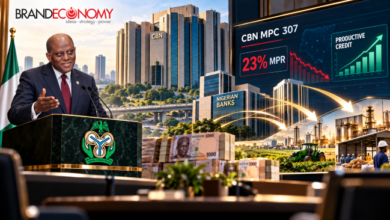
MAN expects further monetary easing, with the benchmark rate potentially trending toward 23%. However, manufacturers insist this alone is insufficient.
Without a meaningful transmission into single-digit or low double-digit lending, the sector’s recovery will stall. High borrowing costs have long turned Nigerian manufacturers into reluctant borrowers, throttling capacity utilisation, long-term investment and adversely affecting Nigerian Manufacturing Rebound.
What the Numbers Say About Manufacturing’s 2026 Outlook
If the right conditions align, MAN projects:
- Manufacturing growth: ~3.1%
- Contribution to real GDP: ~10.2%
- Overall GDP growth: ~4%
These gains would be powered by improved oil output, expanding fiscal space, financial-sector recovery, and a re-energised manufacturing base.
But MAN is explicit: these numbers are conditional, not guaranteed.
Policy Execution: Where Hope Meets Hard Reality
MAN identifies execution—not policy announcements—as the single biggest risk to a 2026 rebound.
Critical Enablers That Must Move from Paper to Practice
- Effective rollout of incentives embedded in new tax laws
- Full operationalisation of the National Single Window
- Purposeful implementation of the Nigeria Industrial Policy
- Alignment with the government’s “Nigeria First” industrial framework
Without coordination, sequencing, and enforcement, reforms will remain macro headlines with little factory-floor impact.
MAN’s 2026 Manufacturing Rescue Checklist
To unlock real momentum, MAN outlines a clear, pragmatic reform agenda:
1. Cheaper, Longer-Term Credit
- Reduce benchmark interest rates by 200–300 basis points within two quarters
- Introduce a Manufacturing Refinancing and Rediscounting Facility (MRRF) enabling banks to refinance approved manufacturing loans at single-digit rates for up to seven years
2. Radical Transparency in Industrial Credit
- Launch a public dashboard tracking:
- Lending flows
- Interest rate spreads
- Loan approvals
- Sectoral credit allocation
This would expose bottlenecks and end the opacity that undermines industrial finance.
3. Energy Cost Reform—Especially Gas
MAN calls for manufacturers to be formally classified as strategic gas users, closing the pricing gap between:
- Manufacturers, and
- Electricity generation companies
A transparent, stable gas pricing framework—prioritising domestic industrial supply before exports—is seen as non-negotiable.
4. Fix the Regulatory Maze
MAN proposes a National Manufacturing Regulatory Coordination Desk (NMRCD) under the Ministry of Industry, Trade and Investment to:
- Harmonise approvals and inspections
- Reduce duplication across agencies
- Cut compliance time and costs
5. Industrial Shock Absorbers
- Approve a ₦1 trillion Manufacturing Stabilisation Fund
- Recapitalise the Bank of Industry to meet real sector credit demand
BRANDECONOMY INSIGHT
Manufacturing will not rebound because inflation falls or the naira strengthens.
It will rebound only if cheaper money, reliable energy, and disciplined policy execution arrive together.
2026 offers Nigeria a narrow but meaningful window to shift manufacturing from resilience to renewal. Miss it—and the sector risks another lost decade.