For decades, electricity has functioned less as infrastructure for Nigerian manufacturers than as an unpredictable tax on production. In the Southeast—one of the country’s most entrepreneurial but infrastructure-constrained industrial corridors—the cost is reflected in idle machinery, expensive self-generation, delayed expansion and consumer prices inflated by energy inefficiency.
The Manufacturers Association of Nigeria is now attempting to rewrite that industrial equation.
MAN has unveiled a dedicated power-supply roadmap designed to reduce the electricity tariff paid by participating manufacturers in Anambra, Ebonyi and Enugu states from ₦209 per unit to ₦130. The initiative, announced at the MAN Southeast Industrial Energy Solutions and Investment Symposium in Awka, would be coordinated by the newly established MAN Power Development Company Limited, or MPDCL.
Dr Ada Chukwudozie, Chairman of the MAN Southeast Zone, presented the programme as a practical response to rising energy costs, unreliable supply and the weakening appetite for industrial investment.
The symposium, appropriately themed “From High Energy Costs to Affordable Power: An Opportunity for Manufacturers,” brought together government officials, regulators, financiers, technology providers and industrial operators around one of the region’s most consequential economic questions: can the Southeast secure electricity that is not only cheaper, but reliable enough to support modern production?
A significant promise—and an arithmetic question
MAN described the proposed tariff adjustment as a 42.5 per cent reduction. However, a decline from ₦209 to ₦130 represents a saving of ₦79 per unit—or approximately 37.8 per cent of the stated starting tariff.
A 42.5 per cent reduction from ₦209 would produce a tariff of about ₦120.18.
This discrepancy does not invalidate the initiative, but it requires clarification. MPDCL should explain whether the quoted percentage was calculated against an all-inclusive energy cost incorporating demand charges, diesel substitution, fixed charges or other expenses not reflected in the ₦209 headline figure.
That distinction matters. Manufacturers, lenders and prospective investors will evaluate the programme on its complete delivered cost—not merely the advertised energy charge.
Even at the mathematically verifiable 37.8 per cent reduction, the potential savings are substantial. A factory consuming one million kilowatt-hours monthly would, in a simplified illustration, save about ₦79 million every month, or ₦948 million annually, before financing, network and other applicable charges.
Such savings could finance new production lines, inventory, staff development, export certification or working capital. For businesses operating on thin margins, lower energy expenditure could determine whether they expand, remain stagnant or shut their doors.
MAN moves beyond advocacy
Chukwudozie said MPDCL had assembled an integrated framework with financing institutions, technology providers and implementation partners to help manufacturers migrate towards more efficient and affordable energy systems.
Her central argument was that electricity is not an incidental factory expense. It powers machinery, supports productivity, protects product quality and determines whether a company can compete. When supply is unstable or unaffordable, production costs climb, investment decisions are postponed and expansion becomes increasingly difficult.
The establishment of MPDCL therefore marks an important strategic shift for MAN. The association is moving beyond lobbying government over electricity prices towards aggregating industrial demand and developing a market-based solution.
Demand aggregation could improve project economics. A power developer supplying several creditworthy factories within an industrial cluster may enjoy more predictable consumption, stronger collections and lower customer-acquisition costs than one serving fragmented residential demand.
For financiers, such industrial clusters can provide bankable anchor customers. For manufacturers, collective procurement can create bargaining power that an individual factory may not possess.
The Southeast’s industrial opportunity
The initiative is particularly important for the Southeast, where manufacturing is closely connected to indigenous enterprise, trading networks and fast-growing production clusters.
Anambra’s commercial and industrial ecosystem stretches across Awka, Nnewi, Onitsha and surrounding communities. Enugu offers logistics, services and an expanding investment base, while Ebonyi possesses opportunities in agriculture, mining, construction materials and agro-processing.
Yet enterprise density has not been matched by dependable infrastructure. Many businesses have been forced to maintain generators, purchase diesel, install solar systems or reduce operating hours. This duplication of electricity infrastructure ties down capital that should ordinarily fund production and innovation.
Reliable power could help manufacturers increase capacity utilisation, improve delivery times and reduce equipment damage caused by unstable supply. It could also strengthen the competitiveness of locally produced goods against imports from countries where electricity is more predictable.
Governor Chukwuma Soludo, represented at the symposium by the Secretary to the Anambra State Government, Mrs Chiamaka Nnake, described affordable, sustainable and dependable electricity as central to industrial transformation.
He said the state was strengthening its energy ecosystem through infrastructure development, private-sector-friendly policies and the operationalisation of the Anambra State Electricity Regulatory Commission.
That regulatory platform is strategically important. Under Nigeria’s decentralised electricity framework, states can regulate intrastate generation, distribution, supply and trading. NERC transferred regulatory oversight of Anambra’s intrastate market to ASERC, while the state regulator is empowered to license operators and develop tariff methodologies that balance affordability with sustainable investor returns.
Technology must meet industrial reality
Mr Chiso Nwangwu, Managing Director of Sabrud Consortium, said the renewable-energy engineering, procurement and construction company would support the initiative with end-to-end solutions covering solar generation, battery storage, electrical infrastructure and maintenance.
Solar and battery systems can reduce dependence on expensive grid or diesel supply, particularly during daylight production. But industrial customers require more than installed capacity. They need dependable output, rapid fault resolution and clear service guarantees.
Factories running continuous operations may require hybrid systems combining solar, storage, grid electricity and another firm generation source. MPDCL must therefore define its proposed generation mix, available capacity, rollout timetable and expected daily supply.
Prof. Frank Okafor, Chairman of ASERC, reinforced the importance of steady and predictable electricity. He said the sector required sustained support to become cost-effective, adding that Anambra remained receptive to innovative approaches that could reduce consumer costs. He also encouraged users to manage consumption efficiently.
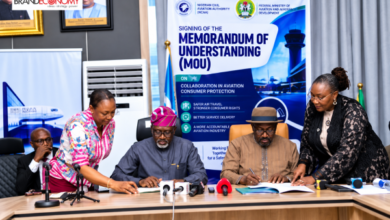
The MPDCL initiative was formally unveiled by MAN National President, Chief Francis Meshioye, alongside the Anambra Commissioner for Power and Water Resources, Mr Casmir Agamadu, and other industry leaders. Dr Eric Okoye, Managing Director of Juhel Pharmacy, chaired the occasion.
Market, brand and investor implications
For manufacturers, the commercial value lies not only in paying less, but in knowing when electricity will be available and what it will cost over time. Predictability enables companies to quote prices, accept long-term orders and plan expansion with greater confidence.
For investors, the opportunity spans distributed generation, gas supply, solar infrastructure, battery storage, metering, industrial distribution networks and project finance. The principal risks include foreign-exchange exposure, equipment-replacement costs, payment discipline, network losses, tariff escalation and regulatory coordination across the three states.
MPDCL will need transparent contracts, credible governance and enforceable service-level standards. It must disclose whether ₦130 is a fixed introductory price, an indexed tariff or an estimated blended cost. Investors will also want clarity on contract tenure, guarantees, collection arrangements and how future inflation or currency depreciation will be treated.
There is also a powerful brand dimension. By establishing MPDCL, MAN is positioning itself as a solutions institution rather than solely an advocacy group. That reputation will depend on delivery. A failed or opaque rollout would damage trust; a successful programme could transform MAN into a credible industrial infrastructure aggregator.
Participating manufacturers could also convert lower energy costs into stronger consumer propositions through better pricing, improved product quality, reliable delivery and increased local sourcing. The brand benefit will be limited, however, if savings are absorbed entirely without visible gains in value, jobs or investment.
BRANDECONOMY Insight
The real breakthrough is not the promise of ₦130 electricity. It is the possibility of organising manufacturers into bankable energy clusters that can attract private capital and support dedicated infrastructure.
But a headline tariff is not the same as delivered power.
Before implementation, MPDCL should publish the tariff calculation, generation mix, financing model, eligible industrial clusters, installed capacity, service hours, escalation formula and rollout timetable. It should also reconcile the stated 42.5 per cent reduction with the 37.8 per cent implied by the announced prices.
The ultimate measure of success will not be the percentage printed on a symposium banner. It will be the cost of every productive factory hour, the volume of new investment attracted and the number of businesses able to expand without building private power stations of their own.
If MPDCL delivers on those outcomes, it could become more than a Southeast intervention. It could provide a replicable blueprint for rebuilding industrial competitiveness across Nigeria.