

Maiduguri Bombings Kill 23, Injure 108 as Peter Obi, PDP, Doctors Raise Fresh Alarm

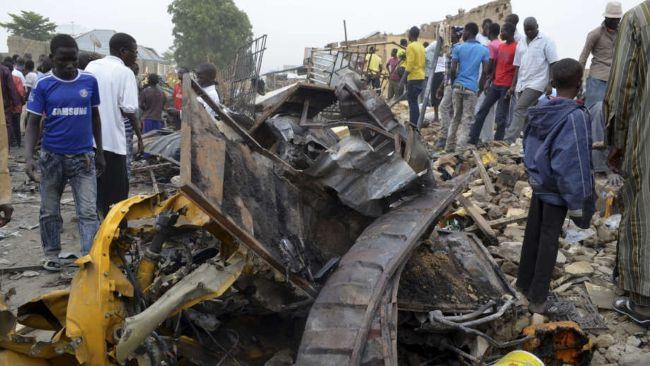 A fresh wave of violence has jolted Maiduguri, Borno State, after coordinated explosions and attempted insurgent infiltrations left at least 23 people dead and 108 injured, reigniting concerns about the resilience of extremist networks in Nigeria’s North-East.
The attacks, which struck crowded civilian locations including the Monday Market area, the Post Office axis, and the vicinity of the University of Maiduguri Teaching Hospital, came just hours after security forces repelled separate assaults on military positions in Ajilari, Damboa and Baga.




The incidents have triggered strong reactions from political leaders, opposition parties, medical professionals and security analysts, all warning that the latest violence reflects a troubling deterioration in the country’s security environment.
Coordinated Attacks Shake Maiduguri
Witnesses said the explosions occurred at about 7:05 p.m. on Monday, during the period of Iftar, causing panic across parts of the city.
Emergency teams and security operatives moved swiftly to the affected areas, evacuating victims to hospitals for treatment while cordoning off the blast sites.
The military, through the Headquarters Joint Task Force, Operation Hadin Kai, said the attacks were carried out by suspected Boko Haram suicide bombers using improvised explosive devices.
According to the army, preliminary intelligence suggested that multiple bombers may have entered the city to target densely populated civilian locations in a coordinated operation designed to cause mass casualties and widespread fear.
Security agencies said surveillance, patrols and counter-IED operations have since been intensified across Maiduguri.
Earlier Assaults on Military Positions Repelled
Before the evening explosions, suspected insurgents had launched near-simultaneous attacks on military formations in Ajilari, Damboa and Baga in the early hours of Monday.
The Borno State Police Command said joint security teams comprising the military, police, Civilian Joint Task Force, hunters and other operatives successfully repelled the attempted infiltrations.
Police spokesperson ASP Nahum Daso said the attacks were foiled through a coordinated response, adding that the insurgents were forced to retreat.
While authorities said there were no confirmed casualties among security personnel, analysts noted that the pattern of coordinated attacks points to a continued operational capability among insurgent groups despite years of counter-insurgency campaigns.
Zulum Condemns Attack, Calls for Vigilance
Borno State Governor Babagana Zulum, who is currently in Saudi Arabia for the Lesser Hajj, condemned the explosions, describing them as cruel, cowardly and barbaric.
In a statement issued by his media adviser, the governor said the attack, coming during Ramadan, was a direct assault on innocent civilians and called for heightened vigilance across the state.
He linked the recent spike in violence partly to ongoing military offensives against insurgent enclaves in Sambisa Forest and other hideouts, arguing that the attacks may be retaliatory.
Zulum, however, assured residents that security agencies were on top of the situation and urged the public to remain calm while reporting suspicious movements to the authorities.
Peter Obi, PDP, ADC Raise Alarm
Former Labour Party presidential candidate Peter Obi said the Maiduguri explosions underscore the scale of Nigeria’s worsening insecurity and reflect a dangerous drift away from the most basic obligation of the state: the protection of lives and property.
He argued that repeated attacks on vulnerable civilian locations suggest a disturbing normalisation of violence in the national consciousness.
Opposition parties also seized on the attacks to criticise the Federal Government’s handling of security.
The Peoples Democratic Party (PDP) and the African Democratic Congress (ADC) described the bombings as evidence that stronger and more urgent action is required to confront the insurgency and improve intelligence-led security operations.
Both parties called for more decisive intervention, better coordination among security agencies and a broader national strategy to prevent further attacks.
Doctors Condemn Bombing Near Teaching Hospital
The Nigerian Association of Resident Doctors (NARD) strongly condemned the attack, particularly because one of the blasts occurred near the University of Maiduguri Teaching Hospital, one of the North-East’s most important tertiary health institutions.
NARD said hospitals must remain protected spaces, warning that attacks around medical facilities create additional trauma and threaten emergency response capacity in conflict-affected areas.
The association called for stronger security architecture around hospitals and other critical public facilities, especially in regions vulnerable to insurgent violence.
Military Response Intensifies
In the aftermath of the bombings, the Nigerian Army said troops under Operation Hadin Kai, working alongside police explosive ordnance teams and other security agencies, had intensified operations across the metropolis.
Residents were advised to remain alert, avoid crowded areas where possible, and report suspicious objects or movements immediately.
The renewed violence comes amid fears that extremist groups may be seeking to reassert visibility in the region after recent military operations reportedly eliminated some of their commanders.
BRANDECONOMY Insight
The Maiduguri bombings are more than another tragic security episode. They signal a deeper strategic problem for Nigeria: the persistence of insurgent adaptability despite years of military pressure.
Three major issues stand out.
1. Insurgency Is Shifting, Not Disappearing
The pattern of attacks suggests that extremist groups remain capable of combining guerrilla assaults on security positions with symbolic attacks on civilian targets. This dual strategy is designed not only to inflict casualties but also to undermine public confidence in the state’s ability to maintain control.
2. Soft Targets Remain Exposed
Markets, hospitals and transport corridors continue to be attractive targets because they combine public visibility with high civilian vulnerability. The attack near UMTH is especially alarming because it shows that even life-saving public institutions remain exposed within a fragile security environment.
3. Security Now Has National Political Consequences
What happens in Maiduguri no longer stays in Maiduguri. Each attack reverberates politically across the country, affecting investor sentiment, governance credibility and public trust in federal authority. As insecurity stretches from the North-East into other parts of the country, it increasingly becomes a test of national leadership, not just military capability.
The larger lesson is clear: Nigeria’s security crisis can no longer be addressed only through tactical military responses. It requires a whole-of-state and whole-of-society strategy combining intelligence reform, community-based surveillance, infrastructure protection, border control and sustained political coordination.