
Can Pay-As-You-Go Distributed Solar Unlock Nigeria’s MSME Productivity?

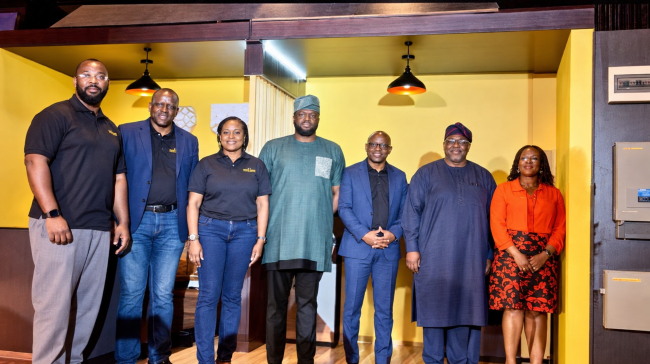
Nigeria’s electricity crisis is no longer only a grid problem. It is now a development, productivity, climate, investment and household-survival problem. That was the deeper message from a renewable energy product launch organised by Sun King at the Lagos Marriott Hotel, Ikeja, where stakeholders argued that distributed solar could become one of Nigeria’s fastest routes to closing its electricity access gap.
Mr Dayo Olowoniyi, Technical Lead for Mission 300 in Nigeria, said distributed solar is central to reaching more than 70 million Nigerians who still live without electricity. According to him, Nigeria recorded more than five million new off-grid connections between 2025 and 2026, showing that decentralised renewable energy is no longer a marginal experiment. It is becoming a serious part of the national energy-access architecture.

Olowoniyi said the Federal Government’s Distributed Access through Renewable Energy Scale-up programme, DARES, implemented by the Rural Electrification Agency, is providing capital subsidies to renewable-energy companies so that solar products can become more affordable for households, rural communities and low-income businesses. The World Bank-backed programme is valued at $750 million and is designed to help companies deploy solar home systems, mini-grids and productive-use equipment in areas that the conventional grid has failed to serve adequately.
“The Federal Government cannot do it alone,” Olowoniyi said, calling for deeper participation by state governments, private investors and energy companies.
That statement captures the real centre of Nigeria’s power challenge. The national grid remains important, but it cannot by itself solve decades of underinvestment, transmission weakness, distribution bottlenecks, liquidity crises and energy poverty. A country of Nigeria’s scale requires a layered electricity strategy: grid power where viable, mini-grids where economic clusters can support them, and solar home or business systems where speed, affordability and last-mile reach matter most.
Mission 300, the Africa-wide initiative backed by major development institutions, seeks to connect 300 million Africans to electricity. For Nigeria, the stakes are enormous. Electricity access is not merely about lighting homes. It determines whether a shop can stay open after sunset, whether a school can use digital tools, whether a clinic can refrigerate vaccines, whether a barber can work without petrol generators, and whether a cold-room operator can preserve food rather than lose inventory.
Solar as Productivity Infrastructure
Ms Titilayo Oshodi, Special Adviser to the Lagos State Governor on Climate Change and Circular Economy, placed the conversation within Lagos’ productivity and sustainability agenda. She said renewable energy can improve the capacity of micro, small and medium enterprises by powering freezers, appliances and other business equipment. She also linked clean energy to education, food preservation, water and sanitation.
Her argument is critical because Nigeria often treats electricity as a domestic comfort rather than a productive input. For MSMEs, unreliable power is a tax on ambition. It raises operating costs, shortens working hours, damages equipment, reduces competitiveness and forces businesses into petrol or diesel dependence.
In Lagos, where informal and formal enterprises drive much of the state’s commercial energy, distributed solar can do more than reduce emissions. It can support the real economy. A hair salon, pharmacy, cold-drinks seller, cybercafe, tailoring shop, food processor or private school does not need rhetoric. It needs reliable power at a cost it can survive.
Oshodi also highlighted the importance of installment-based financing for households and businesses at the lower end of the income ladder. This is where the market is shifting. The future of solar in Nigeria may depend less on technology alone and more on financing architecture.
Sun King’s Scale Play
Mr Lisbon Ogunsanmi, Country Business Manager, Sun King Nigeria, said the company’s monthly solar-system sales had grown from about 3,000 units to around 100,000 units, reflecting rising demand for alternatives to unreliable grid supply and expensive generator power. He said Sun King had trained at least 200 installers and now operates more than 136 shops, supported by after-sales teams across the country.
That footprint matters. In energy access, installation and after-sales capacity are not secondary. They are the difference between adoption and abandonment. Solar products fail reputationally when users cannot find technicians, replacement parts or responsive service teams. A company that wants to scale in Nigeria must therefore sell not just panels and batteries, but trust.
Ogunsanmi identified affordability as a major barrier. Many households and businesses need solar, but cannot afford the full cost upfront. That is why pay-as-you-go and installment models are becoming central to market expansion.
Mr Omoyemi Tuga, Vice President, Pay-As-You-Go Sales, West and Central Africa at Sun King, said the company had introduced a 5 KVA Power Hub system, expandable to 30 KVA, and a 210-litre Power Freeze designed for households and businesses. According to him, the Power Freeze can run on solar during the day and battery power at night, while the Power Hub can serve homes, schools, businesses and hospitals.
Tuga said Sun King’s EasyBuy model allows customers to make an initial payment and then pay weekly or monthly over one to two years, depending on the product. He said customers could access the 5 KVA Power Hub with a down payment from N340,000, while the Power Freeze would soon become commercially available.
Catherine Mudachi, Vice President, Global Affairs and Marketing at Sun King, said the financing model enables small businesses to pay for energy equipment from business income rather than making full payment upfront. In practical terms, this converts solar from a capital-heavy purchase into a productivity asset that can pay for itself over time.
Market Implications
The market opportunity is large. Nigeria’s power deficit has created a massive addressable market for solar home systems, productive-use appliances, mini-grids, batteries, inverters, cold-chain solutions, installation services, after-sales support and energy financing.
But the market is also complicated. Solar products are import-sensitive, meaning exchange-rate volatility can push prices beyond the reach of mass-market consumers. Battery quality varies widely. Poor installation can damage consumer trust. Weak regulation can allow inferior products to flood the market. Financing models must manage default risk, affordability pressure and customer education.
The next phase of growth will favour companies that combine hardware, financing, distribution, data, service and trust. Selling a solar box is no longer enough. Winning companies will build energy ecosystems.
Brand Implications
For Sun King, the launch strengthens its positioning as a serious player in Nigeria’s distributed-energy market. The shift from basic solar lanterns and small home systems to larger Power Hub and cold-storage solutions moves the brand closer to the productivity economy.
That is strategically important. The strongest energy brands in Nigeria will be those that connect their products to income generation, not only household convenience. A freezer that preserves stock, a power hub that keeps a school running, or a solar system that reduces generator spending tells a stronger brand story than a panel on a rooftop.
For government, DARES and Mission 300 also carry brand implications. Citizens are tired of electricity promises. Programmes must now show visible, measurable connections, especially in rural communities, clinics, schools and MSME clusters.
Investor Relevance
Distributed solar is now an investable infrastructure category. Development finance is already flowing into the sector, and private capital will follow where there is evidence of demand, reliable repayment behaviour, stable policy and scalable distribution.
Investors should watch five signals: customer acquisition costs, repayment rates, after-sales performance, local technician networks and productive-use adoption. The most valuable players may not be those selling the cheapest systems, but those building durable customer relationships and financing models that survive inflation.
There is also a broader opportunity in local assembly, battery recycling, technician training, embedded insurance and energy-data platforms.
BRANDECONOMY Insight
Distributed solar will not replace Nigeria’s national grid. But it can do what the grid has failed to do quickly enough: put usable power in the hands of households, traders, schools, clinics and small businesses.
The real breakthrough will come when Nigeria stops treating solar as backup power for the middle class and starts treating it as development infrastructure for the underserved. DARES, Mission 300 and private-sector models such as Sun King’s EasyBuy can help, but scale will require policy consistency, quality control, patient capital and state-level execution.
Nigeria’s electricity-access gap is too large for ideology. Grid, mini-grid and distributed solar must work together. The prize is not just light. It is productivity, dignity, climate resilience and inclusive growth.