BOI’s ₦644.9bn Impact Test: Can Development Finance Turn Disbursements Into Industrial Power?

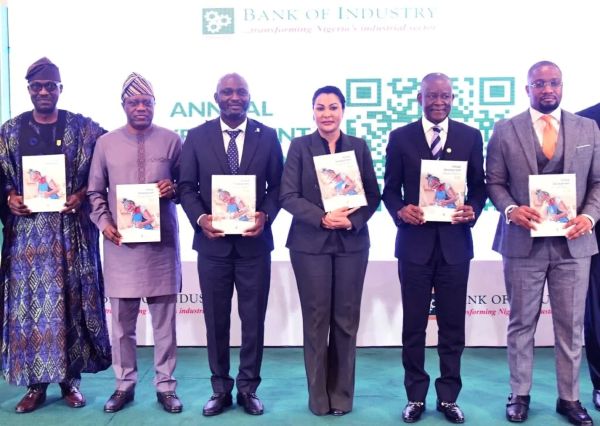 Bank of Industry says its 2025 financing reached 7,078 businesses, supported an estimated 1.68 million jobs and pushed capital into infrastructure, MSMEs, digital enterprise, women-led businesses and priority industrial value chains. The larger question is whether Nigeria can now convert development-finance momentum into sustained productivity, exports and globally competitive enterprises.
Nigeria’s development-finance conversation is beginning to change.



For years, the public debate around intervention lending has centred mainly on volume: how much money was approved, how much was released and how many beneficiaries were reached.
The Bank of Industry, BOI, is now seeking to shift that conversation.
At the unveiling of its maiden 2025 Annual Development Impact Report in Abuja, the Bank presented a more ambitious proposition: development finance should be judged not merely by disbursement, but by the jobs, enterprises, infrastructure, productive capacity, inclusion and industrial competitiveness it creates.
For BOI Managing Director and Chief Executive Officer, Dr Olasupo Olusi, 2025 was a defining year because it marked the first full year of the Bank’s 2025–2027 Corporate Strategy—and the beginning of a more deliberate move from financing activity to financing outcomes.
The headline figures are substantial.
BOI reported total disbursements of ₦644.9 billion across nano, micro, small, medium and large enterprises in 2025. The financing reached 7,078 businesses across 14 industrial sectors and was associated with an estimated job impact of 1.68 million direct, indirect and supported jobs across value chains.
More than 30 per cent of the financing went to nano and MSME businesses, while over 20 per cent was directed towards gender- and youth-focused enterprises.
The numbers matter. But the more important story lies beneath them.
Nigeria is trying to build an economy that produces more, imports less, creates higher-quality jobs, expands exports and retains more value within its borders. That ambition cannot be achieved without institutions capable of taking a longer view of enterprise development than conventional commercial lending often permits.
BOI is positioning itself as one of those institutions.
From Lending Volume to Development Outcomes
The strongest feature of the new report is its attempt to connect finance with measurable outcomes.
Rather than simply reporting loans released, BOI is placing greater emphasis on whether its funding helped companies expand capacity, hire workers, adopt cleaner technology, build local supply chains, enter export markets or reach underserved communities.
Olusi described the transition as a deliberate institutional reset.
The Bank’s financing, he said, was designed to strengthen value chains, widen access to capital and support infrastructure that improves national productivity and business competitiveness.
This is an important shift.
Development finance is not meant to behave exactly like ordinary bank lending. Its central purpose is to finance areas where commercial lenders may hesitate because returns take longer, risks appear higher or the benefits extend beyond a single borrower.
A factory expansion may create jobs, stimulate suppliers, improve local sourcing and reduce imports. A mini-grid may power a community, support small businesses and reduce reliance on diesel. A digital enterprise may create high-value jobs and enable young Nigerians to serve regional or global markets.
These are wider economic effects. They are difficult to capture through loan volumes alone.
BOI’s new Development Impact Framework is therefore intended to make those effects more visible and more accountable.
₦644.9bn Across the Productive Economy
The 2025 portfolio reflected a balance between large-scale industrial financing and grassroots inclusion.
Large enterprises accounted for the biggest share of BOI’s disbursements, reflecting the capital intensity of industrial projects. Yet the Bank also channelled significant financing to small and medium enterprises, micro businesses and nano enterprises—segments that remain critical to Nigeria’s employment base.
The portfolio cut across food processing, agro-processing, engineering and technology, creative and digital enterprise, power and utilities, transport and logistics, pharmaceuticals, hospitality, aviation, mining, climate finance and other priority sectors.
This sectoral spread is important because industrialisation does not happen in isolation.
A food processor depends on farmers, logistics companies, packaging suppliers, energy providers, wholesalers and retailers. A digital company depends on broadband, talent, payment systems and reliable electricity. A pharmaceutical manufacturer depends on quality standards, imported and local inputs, technical skills and regulatory certainty.
The real value of development finance lies in its ability to connect these ecosystems.
BOI’s report suggests that the Bank is increasingly looking at lending through this wider value-chain lens.
Infrastructure as a Productivity Multiplier
One of the most significant aspects of the report is BOI’s financing of infrastructure.
The Bank said it committed more than ₦35 billion to broadband infrastructure rollout, ₦30.6 billion to power infrastructure projects and over ₦20 billion to aviation upgrades.
These interventions move BOI beyond the traditional image of a lender to factories and SMEs.
Broadband is now business infrastructure. It supports fintech, digital commerce, remote work, creative production, online education, cloud services and enterprise productivity.
Power is equally fundamental. Manufacturers cannot compete when they spend excessive amounts on diesel, alternative energy systems and production interruptions. Reliable electricity reduces operating costs, improves capacity utilisation and strengthens the competitiveness of locally made goods.
Aviation infrastructure supports movement, trade, tourism, logistics, export services and the broader ease of doing business.
The message is clear: Nigeria’s industrial challenge is not only about financing firms. It is also about financing the systems that allow firms to operate efficiently.
MSMEs: The Inclusion Imperative
The report also reinforces the importance of MSMEs to Nigeria’s economic future.
Micro and small businesses remain the most accessible route into entrepreneurship for millions of Nigerians. They create jobs, provide essential goods and services, support household incomes and often serve as the first stage of more formal enterprise growth.
But they face a persistent funding gap.
Many lack collateral, formal records, established cash-flow histories or the technical capacity required to secure conventional bank credit. They are also exposed to high interest rates, inflation, weak consumer demand, costly power and volatile input prices.
BOI’s interventions are therefore most valuable when they go beyond credit.
The Bank highlighted programmes such as the Rural Area Programme on Investment for Development, RAPID; the Guaranteed Loan for Women, GLOW; and the Investment in Digital and Creative Enterprises, iDICE, programme.
RAPID is aimed at extending finance into rural enterprises and value chains. GLOW addresses the structural barriers confronting women-led businesses. iDICE is designed to support technology-enabled start-ups and creative enterprises that can generate higher-value employment among younger Nigerians.
These programmes recognise an important reality: inclusion is not achieved by offering everyone the same product. It requires financing structures that reflect the different realities of rural businesses, women entrepreneurs, digital founders, manufacturers and early-stage ventures.
Women, Youth and the Future of Enterprise
BOI’s commitment to gender and youth financing is also commercially strategic.
Women-owned and youth-led businesses represent some of the most dynamic segments of Nigeria’s enterprise economy. Yet they are frequently excluded from formal credit systems or receive financing that is too small, too expensive or too short-term to support meaningful growth.
A stronger financing ecosystem for women and young people can create more than social impact. It can build new markets, new brands, new employers and new supply chains.
For women-led businesses, access to capital can mean moving from subsistence trading into processing, distribution, manufacturing or export-linked production.
For young entrepreneurs, it can mean converting digital skills, creative talent and technical knowledge into scalable companies.
The development opportunity is enormous.
Nigeria has one of the world’s youngest populations. Its ability to create productive livelihoods for young people will influence everything from household welfare and social stability to innovation, tax revenue and long-term consumer-market growth.
Industrial Policy Needs an Execution Engine
The Minister of State for Industry, Senator John Enoh, described BOI as more than a financier. He positioned the institution as a strategic partner in Nigeria’s industrial transformation.
That framing is accurate.
The Nigeria Industrial Policy is designed to strengthen local production, value addition, employment, exports, manufacturing competitiveness and Made-in-Nigeria patronage. But industrial policy cannot succeed as a document alone.
It requires project preparation, finance, infrastructure, skills, market access, standards and disciplined implementation.
Enoh noted that the early implementation phase of the policy has focused on industrial clusters, MSME development, local value chains, export readiness and enterprise support.
He also referenced plans for a proposed ₦350 billion MSME Development Fund—a potentially important vehicle if it is structured transparently, capitalised properly and deployed against clear performance indicators.
The central challenge will be to ensure that policy ambitions are not disconnected from the financial architecture required to deliver them.
That is where BOI’s role becomes central.
The Project Preparation Problem
Minister of Budget and Economic Planning, Senator Abubakar Atiku Bagudu’s representative, Dr Doris Uzoka-Anite, raised another critical issue: Nigeria’s investment challenge is not simply the availability of money.
It is the shortage of bankable projects.
This is one of the most important development-finance realities in Africa.
Investors may be interested in infrastructure, manufacturing, energy, logistics, healthcare, agriculture and digital enterprise. But capital cannot flow efficiently where projects lack feasibility studies, credible financial models, risk analysis, environmental safeguards, governance structures and clear implementation plans.
Project preparation converts ambition into investable opportunity.
Uzoka-Anite’s point should be taken seriously by state governments, ministries, development agencies and private companies. Nigeria needs a deeper pipeline of well-prepared projects that can attract local and international capital on competitive terms.
Development finance institutions such as BOI can play a major role here—not only by lending, but by helping to develop the investment ecosystems around projects.
That means blended finance, guarantees, advisory support, technical assistance, data, monitoring and partnerships that reduce risk for private investors.
Market Implications: A Bigger Role for Development Finance
For the market, BOI’s report suggests that development finance is becoming more central to Nigeria’s growth model.
Commercial banks remain vital. But their lending models are often built around short- to medium-term returns, collateral and risk management.
Industrial transformation requires longer horizons.
Manufacturing projects, mini-grids, industrial clusters, agricultural processing plants, technology platforms and logistics infrastructure need patient capital. They also need repayment structures that match the life cycle of productive investment.
BOI can help fill that gap.
Its strongest opportunity lies in using public and development-partner capital to crowd in private finance. A well-structured BOI facility can reduce risk for commercial banks, attract co-financiers, support local suppliers and make otherwise difficult projects more viable.
The real test is leverage.
How much additional private capital can each naira of BOI financing mobilise? How many firms move from survival to scale? How many jobs remain sustainable after the intervention period? How many businesses become export-ready?
Those are the questions that should increasingly define success.
Brand Implications: BOI as a Builder of National Confidence
For BOI, the annual impact report is also a major brand statement.
It positions the Bank as an institution that wants to be measured by outcomes, not announcements.
That is a powerful proposition in an economy where public institutions are often judged by promises rather than results.
By publishing development-impact data, disclosing methodology and subjecting key statements to external review, BOI is building a brand around accountability, industrial purpose and evidence-led finance.
The credibility of that brand will depend on consistency.
Future reports must show whether businesses grew, whether jobs were sustained, whether rural enterprises became more resilient, whether women-led companies gained scale and whether infrastructure investments delivered the productivity gains expected.
Trust grows when institutions report not only what worked, but also what needs improvement.
Investor Relevance
For investors, BOI’s 2025 report points towards sectors likely to remain important within Nigeria’s development agenda.
These include food processing, agro-processing, energy, digital infrastructure, logistics, creative enterprise, pharmaceuticals, manufacturing, aviation and climate-linked projects.
Investors should watch for companies that benefit from improved access to development finance, lower energy costs, stronger broadband, industrial-cluster development and expanding local value chains.
The report also highlights the importance of public-private partnership structures.
Where BOI financing can de-risk projects, private investors may find more viable opportunities in sectors previously considered too capital-intensive or uncertain.
However, investors should remain disciplined.
Development finance can create opportunity, but it cannot compensate indefinitely for weak governance, poor execution, policy inconsistency or inadequate demand.
The strongest opportunities will be found where sound financing meets capable management, clear market demand and durable infrastructure.
BRANDECONOMY Insight
BOI’s maiden Development Impact Report is significant because it changes the question Nigeria should ask of development finance.
The question is no longer simply: how much money was disbursed?
The more important question is: what did the money build?
Did it create productive jobs? Did it strengthen local supply chains? Did it help businesses export? Did it reduce infrastructure constraints? Did it enable women, youth and rural entrepreneurs to build sustainable enterprises?
The ₦644.9 billion figure is substantial.
But the real value of the report will be measured by whether BOI can turn its new impact framework into a long-term culture of performance, transparency and industrial transformation.
Nigeria does not merely need more financing.
It needs financing that produces factories, stronger businesses, resilient communities, new technologies, export capacity and enduring prosperity.
That is the true development-finance test.