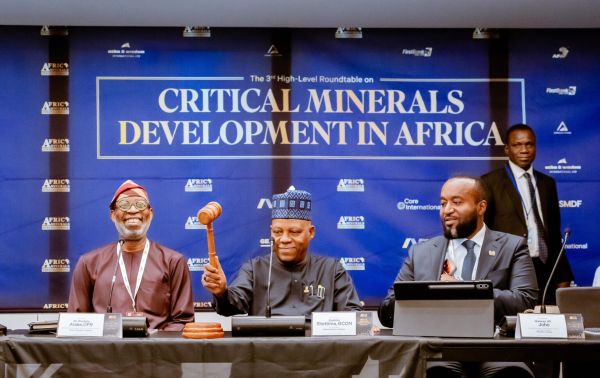
 President Bola Tinubu has urged African governments to stop accepting a role limited to exporting critical minerals while other economies capture the higher value in processing and manufacturing. Speaking through Vice President Kashim Shettima at the third Africa Minerals Strategy Group (AMSG) High-Level Roundtable in New York at UNGA81, he called for coordinated investment in refining, components, batteries, skills and African-owned enterprise.
Represented again by Vice President Kashim Shettima, the Nigerian president called for a common African bargaining position. The proposed declaration will be judged by funded processing, credible data and benefits in mining communities.

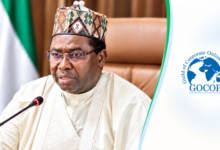

The meeting took place on the sidelines of the 81st United Nations General Assembly under the theme “From Resources to Wealth: Continental Cooperation for Mineral Value Addition, Data Sovereignty, Innovative Financing and Critical Minerals Security.” Tinubu is chair of the AMSG General Assembly; Nigeria’s Minister of Solid Minerals Development, Dr Dele Alake, chairs its ministerial steering committee. Although the roundtable was presented under Tinubu’s leadership, Shettima delivered his remarks in person.
Tinubu has now missed the UN General Assembly’s annual high-level gathering for a third consecutive year. He attended in 2023, while Shettima represented Nigeria in 2024, 2025 and again in 2026. The Presidency said Tinubu extended a working vacation and that Shettima had travelled to New York to represent him. A vice president can conduct substantial diplomacy; the president’s repeated absence nevertheless adds political scrutiny to a call for visible African leadership. The fair test is whether Nigeria and its partners secure commitments that survive the meeting.
From geological endowment to economic power
Tinubu’s central argument was that rising demand from clean energy, artificial intelligence and advanced manufacturing should strengthen Africa’s negotiating position rather than prolong extraction without local prosperity. Mineral-rich communities, he said, too often lack jobs, infrastructure and a meaningful share of the wealth taken from their land. A mine’s value should be assessed through employment, industrial capability, technology transfer and lasting gains for those communities, not export receipts alone.
The diagnosis is compelling. Mining can generate foreign exchange and fiscal revenue while leaving few connections to the wider economy. Processing and manufacturing offer a route to more domestic value, but each step requires reliable electricity, water, transport, technically trained workers, standards and buyers. A blanket insistence that every mineral be refined within every producing country could create uneconomic plants or encourage unrecorded exports. Regional specialisation offers a more credible path: countries can coordinate deposits, energy and industrial sites around shared mineral corridors.
Tinubu warned against African states undercutting one another with lower royalties, weaker local-content obligations and excessive concessions. Common positions could improve negotiating power, provided they do not become a single rigid template for different ore bodies and investment risks. The objective is bankable terms that reward investors for building capacity while protecting public revenue and community rights.
Nigeria’s claims require a clear scorecard
The president outlined a Nigerian policy direction that would require local value addition for new mining licences, improve geological data and investor access, organise artisanal miners into cooperatives, combat illegal mining and strengthen regulatory accountability. He cited sector revenue of roughly ₦6 billion in 2023, more than ₦38 billion in 2024 and between ₦68.1 billion and ₦70 billion in 2025. These are administration figures; the different endpoints given for 2025 and the absence of a stated accounting basis warrant a reconciled public series before the trend is treated as an audited measure of reform.
He also pointed to foreign investment commitments and lithium processing capacity developed and commissioned in Nasarawa State as signs of what firmer local-content terms can attract. Announced capital and installed capacity are useful milestones. Investors and citizens still need to see plant utilisation, commercial output, energy costs, local procurement, environmental compliance and jobs. Those measures determine whether processing has moved beyond the ceremony and can compete in export markets.
Geological information is part of that investment case. Digitised and independently credible mapping can reduce exploration uncertainty; clear licences, beneficial-ownership records and traceable production can curb leakage. “Data sovereignty” should mean African institutions can govern and use strategic information to make decisions, while legitimate investors can access dependable datasets under transparent rules. Keeping data inaccessible would weaken the financing case the roundtable hopes to advance.
A declaration needs obligations and capital
Alake said the group was advancing a Continental Integration and Economic Assurance Declaration (CIEAD) to align mineral value chains, investment and infrastructure across member countries. Tinubu urged governments to specify national and regional contributions and asked development finance institutions and sovereign investors to propose financing platforms. He said the declaration, reported as adopted and signed at the roundtable, should become a programme with timelines, funding and public accountability.
This is the decisive distinction between diplomatic language and an industrial strategy. Strategic Mineral Corridors need named routes, anchor deposits, shared processing opportunities, power plans, permitting rules and credible offtake. A published implementation register could show who is responsible for each project, how much capital is committed, which approvals remain outstanding and when the first commercial shipment is due. Without that discipline, a continental declaration risks becoming another ambitious document without an investable pipeline.
Alake urged countries outside AMSG to join and argued that policy alone could not deliver the goal without integrated financial and infrastructure partnerships. Kenya’s Cabinet Secretary for Mining, Blue Economy and Maritime Affairs, Hassan Ali Joho, stressed domestic resource mobilisation, transparency, competitiveness and closer alignment of licensing procedures. Those issues matter to private capital: mismatched rules, unpredictable taxes and opaque approvals can erase the advantages of a promising deposit.
The market and brand stakes
For governments, a credible alliance could help secure better contract terms and support cross-border industrial clusters. For financiers, it could turn mineral prospects into a sequence of projects with clearer risks and cash flows. For technology companies, demand could emerge in geological data, mineral traceability, processing controls and supply-chain verification. None of those opportunities is automatic; each depends on open procurement, reliable regulation and commercial customers.
Africa’s mineral brand will also be shaped at the mine gate. Buyers increasingly need confidence in origin, quality, labour practices and environmental management. Verified local benefits and dependable delivery strengthen the case for African materials and components. Displacement, pollution or opaque deals would damage trust even where production rises. Communities therefore belong in the investment model from the outset, with enforceable benefit agreements and measurable remediation obligations well beyond UNGA81.
BRANDECONOMY Insight
Tinubu is right that mineral ownership confers no automatic prosperity. Africa gains bargaining power when countries can offer reliable data, investable corridors, processing at competitive scale and enforceable terms together. The immediate proof of AMSG’s progress will be named projects, committed finance, operating plants and visible community gains—not the number of signatures on a declaration. Shettima has conveyed the president’s message at UNGA81; Tinubu’s administration must now show how Nigeria will execute its share of it.